
Oliver Burkeman - Why You Can’t Stop Your Productivity Addiction
Oliver Burkeman, author of Four Thousand Weeks and Meditations for Mortals, joins Chris Williamson to explore the paradox of high achievement and relaxation. Burkeman, a writer focused on productivity philosophy and the human relationship...

Episode


- 01
"I don't mind what happens" - Krishnamurti's secret reveals the ultimate approach to life's uncontrollable nature
- 02
Insecure overachievers turn successes into minimum standards, creating perpetual dissatisfaction despite external accomplishments
- 03
"All you had was anxiety" - Elizabeth Gilbert's insight that we fear losing control we never actually possessed
- 04
Type A people need to learn relaxation while Type B people need discipline - problems of opportunity get less sympathy than scarcity
- 05
The plane has already crashed metaphor: accepting life's inherent limitations liberates us from white-knuckle control attempts
- 06
Interest is everything - building days around what genuinely fascinates you creates more authentic and effective output
- 07
Finitude means you're always settling - every choice involves trade-offs, so commitment phobia just chooses different downsides
Get the latest ideas from Chris Williamson.
Plus the best new takeaways from other top podcasts — read in minutes, not hours.
By continuing, you agree to podbrain's Terms and Privacy Policy.
These notes may contain occasional inaccuracies. Learn how podbrain notes are made
Oliver Burkeman, author of Four Thousand Weeks and Meditations for Mortals, joins Chris Williamson to explore the paradox of high achievement and relaxation. Burkeman, a writer focused on productivity philosophy and the human relationship with control, discusses his journey from productivity optimization to embracing life's fundamental limitations.
The conversation examines the insecure overachiever phenomenon - highly successful people driven by internal inadequacy rather than genuine interest. They explore how the pursuit of control often diminishes actual agency, and why the most accomplished individuals frequently struggle with moment-to-moment happiness despite external success.
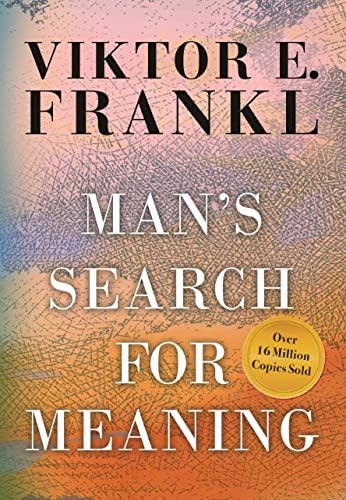
Drawing from Viktor Frankl's insights in Man's Search for Meaning and Bill Perkins' Die with Zero, they discuss the tension between meaning and pleasure, the cost of deferring gratification, and how aging shifts perspective on achievement and mortality. The discussion reveals why some people need to hear 'work harder' while others desperately need permission to relax.
The Insecure Overachiever's Trap
Insecure overachievers pursue goals to fix something about themselves rather than create from a place of wholeness, turning every achievement into the new minimum standard.
"Anything you achieve in the world just instantly becomes the minimum standard that you've got to meet next time, which is a very depressing way to live" - Oliver describes the achievement treadmill.
The healthier approach involves entertaining the possibility that "everything was fine right now" and creating cool things from interest rather than inadequacy.
Chris's Spotify charting experience exemplified this trap: the Goldilocks zone of enjoyment lasted "approximately 15 minutes" before becoming next year's pressure.
Control vs. Agency: The Fundamental Distinction
Krishnamurti's secret "I don't mind what happens" represents ultimate freedom from anxiously leaning into the future, waiting for things to be okay.
"You're scared to let go because you're afraid of losing control, but you never had control. All you had was anxiety" - Elizabeth Gilbert's insight on the illusion of control.
True agency emerges when you relax the need for control, rather than trying to lever yourself into a position of controlling life instead of being in life.
The plane crash metaphor: "We go through life braced like we're in a plane that might crash, but the plane has already crashed" - accepting life's inherent limitations is liberating.
Interest as the Ultimate Productivity Strategy
"Interest is everything" - building days around genuine fascination creates more authentic and effective output than rigid productivity systems.
Chris discovered that straying from personal interest made shows worse despite potentially higher numbers: "the further I've gotten away from what I'm interested in, the worse the show's got."
Trusting yourself to do what you want doesn't lead to collapse - "if you're interested in being productive in the first place, you're not the kind of person who's going to become a wreck."
Audience capture phenomenon shows the danger of giving people what they want versus what genuinely interests you - authenticity creates better connection.
The Type A Problem and Advice Hyper-Response
"Type A people have a type B problem, and type B people have a type A problem" - insecure overachievers need relaxation advice, not more productivity hacks.
Problems of opportunity get less sympathy than scarcity: "I need someone to teach me how to switch off feels dopaminergic, addicted, and opulent."
Advice hyper-responders create a selection bias where people most needing relaxation consume productivity content, while relaxed people consume relaxation content.
The solution requires "a parasympathetic Goggins" for type A personalities - someone advocating rest with the same intensity others advocate grinding.
Aging, Mortality, and the Shift in Perspective
At 50, Oliver describes developing "greater basic confidence" in his abilities while simultaneously recognizing "it's got to be now" due to mortality awareness.
Die with Zero by Bill Perkins illustrates the danger of deferring gratification too long - the combination of competence and urgency creates healthier motivation.
"Do it anyway" becomes increasingly important with age - doing it scared, uncertain, or tired rather than waiting for perfect conditions.
The British equivalent "you might as well" captures how stakes shift with age - you have less to lose, or never had what you thought you had to lose.
The Incongruence Crisis of Personal Evolution
Evolving beyond the "hard charger" identity creates temporary incongruence where old strategies stop working before new ones develop mastery.
"Real world results briefly get worse because you've got to relinquish strategies you were using previously before you've got mastery in the new ones."
Being around highly congruent people during transition periods creates painful comparison: "their congruence throws my incongruence into harsh contrast."
The solution requires staying in the "middle stage of the alchemical process" without restlessly trying to fix the temporary discomfort of growth.
Settling and the Reality of Finite Choices
Four Thousand Weeks explored how finitude means "you are settling" regardless of choice - every decision involves accepting downsides.
"You can do what you like, you only need to face the consequences" - Sheldon Kopp's insight that all choices have trade-offs for finite humans.
Commitment phobia often stems from fantasizing about options without downsides, but "keeping options open" is itself a choice with specific costs.
Recognizing when the only reason preventing commitment is "restless fantasy of not having to make any trade-off" often clarifies the right path forward.


These notes may contain occasional inaccuracies. Learn how podbrain notes are made
More in Self-Development

Can the Middle Class Be Saved? Political Division, Economic Doom & The Leadership Problem | Andrew Bustamante Pt. 2
Jun 20, 2026
The Career Trap That Makes Women Miserable - Suzanne Venker - #1113
Jun 20, 2026
How Immigration and War Test the Strength of Values and National Identity
Jun 19, 2026
7 Strategies for Becoming a Better Father | FRIDAY FIELD NOTES
Jun 19, 2026
ELECTROMAGNETISM Is The SECRET To Health: Biofield Tuning Explained | Eileen McKusick
Jun 15, 2026
.svg)