
Is God Real? And Can We Have A Conversation? | Dr. Marc Gafni
Dr. Marc Gaffney, scholar of Hebrew mysticism and author of Radical Kabbalah, joins Aubrey Marcus for an exploration of God, prayer, and the nature of divine communication. Gaffney brings decades of study in the Solomon lineage and interior sciences, while Marcus shares his journey...

Episode


- 01
"The God you don't believe in doesn't exist" - Gaffney argues we all have caricatures of God that are rightfully rejected
- 02
Reality is fundamentally conversational "all the way up and all the way down" - even quarks exchange information in literal conversations
- 03
Prayer affirms "the dignity of personal need" - desperate authentic need creates the strongest connection to divine response
- 04
God hears every prayer but doesn't answer every prayer - the distinction between being heard versus receiving desired outcomes
- 05
Dune concept Kwisatz Haderach directly derives from Hasidic texts about messianic time-travel abilities that Frank Herbert read while using psychedelics
- 06
Evolution is "love in action in response to need" - underneath physics lies relationality that responds to genuine desperation
- 07
The infinite intimate desires personal relationship with each unique individual - biochemistry requires non-mechanical personal movement to create irreducible uniqueness
- 08
Parapsychology research shows "one in septillion chance" all studies are coincidence - consciousness affects reality beyond physical laws
Get the latest ideas from Aubrey Marcus Podcast.
Plus the best new takeaways from other top podcasts — read in minutes, not hours.
By continuing, you agree to podbrain's Terms and Privacy Policy.
These notes may contain occasional inaccuracies. Learn how podbrain notes are made
Dr. Marc Gaffney, scholar of Hebrew mysticism and author of Radical Kabbalah, joins Aubrey Marcus for an exploration of God, prayer, and the nature of divine communication. Gaffney brings decades of study in the Solomon lineage and interior sciences, while Marcus shares his journey from atheism through psychedelic experiences to direct divine encounter.
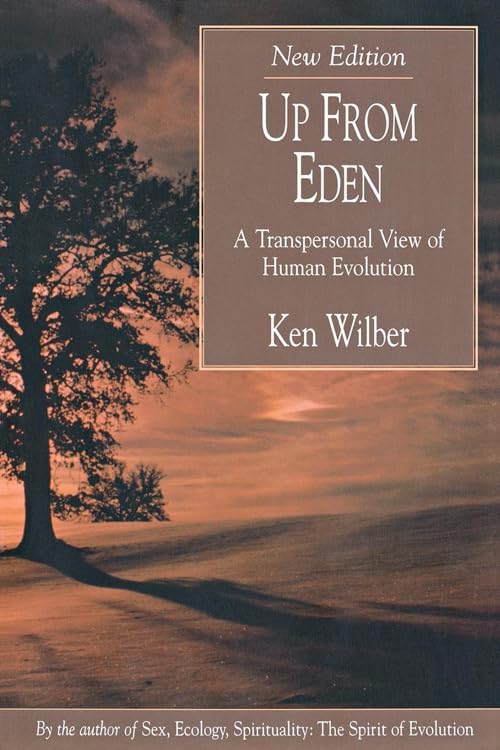
The conversation moves through the three faces of God - first person (consciousness), second person (relationship), and third person (systems) - drawing from Ken Wilber's The Sociable God and Up From Eden frameworks. They examine how prayer functions as genuine conversation with an infinite intimate presence that personally cares for each individual.
Central themes include the distinction between affirmative prayer (manifestation techniques) and authentic prayer (relationship with mystery), the role of desperate need in accessing divine power, and how figures like Abraham and Noah represent different approaches to challenging versus accepting divine will. The discussion weaves together insights from The Psychology of Awakening, parapsychology research, and mystical traditions.
The God You Don't Believe In Doesn't Exist
"The God you don't believe in doesn't exist. That's a good place to start" - Gaffney explains everyone has personal caricatures of God from childhood trauma that are rightfully rejected.
Abraham Cook's teaching: "There is faith which is heresy, and heresy which is faith" - faithful devotion to a small God constitutes heresy against the real God.
"If you have a small imagination, you have a small God. And then you become a small person" - the scope of divine vision directly shapes human capacity.
Monotheism as Unity, Not Exclusion
"One God means this one and all the rest are in" - true monotheism includes all divine faces rather than excluding other expressions.
Idolatry occurs when "one facet of God says, I'm the only God" - any single value or perspective claiming exclusive truth becomes idolatrous.
Using abortion debate as example: both pro-life and pro-choice represent legitimate values, but either claiming sole validity creates idolatry through "dissociation of a dimension or face of God from the field of the one."
Evil Proves God's Existence
"The only way we can call something evil and understand our unimaginable revulsion is because there's a field of God" - moral outrage requires divine foundation.
"Without God, all is permitted and nothing really matters" - Dostoevsky's insight reflected in Camus's The Stranger opening: "mother died today, or was it yesterday?"
"All evil is a failure of the intimate universe. Evil is a failure of intimacy" - evil represents breakdown in cosmic relationality, not absence of divine presence.
"The question is the answer" - our ability to formulate the problem of evil demonstrates we exist within a field of value that makes moral judgment possible.
Prayer as Protest: Abraham vs Noah
Abraham challenges God over Sodom and Gomorrah: "Will God, who is the judge of the entire world, not do justice?" - protest becomes the first form of prayer.
"Abraham is chosen for his prayer, and his prayer is protest" - divine election comes through willingness to challenge rather than blind obedience.
Noah represents fundamentalist comfort: "Mr. Comfort" builds his ark without protest, choosing personal safety over challenging divine justice.
"The voice in me that protests God is God" - authentic divine protest emerges from the God-voice within, not external rebellion.
Reality as Conversational Cosmos
Ken Wilber's realization through The Sociable God framework: student fainting in ecstasy saying "blessed are you" demonstrates direct second-person divine experience.
"Reality is conversational, meaning three quarks that go two up and one down and become a proton are having literally a conversation with each other" - cosmos operates through information exchange at every level.
"When we initiate the conversation and invoke the divine, we call that prayer. When the infinite divine initiates the conversation, we call that prophecy."
Prophecy is "a potentiality of every human being" according to Abraham Cook - not limited to ancient Near East but ongoing feature of reality.
The Infinite Intimate: God's Personal Love
"If I exist as an irreducible unique human being, that uniqueness cannot be an assembly line production of the infinite" - biochemical uniqueness requires personal divine attention.
"God desires your existence, God intended your existence, God chose you, God recognizes you, God adores you, and God needs you" - six dimensions of personal divine relationship.
Visualization exercise: "Take all of God in the third person and place it in a chair looking at you and madly loving you" - infinite cosmic power focused personally.
"Mix infinite tenderness with infinite raw desire, then exponentialize it beyond numbers. That's what God is feeling about you" - divine emotion toward each individual.
Prayer Affirms the Dignity of Personal Need
Baal Shem Tov story: poor man feeds master everything he has, then screams to God in forest about his desperate needs - "When you go to God to pray, you ask for everything."
"Prayer affirms the dignity of personal need" - authentic prayer begins with honest acknowledgment of what we genuinely require.
The 48 Laws of Power Dostoevsky example: writer deliberately impoverishes himself to create the desperate need that generates his greatest art.
Dean Radin's parapsychology research shows "one in septillion chance" all studies are coincidence - but effect sizes remain small in laboratory settings lacking genuine need.
Distinguishing Authentic from Manipulative Prayer
Affirmative prayer (Neville Goddard, Ernest Holmes tradition) treats reality as "currency of laws" - important but insufficient approach to divine relationship.
Love, Medicine and Miracles by Bernie Siegel shows psychoneuroimmunology's power, "but many people still die of cancer" - not because they failed to master thoughts.
"Reality is more mysterious than that. Reality is a relationship filled with mystery" - authentic prayer bows before uncertainty rather than claiming control.
God voice litmus tests: "Is this the real God voice? Who does it serve? How will this look in 10-20 years?" - evolutionary integrity over time.
The God Voice Never Stopped Speaking
Marcus's dry cleaner story: divine message to give all money in wallet leads to powerful prayer exchange with Christian woman before Christmas.
"The idea that God has stopped talking is absurd. It would mean that God has stopped caring" - divine communication remains constant and available.
Dune connection: Frank Herbert "stoned in 1964, reading Hasidic text" about Kwisatz Haderach (time travel) - science fiction emerges from mystical traditions.
"We're constantly praying. The soul is constantly praying" - prayer as fundamental breathing of spiritual life, not occasional activity.







These notes may contain occasional inaccuracies. Learn how podbrain notes are made
More in Self-Development

Can the Middle Class Be Saved? Political Division, Economic Doom & The Leadership Problem | Andrew Bustamante Pt. 2
Jun 20, 2026
The Career Trap That Makes Women Miserable - Suzanne Venker - #1113
Jun 20, 2026
How Immigration and War Test the Strength of Values and National Identity
Jun 19, 2026
7 Strategies for Becoming a Better Father | FRIDAY FIELD NOTES
Jun 19, 2026
ELECTROMAGNETISM Is The SECRET To Health: Biofield Tuning Explained | Eileen McKusick
Jun 15, 2026
.svg)