
The one skill you need to succeed in your career in a turbulent world - by Adam Grant
Adam Grant is an organizational psychologist at the Wharton School, bestselling author of Think Again and Hidden Potential, and host of the podcast Rethinking Unworked Life. His monthly newsletter...

Episode


- 01
Meta-analysis of three decades shows attention spans haven't declined - motivation has, not ability to concentrate
- 02
The 'I'm not biased' bias affects smart people most: 'the better you are at thinking, often the worse you are at rethinking' - Grant
- 03
Motivational interviewing works by helping people find their own reasons to change rather than arguing with them
- 04
Daryl Davis converts white supremacists by asking one key question: 'How can you hate me when you don't even know me?'
- 05
Research on 30,000 salespeople shows assists to teammates, not individual performance, predicts management success
- 06
Grant advocates against the 'dark triad' in leadership: narcissism, Machiavellianism, and psychopathy are toxic traits
- 07
Binary bias oversimplifies complex issues - 85% of Americans actually agree on universal background checks for guns
- 08
Despite polarization, this remains 'the best time in human history to be alive' across most objective metrics
Get the latest ideas from World Economic Forum.
Plus the best new takeaways from other top podcasts — read in minutes, not hours.
By continuing, you agree to podbrain's Terms and Privacy Policy.
These notes may contain occasional inaccuracies. Learn how podbrain notes are made
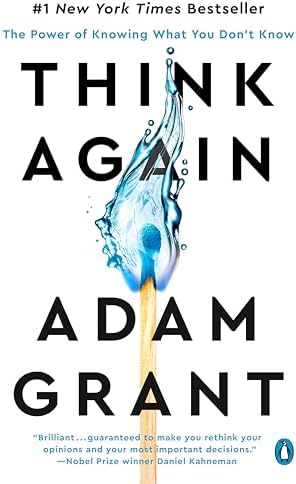
Adam Grant is an organizational psychologist at the Wharton School, bestselling author of Think Again and Hidden Potential, and host of the podcast Rethinking Unworked Life. His monthly newsletter reaches 200,000 people, and he's a frequent speaker at the World Economic Forum's annual meeting in Davos.
The conversation explores Grant's research on rethinking and unlearning in a rapidly changing world, drawing heavily from Think Again and its core premise that intelligence now requires the capacity to rethink, not just think. Grant discusses motivational interviewing techniques, the psychology of polarization, and his hopes for leadership transformation in 2026.
Grant also shares insights from his diverse background as a former springboard diver and magician, explaining how these experiences shaped his understanding of risk-taking and growth. The discussion covers attention spans in the TikTok generation, the art of changing minds, and why data from books like Factfulness and The Better Angels of Our Nature suggests the world is improving despite negative perceptions.
The Attention Span Myth: Motivation vs. Ability
A major meta-analysis spanning three decades found that attention spans haven't actually declined - adults and children perform just as well on concentration tests, sometimes even better.
The real issue is motivation, not ability: 'We're used to looking for the next shiny object' but people can focus for extended periods if their interest is sustained - Grant
Teenagers binge-watching Netflix for eight hours or playing video games for 14 hours demonstrates sustained attention when content is engaging and motivating.
Modern viewing habits show active engagement: teenagers watch with subtitles on, meaning 'they're reading as they're listening' rather than passively consuming - Grant
Rethinking Intelligence: The Core Message of Think Again
Think Again argues that in our rapidly changing world, 'intelligence is not just your ability to think and learn, it's your capacity to rethink and unlearn' - Grant
The 'I'm not biased' bias is 'the mother of all biases' - the belief that others have flawed thinking but you remain neutral and rational.
Higher intelligence test scores correlate with greater susceptibility to the bias: 'the better you are at thinking, often the worse you are at rethinking' - Grant
Smart people develop overconfidence from their track record of being told they're right, making them resistant to changing their minds.
Motivational Interviewing: The Art of Changing Minds
Motivational interviewing, developed by Miller and Rolnick for addiction counseling, helps people find their own motivations to change rather than arguing with them.
Over a thousand randomized controlled experiments validate this approach for helping people shift attitudes and actions.
Daryl Davis, featured in Think Again, uses this technique to convert white supremacists by asking: 'How can you hate me when you don't even know me?'
The key question for fact-resistant people: 'What evidence would change your mind?' grounds conversations in facts on their terms, not yours.
Breaking Through Polarization with Complexity
The 'perception gap' means we overestimate how different others' views are from our own - actual polarization is less than assumed.
Binary bias oversimplifies complex issues into just two categories, but research shows 85% of Americans agree on universal background checks for guns.
Peter Coleman's research shows that reading about complexity on any issue makes people more likely to find common ground on completely different topics.
Starting conversations with areas of agreement rather than points of disagreement creates more productive dialogue.
Leadership and the Dark Triad Problem
Grant's biggest hope for 2026: changing what we value in leadership by rejecting the 'dark triad' of narcissism, Machiavellianism, and psychopathy.
'Character matters as much as competence and charisma' - leaders unwilling to put collective interests above themselves are 'unfit to lead' - Grant
Research on 30,000 salespeople by Alan Benson shows the best managers aren't top individual performers but those who gave the most assists to teammates.
Organizations should measure impact on others, not just individual results: 'Did you refer clients? Did you help solve problems? Did you get them access to deals?' - Grant
Data-Driven Optimism Despite Negative Perceptions
Despite increased polarization, this remains 'broadly speaking the best time in human history to be alive' across objective metrics - Grant
Life expectancy, disease rates, poverty, hunger, and violence are all 'trending in positive directions' contrary to news coverage.
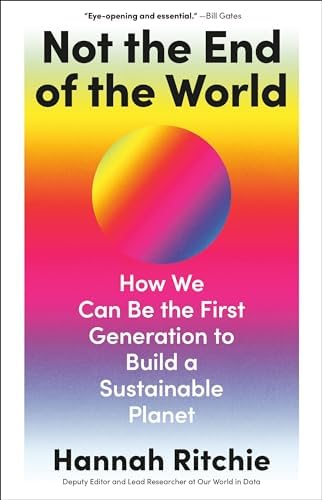
Books like Factfulness, The Better Angels of Our Nature, and Not the End of the World provide 'data-driven stories' that are 'more uplifting than the news anchored version' - Grant
The mistake is zooming in on individual incidents rather than zooming out to see overall trends like declining murder rates in developed countries.

![Factfulness: Ten Reasons We're Wrong About the World, Footprints [Hardcover] , Foolproof [Hardcover] 3 Books Collection Set](https://m.media-amazon.com/images/I/41N9ceYOQYL._AC_.jpg)

These notes may contain occasional inaccuracies. Learn how podbrain notes are made
More in Politics & Society

And, This Is Why Reid Hoffman Doesn’t Fear Artificial Intelligence
Jun 19, 2026And, This Is Hunter Biden Like You've Never Heard Him Before
Jun 12, 2026
Better Sex, Better Hair, Better Sleep: ‘Humanmaxxing’ Is Here
Jun 11, 2026
Introducing: OnlyFantasy (Leon's New Podcast)
May 21, 2026
Three young leaders changing the world one step at a time
May 21, 2026
.svg)