
Pete Blaber - Part 2: Delta Force Commander on Pablo Escobar, Takur Ghar, and Pat Tillman
Pete Blaber, former Delta Force commander and author of The Mission, The Men, and Me and The Common Sense Way, returns to complete his comprehensive examination of military leadership failures and institutional...

Episode


- 01
Pat Tillman was killed by friendly fire in a tragic accident caused by toxic leadership's senseless orders, not battlefield friction - 'Pat Tillman was killed in a tragic friendly fire accident...caused by the sum total of senseless choices made by the toxic chain of command' - Pete
- 02
The Iraq War was launched based on fabricated intelligence - satellite photos showing water trucks, HVAC systems, and a soldier urinating were presented as WMD evidence to the UN
- 03
Psychological wounds only heal with truth and community - without these two elements, PTSD becomes a lifelong burden for combat veterans
- 04
Common sense decision-making requires engaging your neocortex through diaphragmatic breathing, speaking calmly, and counting to override emotional responses in crisis situations
- 05
Expeditionary warfare fails without 'through, with, and by' partnerships - operating alone in foreign countries without cultural advisors and local allies creates more enemies than it eliminates
- 06
Halliburton/KBR received $39.5 billion in Iraq War contracts, with Dick Cheney's company profiting massively from a war justified by water trucks and air conditioners
- 07
Military working dogs became essential after 9/11 - the first operational dogs since Vietnam were introduced by Delta Force in 1999, revolutionizing special operations capabilities
Get the latest ideas from The Shawn Ryan Show.
Plus the best new takeaways about military & strategy from other top podcasts — read in minutes, not hours.
By continuing, you agree to podbrain's Terms and Privacy Policy.
These notes may contain occasional inaccuracies. Learn how podbrain notes are made
Pete Blaber, former Delta Force commander and author of The Mission, The Men, and Me and The Common Sense Way, returns to complete his comprehensive examination of military leadership failures and institutional cover-ups. As the interim Delta commander during the Iraq invasion and AFO commander during Operation Anaconda, Blaber witnessed firsthand how disconnected leadership and toxic decision-making cost lives and undermined missions.
This continuation covers the Pat Tillman friendly fire incident, the fabricated intelligence that launched the Iraq War, the development of military working dog programs, and Blaber's transition to civilian leadership roles. The discussion reveals how institutional lies, from water trucks misidentified as WMD equipment to the cover-up of Tillman's death, demonstrate systemic problems with accountability and truth-telling in military and government institutions.
Blaber also presents his neuroscience-based approach to decision-making under stress, explaining how understanding the three-part brain (reptilian, emotional, and neocortex) can save lives in crisis situations. Drawing from The Common Sense Way, he details practical techniques for engaging logical thinking when emotions threaten to override sound judgment.
The Pat Tillman Cover-Up: How Toxic Leadership Destroys Truth
Mary Tillman contacted Blaber in 2017 with 3,500 pages of documents, asking him to investigate her son's death after 13 years without answers from the Army about whether Pat was killed accidentally or intentionally.
The Army waited 35 days to tell the Tillman family that Pat was killed by friendly fire, initially claiming through his Silver Star citation that he died 'charging uphill to counter an ambush.'
Pat Tillman was killed in a slot canyon near the Pakistani border when his split platoon came under friendly fire from Rangers who couldn't identify him in the chaos - 'Serial 2 comes around this bend blind. First thing they see is a guy with a beard in these weird khaki camos, AK-47 firing away' - Pete
The toxic chain of command scapegoated the platoon after the incident, punishing soldiers while protecting the officers who issued the senseless orders that caused the tragedy.
Over 20 Rangers from the 40-man platoon still suffered from PTSD decades later, with their trauma stemming more from the investigation and cover-up than from the combat itself.
Iraq War Intelligence Fabrication: Water Trucks and Air Conditioners
Colin Powell's UN presentation was based on seven satellite photos that Blaber and his CIA counterpart immediately recognized as showing water trucks, HVAC systems, and a soldier urinating - not WMD facilities.
Blaber's team applied common sense analysis: 'This fucking thing right here, this decontamination truck, looks a hell of a lot like every water truck we've seen driving around in Iraq for years' - CIA counterpart
The war planning excluded Iraqi-American cultural advisors despite Blaber's recommendations, with CENTCOM meetings restricted to 'O6 and above only,' preventing ground-level expertise from reaching decision-makers.
Halliburton/KBR received $39.5 billion in Iraq War contracts, with Dick Cheney's former company becoming the primary beneficiary of a war launched on fabricated intelligence.
Ambassador Bremer disbanded the Iraqi military on his third day in-country, putting 150,000 armed men out of work while refusing Iraqi-American cultural advisors who could have prevented the insurgency.
Military Working Dogs: Innovation from the Ground Up
Blaber's squadron developed the first operational military working dog program since Vietnam in 1999, purchasing Belgian Malinois and training operators as handlers rather than using dedicated dog handlers.
The dogs revolutionized close-quarters battle and underground facility operations - 'stairs are the most dangerous thing in CQB. You've taught CQB. A dog runs up that step. Steps are clear' - Pete
The dogs' first combat kills came during the hunt for Uday and Qusay Hussein, where two dogs were killed after terrorizing the brothers and enabling the assault team to complete the mission.
The program's success led to widespread adoption across all military units, demonstrating how innovation from special operations can transform conventional forces.
The Neuroscience of Crisis Decision-Making
Humans have three brains that process information sequentially: reptilian (survival), emotional (learning), and neocortex (logical thinking), with the reptilian brain responding 220 milliseconds faster than conscious thought.
Crisis decision-making requires engaging the neocortex through diaphragmatic breathing, speaking calmly, and counting - techniques that override emotional responses and enable logical analysis.
The cold water test demonstrates neocortical control: 'Next shower you're taking...turn it down...do five deep belly breaths...On your second to third breath, you're going to be shocked...the water turns hot' - Pete
Situational awareness requires 'paying attention like a cat' - using all senses symmetrically while breathing consciously to maintain neocortical engagement during potential threats.
Transition to Civilian Leadership and Writing
Blaber left the military after 21 years when toxic leadership conflicts made clear that integrity and advancement were incompatible - 'I have no interest in compromising my integrity to get to the next rank' - Pete
He transitioned to biotechnology leadership at Amgen, applying military decision-making principles to commercial operations and hiring over 500 people, prioritizing veterans when possible.
The Mission, The Men, and Me was written to preserve lessons from the Global War on Terror that institutions were failing to learn, requiring 'monk mode' discipline of early morning writing sessions.
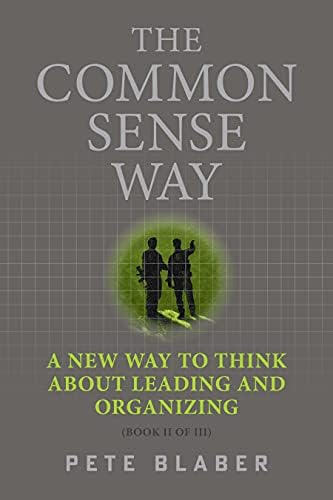
The Common Sense Way explains the biological foundations of decision-making, requiring extensive research into neuroscience to make complex brain science accessible to eighth-grade reading levels.


These notes may contain occasional inaccuracies. Learn how podbrain notes are made


.svg)