
Pete Blaber - Part 1: Delta Force Commander on Roberts Ridge: The Battle of Takur Ghar
Colonel Pete Blaber (retired) commanded at every level of Delta Force, serving as interim commander during the Iraq invasion. His operational experience spans Panama, Colombia, Somalia, the Balkans, Afghanistan, and Iraq, making him one of the most combat-experienced special operations leaders of his generation.

Episode


- 01
Delta Force operated on three guiding principles: understand what's going on around you, blend in anywhere, and the only failure is a failure to try
- 02
The Ukraine war started with a U.S.-orchestrated coup in 2014, leading to 1.25 million Ukrainian military deaths by 2025 - Blaber
- 03
Operation Anaconda's failures stemmed from disconnected command structures micromanaging battlefield decisions from remote locations thousands of miles away
- 04
Pre-digital childhood development created superior problem-solving abilities through unstructured challenges, adaptive risk calculation, and trusting one's senses
- 05
Pablo Escobar was killed by Colombian forces using U.S.-provided direction-finding equipment after voice-matching his cell phone calls to his son
- 06
Modern military TOCs should support ground forces, not command them - 'the TOC's job is to support the guys on the ground' - Blaber
- 07
Bosnia operations invented the Kevlar tennis net vehicle-stopping device, successfully capturing Serbian war criminals through innovative tactics
- 08
Helicopter-centric assault planning eliminates creative problem-solving and guarantees loss of surprise in combat operations
Get the latest ideas from The Shawn Ryan Show.
Plus the best new takeaways about military & strategy from other top podcasts — read in minutes, not hours.
By continuing, you agree to podbrain's Terms and Privacy Policy.
These notes may contain occasional inaccuracies. Learn how podbrain notes are made
Colonel Pete Blaber (retired) commanded at every level of Delta Force, serving as interim commander during the Iraq invasion. His operational experience spans Panama, Colombia, Somalia, the Balkans, Afghanistan, and Iraq, making him one of the most combat-experienced special operations leaders of his generation.
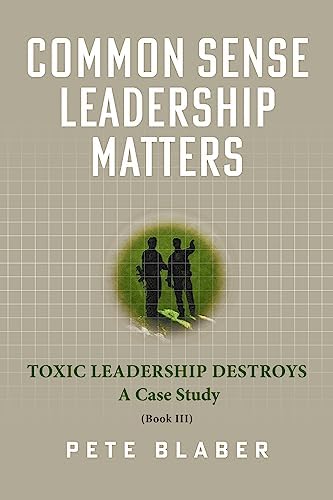
Blaber is the author of The Mission, The Men and Me and Common Sense Leadership Matters, both focusing on leadership principles derived from decades of special operations experience. His approach emphasizes common sense decision-making over bureaucratic processes.
The conversation covers Blaber's early military career, his role in hunting Pablo Escobar in Colombia, war criminal captures in Bosnia, and his controversial perspective on the Ukraine conflict. He argues that modern military command structures have become dangerously disconnected from battlefield realities.
A significant portion focuses on Operation Anaconda and the Battle of Takur Ghar, where Blaber served as AFO (Advanced Force Operations) commander. His account challenges official narratives about the deaths of Navy SEAL Neil Roberts and Air Force CCT John Chapman, attributing the tragedy to micromanagement from remote command centers.
Pre-Digital Childhood and Military Foundation
Growing up in Oak Park, Illinois as one of nine children in an Irish Catholic family provided foundational experiences that shaped Blaber's approach to problem-solving and leadership.
Psychological studies show pre-digital childhoods developed three critical abilities: unstructured problem solving, adaptive risk calculations, and believing in your senses - all essential for special operations.
At Southern Illinois University, Blaber purchased Be Expert with a Map and Compass by Bjorn Kellstrom, his first book bought with his own money, learning terrain navigation in the Shawnee National Forest.
The 1980 Iran hostage rescue failure at Desert One motivated Blaber to join the military, specifically seeking assignment to units that conduct the toughest missions.
Delta Force Selection and Common Sense Culture
Delta Force operated on three guiding principles that Blaber used on every mission: understand what's going on around you, blend in anywhere, and the only failure is a failure to try.
The unit's culture emphasized common sense over standard operating procedures, with no rigid SOPs for building clearing or formations - everything was mission-adaptive.
During selection, psychological interviews used empty manila folders as props to observe candidates' reactions under pressure, testing honesty and composure rather than catching lies.
A leadership climate emerges from the sum total of choices made by all leaders in the system, not just the senior commander - requiring constant maintenance and pruning of toxic elements.
Colombia Operations and Pablo Escobar
The Colombian HRT (Agrupación) killed Pablo Escobar using U.S.-trained direction-finding equipment after voice-matching his cell phone calls to his son in Bogotá.
Blaber's first major intelligence breakthrough came from attending an embassy party where he spotted suspected Cali cartel members, leading to the capture of the Oriela brothers.
The mission required blending into embassy culture while maintaining operational security: 'I had to wear a suit every day and comport myself so State Department and CIA weren't calling you a knuckle-dragger' - Blaber.
Success required getting personnel out of Bogotá to where narco-trafficking actually occurred, emphasizing the principle of interacting with the environment rather than remote analysis.
Bosnia War Criminal Hunts and Innovation
Bosnia served as a 'living laboratory' for developing human hunting techniques, with Delta Force capturing seven to eight indicted war criminals between 1995-1999.
The unit invented the 'Kevlar tennis net' vehicle-stopping device, successfully capturing a Serbian general by anchoring the net to bridge abutments around a curve.
Blending in required adopting local dress codes: 'blue jeans, a white t-shirt, and a leather jacket' with cigarettes, while using creative camouflage for surveillance equipment.
Bureaucratic command structures led to the Russians seizing Pristina airfield while NATO spent 96 hours in planning cycles, demonstrating the failure of hierarchical decision-making.
Afghanistan AFO Operations and Enemy Location
General Franks gave Blaber the mission statement: 'Go find the enemy, and then kill or capture him' - providing complete operational freedom for 45 AFO personnel.
Intelligence from imprisoned Al-Qaeda trainer Ali Mohammed provided the key: 'Ask the shepherds because they have to have lamb meat to survive' and similar guidance for finding Arabs in Afghanistan.
A shepherd led AFO forces to the Shahikot Valley by pointing to 'daunting palisades' and saying two words: 'Shahi Kot' - the location where Al-Qaeda was hiding.
Process of elimination narrowed Afghanistan's 645,000 acres to Pashtun areas, then eliminated desert flats and high altitude zones, focusing on areas with 'urban umbilical cords.'
Operation Anaconda Command Failures
The battle opened successfully with AFO teams calling in fire on 37 targets and killing 50-100 enemy fighters while remaining uncompromised on three observation posts.
JSOC commander General Trabone attempted to change command and control mid-battle, ordering Blaber: 'I'm sending the SEALs down tonight. Put them in by tomorrow night, and that's an order.'
The decision violated common sense principles by inserting unacclimated personnel without proper preparation time: 'We all went to Mogadishu with skateboard helmets on' - highlighting equipment lessons learned.
General Hagenbach demonstrated proper leadership by changing his mind when presented with new information, choosing to continue the battle rather than withdraw.
Takur Ghar Tragedy and Micromanagement
Neil Roberts fell from a Chinook helicopter on Takur Ghar after the aircraft took heavy fire from an RPK machine gun and RPGs positioned in a hardened bunker.
A field artillery major with no combat experience, located 1,000 miles away, took command and repeatedly ordered 'assault' - confusing Air Force CCT John Chapman about the mission.
Three helicopters landed in the exact same location despite enemy fire, with the remote commander failing to order offset landing zones or coordinate with ground forces.
Jason Cunningham bled out on the mountain after JSOC denied medevac requests: 'We've already lost two, and the risk is not worth it' - despite Blaber's guarantee the LZ was secure.
Ukraine War Analysis and Propaganda
The Ukraine war began with a U.S.-orchestrated coup in 2014, with Victoria Nuland admitting the U.S. spent $5 billion in USAID funds to create fake Maidan protests.
Between 2014-2021, 14,000 ethnic Russian civilians were killed in eastern Ukraine through artillery and drone attacks, constituting ethnic cleansing according to Blaber.
Current Ukrainian casualties stand at 1.25 million soldiers killed, with forces losing approximately 1,000 men daily throughout 2025, based on hacked Ukrainian MOD databases.
The conflict represents the same disconnected command structure problems, with U.S. and British generals micromanaging operations from Wiesbaden while Ukrainian forces are forced into conscription.


These notes may contain occasional inaccuracies. Learn how podbrain notes are made


.svg)