
Joe Kent - His Message to President Trump on Ending the War With Iran
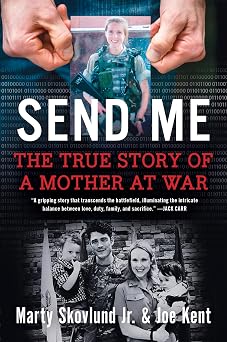
Joe Kent, former director of the National Counterterrorism Center, retired Green Beret with 11 combat deployments, and author of Send Me, The True Story of a Mother at War, resigned from the Trump administration last week in protest of the Iran war. Kent...

Episode


- 01
Joe Kent resigned from his National Counterterrorism Center position, stating the administration was influenced by Israeli officials to strike Iran
- 02
Iran denies Trump's claims of ongoing negotiations, calling them 'psychological warfare intended to manipulate energy prices and markets'
- 03
The U.S. has spent $18-25 billion on the Iran conflict while Israel spent only $6.4 billion since March
- 04
NCTC identified 18,000 known suspected terrorists with access to America due to four years of open borders
- 05
Polymarket shows 13% chance of U.S. forces entering Iran by March 31st and 19% chance of ceasefire
- 06
Kent argues restraining Israel is the only path to peace: 'We have to take away the resources they have to go on offense'
- 07
The Straits of Hormuz closure threatens 20-25% of world oil supply, risking global economic depression and famines
- 08
All 18 U.S. intelligence agencies agreed Iran's fatwa against nuclear weapons was holding until recent escalation
Get the latest ideas from The Shawn Ryan Show.
Plus the best new takeaways from other top podcasts — read in minutes, not hours.
By continuing, you agree to podbrain's Terms and Privacy Policy.
These notes may contain occasional inaccuracies. Learn how podbrain notes are made
Joe Kent, former director of the National Counterterrorism Center, retired Green Beret with 11 combat deployments, and author of Send Me, The True Story of a Mother at War, resigned from the Trump administration last week in protest of the Iran war. Kent served as a CIA paramilitary officer, member of a classified special missions unit, and earned six Bronze Stars before becoming President Trump's foreign policy advisor.
The conversation covers Kent's resignation letter citing Israeli influence on U.S. decision-making, the current state of U.S.-Iran relations, and the broader implications for American foreign policy. Kent argues the administration was manipulated into conflict through Israeli lobbying and media campaigns that moved the red line from 'no nuclear weapons' to 'no enrichment,' despite Iran's religious prohibition on nuclear weapons holding since 2004.
The discussion examines the economic and strategic costs of the conflict, with the U.S. spending up to $25 billion compared to Israel's $6.4 billion, while the Straits of Hormuz closure threatens global energy supplies. Kent warns of domestic security risks from 18,000 suspected terrorists who entered during four years of open borders, and questions the FBI's investigation priorities given ongoing threats to homeland security.
The Resignation: Israeli Influence on Iran Policy
Kent resigned after concluding the administration was 'slow walked and then rapidly entering this war' due to Israeli government influence and media pressure that moved the red line from no nuclear weapons to no enrichment.
"They tell me things our own government won't tell me" - Lindsey Graham describing his meetings with Israeli intelligence, while Netanyahu 'showed the president intelligence that persuaded Trump to go ahead.'
The U.S. has spent $18-25 billion on the conflict with another $200 billion requested from Congress, while Israel spent only $6.4 billion since March.
Iran immediately denied Trump's claims of productive conversations, with their foreign ministry calling it 'psychological warfare intended to manipulate energy prices, markets, and buy him time.'
The Intelligence Manipulation: Moving the Red Line
All 18 U.S. intelligence agencies agreed Iran's fatwa against nuclear weapons was holding, with no assessment they were making nuclear weapons until the recent conflict escalation.
Israeli officials bypassed normal intelligence channels, telling decision makers 'this isn't in intelligence channels yet' to avoid analytical tradecraft and vetting processes.
The red line shift from 'no nuclear weapons' to 'no enrichment' was driven by Israeli surrogates in media, think tanks like Foundation for Defense of Democracies, and Fox News talking heads.
"The only American official who ever said America's policy is zero enrichment was Mike Pompeo in the first Trump administration" - Kent explaining how this became falsely portrayed as established U.S. policy.
Strategic Consequences: Straits of Hormuz and Global Impact
The Straits of Hormuz carries 20-25% of world oil supply, with closure threatening global economic depression and famines due to fertilizer shortages from petrochemicals.
China benefits by purchasing Iranian oil in Yuan rather than dollars, while Russia profits from higher energy prices funding their war efforts.
The conflict weakens the petrodollar system as Gulf Cooperation Council countries question U.S. security guarantees after being unable to defend against Iranian missiles and drones.
Massive trading activity occurred minutes before Trump's Iran announcement: $1.5 billion in S&P 500 futures purchased and $192 million in oil futures sold, netting $60 billion in profits.
Homeland Security Risks: Open Borders and Sleeper Cells
NCTC identified 18,000 known suspected terrorists with access to America, with Kent stating 'the more we dug into the data of the last four years, the more I realized we have no idea who's in our country.'
The main threat comes from individuals inspired by media content rather than organized cells, as lone actors are harder to detect than communicating cells.
Recent attacks include a shooter in Texas wearing an Iran t-shirt who killed three people, demonstrating the domestic blowback from Middle East conflicts.
Kent warns that war creates opportunities for expanding surveillance state and civil liberty infringements: 'the more people are scared of what's happening, the easier that is to sell.'
Assassination Attempts and Security Concerns
Two days before the Butler assassination attempt, the FBI arrested Asaf Murshant for an Iranian plot to assassinate Trump using a sniper, but Kent was blocked from investigating potential linkages.
Multiple security breaches occurred after Trump took office, including UN escalator stoppage, Code Pink protesters at dinner, and an armed police officer circumventing Secret Service.
Charlie Kirk, who lobbied against the Iran war, was assassinated in September, but NCTC was stopped from thoroughly investigating foreign connections to the case.
Tucker Carlson's team found Thomas Crooks' full online persona with overseas communications, despite FBI claims they found 'nothing there' on his devices.
Military Strategy and Ground Force Deployment
Kent warns against seizing Karg Island: 'It would essentially be giving Iran a bunch of hostages on an island that they could barrage with drones and missiles.'
Israel lacks capability for meaningful ground operations in Iran, meaning 'any kind of meaningful hold ground, even for a limited amount of time, that would have to be American boots.'
The U.S. has deployed approximately 25,000 troops to the region while Israel sent far fewer, with most Israeli operations limited to air support heavily funded by America.
Kent argues the administration lacks clear strategic goals beyond a 'punchlist of things we want to bomb' while Israel has the clear objective of complete regime change.
Path Forward: Restraining Israel and Diplomatic Solutions
"The number one thing we have to do in order to get out of this is to restrain the Israelis and get our relationship with Israel straight" - Kent's primary recommendation.
Kent proposes telling Israel: 'you're done going on the offense. We will tell you what operations you can conduct' while maintaining defensive capabilities only.
The solution requires using Gulf allies like Omanis and Qataris to bring Iran to negotiations, offering sanctions relief and oil market access as incentives.
Kent believes Trump can solve this through 'drastic action' but warns 'it gets harder and harder every day that goes on' without decisive intervention.
These notes may contain occasional inaccuracies. Learn how podbrain notes are made


.svg)