
Butch Wilmore - He Was Stranded in Space for 286 Days
Butch Wilmore is a recently retired NASA astronaut and U.S. Navy captain with over 8,000 flight hours, 663 carrier landings, and 464 consecutive days in space. He flew combat missions during Desert Storm in A-7 Corsairs and F-18 Hornets, later becoming a test pilot before joining NASA's astronaut corps. His most...


- 01
Wilmore spent 464 consecutive days in space, with 286 days unplanned due to Starliner thruster failures during the first crewed test flight
- 02
During Starliner's approach to ISS, five thrusters failed sequentially, leaving zero fault tolerance for six-degree-of-freedom spacecraft control
- 03
"I can't believe we do this" and "don't get famous" - Wilmore's constant thoughts during 32 hours of spacewalks in $5-7 million spacesuits
- 04
Boeing knew about helium leaks before launch; by mission end, seven of eight manifolds had developed leaks of some sort
- 05
NASA initially classified the mission as a "high visibility close call" without consulting the pilot who controlled the spacecraft during failures
- 06
"Our Lord is sovereign. He's in control" - Wilmore's faith-based approach to handling the unexpected 286-day space extension
- 07
Crew had to build makeshift seats in SpaceX Dragon using foam and available materials as backup escape option from failing Starliner
- 08
Mars missions face near-impossible physics: atmosphere only 1/100th Earth's density makes slowing massive human payloads extremely difficult
Get the latest ideas from The Shawn Ryan Show.
Plus the best new takeaways about space from other top podcasts — read in minutes, not hours.
By continuing, you agree to podbrain's Terms and Privacy Policy.
These notes may contain occasional inaccuracies. Learn how podbrain notes are made
Butch Wilmore is a recently retired NASA astronaut and U.S. Navy captain with over 8,000 flight hours, 663 carrier landings, and 464 consecutive days in space. He flew combat missions during Desert Storm in A-7 Corsairs and F-18 Hornets, later becoming a test pilot before joining NASA's astronaut corps. His most recent mission was commanding Boeing's Starliner on its first crewed test flight.
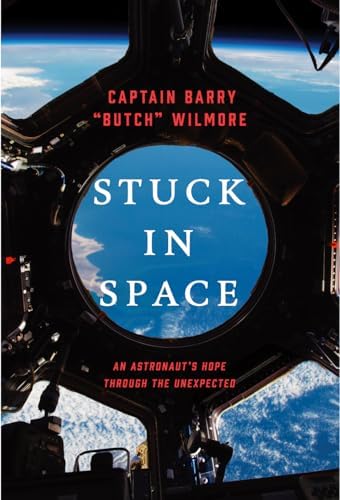
What began as an 8-day certification mission to the International Space Station became a 286-day ordeal when multiple thruster failures left Starliner unsafe for crew return. Wilmore and pilot Sunita Williams were ultimately brought home on a SpaceX Dragon after NASA reclassified the mission from a "close call" to a Type A mishap. His experience forms the basis of his book Stuck in Space An Astronauts' Hope Through the Unexpected, written initially for his daughters but published to offer encouragement through life's unexpected challenges.
From Tennessee Football to Naval Aviation
Wilmore grew up in Mount Juliet, Tennessee, describing himself as "the most mischievous kid in the county" who needed the stability of church and strong coaching mentors who instilled the mantra "you got to want it."
Despite being "small, slow, and weak" for football, Wilmore's determination allowed him to play college football while majoring in electrical engineering at Tennessee Tech - "two full-time jobs" requiring immense dedication.
The Navy initially rejected Wilmore multiple times due to knee surgery and vision issues, taking nearly two years of persistence before final acceptance into Naval Aviation Officer Candidate School.
Marine Corps Drill Instructor Gunnery Sergeant Tiberius Gerhardt, nicknamed "the evil one," instilled discipline and mental toughness that Wilmore credits with saving his life multiple times in future combat situations.
Combat Flying and Carrier Operations
Wilmore was assigned to the A-7E Corsair II despite it not being on his preference list, but the single-seat attack aircraft became "the best thing that could have happened" during Desert Storm operations.
Carrier landings require hitting a 300-foot rollout area at full power every time - "if you pull power when you touch down, that's called a cut pass" and two cut passes typically end a carrier aviation career.
On his first night combat mission, Wilmore had three surface-to-air missiles fired at him, including navigating to the wrong target due to "fog of war" while under fire over Iraq.
"This is Romans 13" - Wilmore justifies combat actions as an extension of government authority to keep evil at bay, referencing Romans 13 to distinguish between murder and legitimate military force.
Flying F-18s allowed the complete combat cycle: "Fight your way in, air-to-air mode. Switch to air-to-ground mode, bombs on target, on time, pull off target, fight your way out."
Transition to NASA and Astronaut Training
After four NASA applications over eight years, Wilmore was selected following an intensive interview process where he spent months practicing talking about himself aloud to his wife during cross-country drives.
"Know everything and perform it well" - the initial NASA instructor's mandate that seemed impossible but represented the necessary mindset for human spaceflight operations.
Wilmore became the first Space Shuttle pilot to perform spacewalks, accumulating over 32 hours outside in five EVAs using $5-7 million spacesuits that are "one-man space capsules shaped like a person."
"I can't believe we do this" and "don't get famous" were Wilmore's constant thoughts during spacewalks, emphasizing the mental focus required for every movement in the vacuum of space.
Starliner Mission: From Sports Car to Crisis
Day one of Starliner operations was exceptional - Wilmore described the spacecraft as a "sports car" with precision control, able to point at individual stars on the American flag with manual flying capabilities.
Starting day two, thrusters began failing sequentially during approach to ISS: "We lose an aft firing thruster... then a second thruster... then a third thruster. Now we're zero fault tolerant to maintaining six degree of freedom control."
After losing four thrusters, Wilmore had to relinquish manual control to allow ground teams to send test firings to failed thrusters - "very challenging" to maintain position and attitude without touching controls.
The root cause was determined to be Teflon seals deforming from overheating, restricting propellant flow and causing the computer's Fault Detection Indication Response (FDIR) system to disable thrusters.
"Even before we docked, I'm like, chances are very slim of us coming back in this spacecraft" - Wilmore recognized early that the thruster problems would be nearly impossible to fully characterize and fix.
286 Days of Unexpected Space Station Life
Boeing knew about one helium leak before launch, but "by the time the spacecraft returns, seven of those eight manifolds had a leak of some sort in it" - demonstrating the mission's cascading problems.
The crew had to build makeshift seats in the SpaceX Dragon using foam and available materials, with medical doctor Mike Barrett doing much of the engineering work to create a backup escape option.
Wilmore survived the first four months eating food that previous crews had discarded as "trash" - surplus meals that were perfectly good but set aside for disposal.
Daily life included constant maintenance, science experiments, and 2.5 hours of mandatory exercise to prevent muscle atrophy and bone decalcification in zero gravity.
"I tied into my church every Sunday" - Wilmore maintained spiritual discipline through video calls, singing and worshiping with his congregation from his corner module on the space station.
Faith, Family, and Perspective in Crisis
"I am content. My Lord is working out his plan and his purpose for his glory and ultimately my good if I believe" - Wilmore's response when asked about his biggest takeaway from the extended mission.
Drawing from Philippians 46-7, Wilmore explained his calm demeanor: "Be anxious for nothing, but everything by prayer and supplication with thanksgiving, let your request be made known unto God."
"I'm not going to fret over things that I can't control. That is not beneficial to me or anybody around me" - Wilmore's leadership philosophy prevented family anxiety during the crisis.
Referencing James on trials and tribulations, Wilmore noted that difficulties are beneficial for growth: "Iron sharpens iron. You don't get that unless you touch each other."
Stuck in Space An Astronauts' Hope Through the Unexpected was written for his daughters but published "because of two words: encouragement and perspective" to help others through unexpected challenges.
NASA Classification Controversy and Mars Challenges
NASA initially classified the mission as a "high visibility close call" without consulting Wilmore, who controlled the spacecraft during failures - "How do you make that assessment?" he questioned.
The classification was later changed to Type A mishap, the same level as Challenger and Columbia accidents, after Wilmore voiced concerns about the decision-making process up the chain of command.
Mars missions face nearly impossible physics: the atmosphere is "about 1/100th the density of our atmosphere," making it extremely difficult to slow down the massive payloads required for human missions.
"It would take six supersonic parachutes the size of six football fields to slow down enough" - Wilmore's assessment from serving on an interplanetary landing evaluation team highlights Mars landing challenges.
Referencing Genesis 4 regarding early human innovation, Wilmore sees no scriptural conflict with space exploration: "The Lord has given us this ingenuity, this mind to go forward."









These notes may contain occasional inaccuracies. Learn how podbrain notes are made
More in Culture & Entertainment

#316 Brian Keating - Brian Keating - The First Object Ever Found From Another Solar System
Jun 25, 2026
#2518 - Tim Dillon
Jun 24, 2026
#2517 - Taylor Sheridan
Jun 23, 2026#315 Sadhguru - Stop Letting Your Mind DESTROY You
Jun 22, 2026
JRE MMA Show #181 with Justin Gaethje & Trevor Wittman
Jun 20, 2026
.svg)