
#316 Brian Keating - Brian Keating - The First Object Ever Found From Another Solar System
In this episode, host Sean Ryan sits down with Dr. Brian Keating, the Chancellor's Distinguished Professor of Physics at UC San Diego, inventor of the BICEP telescope, and author of Losing the Nobel Prize. Keating is also the host of the "Into the Impossible" podcast, named...


- 01
Physicist Brian Keating remains highly skeptical of recent government UAP disclosures, citing a complete lack of verifiable physical evidence and scientific data.
- 02
In Losing the Nobel Prize, Keating details how the BICEP2 telescope team mistakenly announced detecting primordial gravitational waves, which actually turned out to be cosmic dust.
- 03
Galileo Galilei's Sidereus Nuncius revolutionized humanity's view of the cosmos by revealing craters on the Moon and moons orbiting Jupiter using a stabilized telescope.
- 04
Drawing from The Denial of Death, Keating argues that humanity's obsession with legacy, space colonization, and AI stems from a primal fear of mortality.
- 05
Despite claims in books like Imminent, Keating suggests that many supposed physics-defying UAP encounters could actually be advanced military radar-spoofing technologies.
- 06
The Fermi Paradox asks why we have found no evidence of alien civilizations despite the billions of stars in our galaxy, as discussed in The God Delusion.
- 07
Keating offers 250 actual meteorites to military personnel with APO addresses to foster curiosity, accessible at a dedicated website he created for the show.
- 08
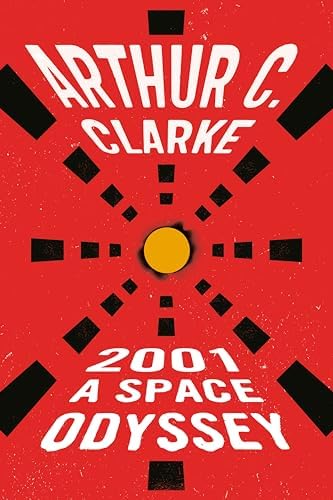
Arthur C. Clarke's 2001 A Space Odyssey serves as the inspiration for Keating's "Into the Impossible" podcast, celebrating the limits of human imagination and scientific discovery.
Get the latest ideas from The Shawn Ryan Show.
Plus the best new takeaways about science from other top podcasts — read in minutes, not hours.
By continuing, you agree to podbrain's Terms and Privacy Policy.
These notes may contain occasional inaccuracies. Learn how podbrain notes are made
In this episode, host Sean Ryan sits down with Dr. Brian Keating, the Chancellor's Distinguished Professor of Physics at UC San Diego, inventor of the BICEP telescope, and author of Losing the Nobel Prize. Keating is also the host of the "Into the Impossible" podcast, named after a concept by Arthur C. Clarke, author of 2001 A Space Odyssey.
The conversation spans a wide array of topics, beginning with a critical evaluation of recent government UAP disclosures and books like Luis Elizondo's Imminent. Keating explains how advanced military radar-spoofing technology could easily mimic physics-defying phenomena. They also discuss Galileo's historic 1609 military telescope and his groundbreaking work Sidereus Nuncius, which challenged the geocentric model of the universe.
Finally, Keating shares his personal journey from atheism back to practicing Judaism, his perspective on the Fermi Paradox, and the psychological drivers of human legacy as explored in Ernest Becker's The Denial of Death. He also addresses secular dogmatism, referencing Richard Dawkins's The God Delusion, and explains why taking a weekly Sabbath is a vital practice for high performers.
The Skeptical Physicist's View on UAP Disclosures
Brian Keating expresses deep disappointment with recent government UAP disclosures, describing them as a "nothing burger" lacking any verifiable scientific data.
Keating notes that while books like Imminent by Luis Elizondo tease major revelations, they rely on hearsay rather than physical evidence. "If these things never go the full distance, they never produce the evidence." - Brian
The timing of major alien disclosures often coincides with politically inconvenient events, suggesting they function as "bread and saucers" to distract the public.
Keating introduces the concept of "aliens of the gaps," comparing the modern, almost religious worship of UAPs and AI to ancient human impulses of creating gods.
Antarctica, the South Pole, and Extreme Science
Keating built the BICEP telescope at the South Pole, Antarctica, which he describes as an otherworldly, isolated environment with only about 800 people during the winter.
The South Pole is a true continent with 9,500 feet of ice sitting on top of rock, unlike the North Pole which has no landmass.
Travel to the South Pole is highly restricted, requiring intense psychological and physical screenings, including preemptive dental extractions to avoid medical emergencies.
Temperatures at the South Pole can drop to -100°F, which freezes hydraulic fluid and JP-8 fuel, making winter plane landings impossible.
Galileo's Telescope and the Birth of Military Optics
Galileo Galilei did not invent the telescope, but he improved its magnification by 10x and published his findings in Sidereus Nuncius.
Galileo made the telescope better by "stopping down" the aperture with a brass disc to focus light and inventing the tripod for stability.
The telescope was initially marketed to the Venetian military as a tactical tool to spot enemy ships three days before they arrived.
Galileo's observations of craters on the Moon and moons orbiting Jupiter shattered the 2,000-year-old Aristotelian belief that the Earth was the center of the universe.
Radar Spoofing and the Physics of Deception
Many UAP sightings that appear to defy the laws of physics could be explained by advanced military radar-spoofing and electronic warfare technologies.
During World War II, physicist Luis Alvarez invented a radar-spoofing system that transmitted a weaker signal as a plane got closer, tricking German U-boats into thinking the target was moving away.
Keating highlights the "Feynman point" in the mathematical constant pi—where six 6s appear in a row at the 762nd decimal place—as an example of natural coincidence that looks designed.
"Occam's razor suggests the simplest hypothesis isn't always correct, but it's more likely than an outlandish scenario." - Brian
How Cosmic Dust Cost a Physicist the Nobel Prize
In his book Losing the Nobel Prize, Keating recounts the 2014 BICEP2 experiment where his team prematurely claimed to have detected primordial gravitational waves from the Big Bang.
The team's historic announcement was later retracted when they realized the signal they detected was actually polarized cosmic dust from supernovas.
Supernovas fuse elements up to iron and nickel, dispersing these magnetic particles across the cosmos. "We all bleed the same iron that came from a supernova." - Brian
Keating emphasizes Richard Feynman's warning: "The first principle in science is that you shouldn't fool yourself, but the second principle is that you should think that you're the easiest person to fool." - Brian
The Return to Faith and the Power of the Sabbath
Keating transitioned from childhood Catholicism to atheism, but returned to practicing Judaism after the events of September 11, 2001.
He criticizes the dogmatic nature of modern scientific atheism, noting that books like The God Delusion by Richard Dawkins often attack a simplified caricature of religion.
Keating strongly advocates for high-performing individuals to observe a weekly Sabbath to disconnect from technology and focus on family. "If you cannot do that, you are a slave. You're a rich slave." - Brian
In Hebrew, Israel means "to struggle with God," which Keating embraces by approaching his faith with the same rigorous questioning he applies to physics.
The Fermi Paradox and the Denial of Death
The Fermi Paradox asks "Where is everybody?" given the mathematical probability of billions of habitable planets in the galaxy.
One theory suggests the average lifetime of a technological civilization is only 5,000 years before they destroy themselves through warfare.
Drawing on Ernest Becker's The Denial of Death, Keating explains that human drives for space colonization, AI, and legacy are attempts to transcend our mortality.
Alfred Nobel established the Nobel Prizes after a premature obituary labeled him the "merchant of death" for inventing dynamite, prompting him to redefine his legacy.


These notes may contain occasional inaccuracies. Learn how podbrain notes are made


.svg)