
Jeremy Slate - The Fatal Decisions That Doomed the Entire Roman Empire
Jeremy Ryan Slate, CEO and co-founder of Command Your Brand podcast PR agency, host of the Jeremy Ryan Slate Show, best-selling author and Roman history expert, joins to explore the parallels between Rome's collapse and modern America's trajectory.

Episode


- 01
Rome's collapse followed a 300-year pattern starting with Marcus Aurelius naming his unqualified son Commodus emperor in 180 AD
- 02
By 284 AD, Rome experienced 15,000% inflation as their silver coins went from 95% pure to just 5% pure bronze
- 03
The Praetorian Guard killed approximately 17 different emperors, functioning as a shadow government that made and unmade rulers
- 04
Constantine fixed Rome's currency by gradually minting gold coins from 314-336 AD, creating a stable currency that lasted until 1000 AD
- 05
In the crisis of the third century (238-284 AD), 27 different men claimed to be emperor in a 50-year period
- 06
The 1913 Federal Reserve Act, 16th Amendment income tax, and 17th Amendment direct election of senators transformed America from republic to empire
- 07
Rome gave 30 million people citizenship overnight in 212 AD under Emperor Caracalla to increase tax revenue, devaluing citizenship
- 08
The 4-Hour Workweek was one of the first business books that influenced the host's entrepreneurial journey starting in 2014
Get the latest ideas from The Shawn Ryan Show.
Plus the best new takeaways about history from other top podcasts — read in minutes, not hours.
By continuing, you agree to podbrain's Terms and Privacy Policy.
These notes may contain occasional inaccuracies. Learn how podbrain notes are made
Jeremy Ryan Slate, CEO and co-founder of Command Your Brand podcast PR agency, host of the Jeremy Ryan Slate Show, best-selling author and Roman history expert, joins to explore the parallels between Rome's collapse and modern America's trajectory.
The conversation examines the three-part pattern of societal collapse that Slate calls 'the Roman pattern': monetary debasement and inflation, immigration and border control failures, and short-sighted political leadership focused only on immediate power.
Slate traces Rome's 2,000-year history from kingdom (753-509 BC) through republic (509-31 BC) to empire (31-476 AD in the West, until 1453 in the East), focusing particularly on the crisis of the third century when the empire nearly disintegrated.
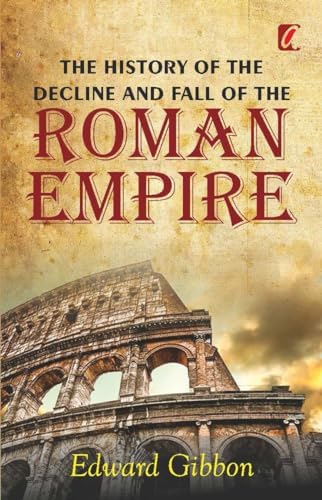
Drawing from The History of the Decline and Fall of the Roman Empire by Edward Gibbon and The Roman Revolution by Ronald Syme, the discussion reveals how Rome's political breakdown created conditions for imperial rule, much like modern America's transformation since 1913.
The Roman Pattern: Three Pillars of Civilizational Collapse
Slate identifies three consistent patterns in collapsing empires: monetary debasement, immigration/border failures, and short-sighted political leadership focused on immediate power rather than long-term stability.
"If you fix your money, you could do all the other stuff a lot longer" - Slate, though both agree America likely cannot fix its monetary system at this point.
The pattern applies across civilizations including the Eastern Roman Empire, Mongol Empire, and Weimar Germany, where people needed wheelbarrows of money to buy bread by the time they reached the store.
Rome's Monetary Collapse: From Silver to Bronze
Roman silver coins went from 95% pure in the first century to just 5% pure bronze by the late 270s AD, representing 15,000% inflation by 284 AD.
The crisis began when Septimius Severus doubled military pay in 193 AD, starting a pattern where each new emperor would double, triple, or quadruple legion salaries to secure loyalty.
Constantine successfully restored monetary stability by gradually minting gold coins from repossessed pagan temples between 314-336 AD, creating a currency that remained stable until 1000 AD.
Black markets emerged as people refused debased currency, returning to barter systems trading sheep for grain, while the wealthy hoarded gold knowing bronze coins were worthless.
The Praetorian Guard: Rome's Deep State Shadow Government
The Praetorian Guard killed approximately 17 different emperors, functioning as a combination of "the Supreme Court, CIA, FBI, and Secret Service" with power to make and unmake rulers.
In 193 AD, the Praetorian Guard literally auctioned the empire to the highest bidder, selling it to Pertinax who was killed after 80 days, then putting it up for sale again.
Their loyalty was purely transactional based on political positioning and personal benefit, not public interest or constitutional duty - they were "the power of the deep state behind the throne."
Constantine finally disbanded the Praetorian Guard in 311 AD, executing some members and exiling others after taking power.
The Crisis of the Third Century: 27 Emperors in 50 Years
Between 238-284 AD, 27 different men claimed to be emperor in what's called the crisis of the third century, with most ruling only months or a few years before being killed.
The empire literally broke apart with the Gallic Empire in the West under Posthumus and Palmyra in the East under Queen Zenobia, while barbarian invasions increased due to broken agreements.
Emperor Aurelian reunified the entire empire in just five years during the 270s, only to be assassinated by his own secretary, showing how being emperor had become a death sentence.
The last emperor to rule 20 years was Severus Alexander who died in 238 AD - this wouldn't happen again until Diocletian in 284 AD due to constant civil wars.
Immigration and the Loss of Roman Identity
Roman citizenship was extremely valuable, granting rights like St. Paul's ability to appeal directly to the emperor, but Emperor Caracalla gave 30 million people citizenship overnight in 212 AD purely for tax revenue.
The military became increasingly barbarian as Romans stopped reproducing - Augustus had to create financial incentives for wealthy Romans to have children because they'd stopped procreating.
By the third century, barbarian tribes lived within Roman borders but maintained their tribal identities rather than integrating, creating enclaves that didn't consider themselves Roman.
"The real immigration conversation is they were so busy fighting each other, like our politicians now... they're more worried about fighting each other" than securing borders - Slate.
America's Transformation: From Republic to Empire in 1913
Three pivotal changes in 1913 transformed America: the Federal Reserve Act (a private banking cartel), the 16th Amendment (income tax), and the 17th Amendment (direct election of senators).
The 17th Amendment eliminated state representation in the Senate, making both chambers elected by popular vote rather than having states select senators to represent their interests.
"We haven't been a functional republic in a very long time. There's still some remnants of it, some vestiges of it, but we have not been a functional republic in a very long time" - Slate.
Modern presidents rule by executive order like Roman emperors, with executive power far outweighing the other branches - "Bush did it. Obama did it. Trump has done it."
The Path Forward: Lessons from Constantine's Reforms
"We got to fix our currency. I think that's the bigger problem. If we don't fix currency, we are absolutely screwed" - but both agree America may be too far over its skis to implement real monetary reform.
Constantine's successful model combined monetary reform (gold standard), spiritual cohesion (Christianity), and competent governance, but required gradual implementation over decades.
Education and apprenticeships are critical - "we're turning out people that don't know how to do anything" and risk losing institutional knowledge like Romans who forgot how to maintain aqueducts.
The Fourth Turning offers insights into 40-80 year cycles that can predict societal changes, according to Slate's recommendation for understanding historical patterns.



These notes may contain occasional inaccuracies. Learn how podbrain notes are made


.svg)