
Wes Huff - This Might Be the Most Important Biblical Discovery of the 20th Century
Wes Huff, Vice President of Apologetics Canada, joins Sean Ryan to discuss faith, evidence, and the historical foundations of Christianity. Born in Pakistan to missionary parents, Huff spent his childhood in the Middle East before experiencing a medically unexplained healing from paralysis at age 12. Now a Reformed...

Episode


- 01
Wes Huff experienced complete paralysis from acute transverse myelitis at age 11, then miraculously walked after exactly one month with doctors calling it medically unexplainable
- 02
The Dead Sea Scrolls contain 970 documents from 11 caves, preserving every Old Testament book except two with remarkable fidelity across nearly 2,000 years
- 03
Islam's Quran denies Jesus' crucifixion in Surah 4:157 despite overwhelming historical evidence, creating fundamental contradictions with established history
- 04
The Protestant Reformation's core principles are 'sola scriptura, sola gratia, sola fide' - scripture alone, grace alone, faith alone as ultimate authority
- 05
Early Christians had direct apostolic connections through figures like Irenaeus, establishing manuscript chains of custody for New Testament authenticity
- 06
Augustine's just war theory permits defensive violence to protect the weak and enact justice, distinguishing righteous warfare from aggression
- 07
The Ark of the Covenant represented God's presence on earth, fulfilled in Jesus who 'tabernacled among us' according to John 1:14
- 08
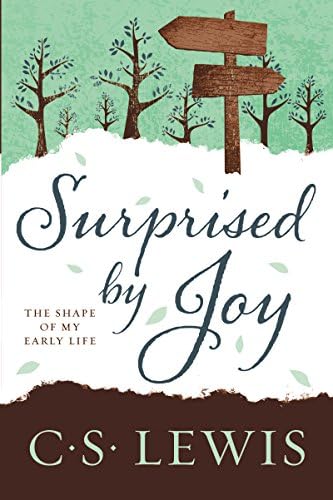
C.S. Lewis wrote in Surprised by Joy that Christianity is either infinitely important if true, or of no importance if false - never moderately important
Get the latest ideas from The Shawn Ryan Show.
Plus the best new takeaways about history from other top podcasts — read in minutes, not hours.
By continuing, you agree to podbrain's Terms and Privacy Policy.
These notes may contain occasional inaccuracies. Learn how podbrain notes are made
Wes Huff, Vice President of Apologetics Canada, joins Sean Ryan to discuss faith, evidence, and the historical foundations of Christianity. Born in Pakistan to missionary parents, Huff spent his childhood in the Middle East before experiencing a medically unexplained healing from paralysis at age 12. Now a Reformed Baptist theologian and Christian apologist, he specializes in manuscript evidence and biblical archaeology.
The conversation begins with Ryan's personal struggles about living as a Christian, questioning why moral behavior matters if salvation comes through faith alone. This leads into deeper discussions about the problem of evil, the nature of God's compassion, and how suffering fits within Christian theology. Huff draws from Jesus Calling, which Ryan reads daily, and references insights from Surprised by Joy by C.S. Lewis.
The discussion moves through Huff's miraculous healing story, his research into Islam and the Quran's historical contradictions, and the Protestant Reformation's principles. They explore the Dead Sea Scrolls' significance for biblical manuscript evidence, the formation of the biblical canon, and archaeological discoveries that support Christian claims. Throughout, Huff references scholarly work including The Case for Christ by Lee Strobel and Imagine Heaven by John Burke in contextualizing evidence for Christianity.
Wrestling with Christian Living and Divine Justice
Ryan expresses frustration about the difficulty of Christian living when salvation appears to come through faith alone, questioning why moral behavior matters if deathbed conversions are possible
Huff explains that Christians are 'not saved by works but saved for works' - salvation comes through Christ's works, but genuine faith naturally produces righteous behavior as evidence
The problem of evil doesn't disappear by removing God from the equation but becomes more complicated, as objective moral standards require a moral lawgiver
God's compassion is demonstrated through Christ's incarnation - 'the God of the Bible actually steps off his throne in eternity and into humanity' to experience human suffering firsthand
A Medical Miracle at Age Eleven
Huff was diagnosed with acute transverse myelitis just before his 12th birthday, causing complete paralysis from the waist down with doctors predicting lifelong paraplegia
After exactly one month of paralysis, Huff instinctively got out of bed and walked to his wheelchair before realizing what had happened - 'I wiggled my toe and that broke me out of the spell'
Medical professionals were the first to use the word 'miracle,' telling his family 'we really don't have an explanation' for the complete disappearance of spinal cord inflammation
The experience provided a framework for the transcendent but didn't eliminate intellectual questioning during his teenage years about Christianity's truth claims
Islam's Historical Problems with Christianity
Huff extensively studied Islam, reading the Quran, Hadith, and Sunnah during university, even participating in Ramadan Quran readings with Muslim students
The Quran's Surah 4:157 denies Jesus' crucifixion, stating 'he was not crucified, nor was he killed, but it was made to appear to them' - contradicting overwhelming historical evidence
Islamic texts contain apocryphal stories like Jesus making clay birds come alive, sourced from the Arab Infancy Gospel of Thomas rather than authentic first-century accounts
The Quran shows historical confusion, placing Haman from the Persian book of Esther into the Egyptian Exodus story, demonstrating chronological errors spanning hundreds of years
Protestant Reformation and Biblical Authority
Martin Luther's 95 Theses in 1517 challenged papal authority to sell indulgences, questioning why the Pope required payment if he truly had power to forgive sins
The Reformation's core principles are 'sola scriptura, sola gratia, sola fide, sola christus, sola deo gloria' - scripture alone, grace alone, faith alone, Christ alone, to God's glory alone
Reformers argued that 'councils err, popes err, people err, God doesn't err' - making scripture the sole infallible rule of faith and practice for the church
The printing press enabled Luther's writings to spread rapidly across Europe, with technology playing a crucial role in the Reformation's success
Dead Sea Scrolls and Manuscript Evidence
The Dead Sea Scrolls contain 970 documents discovered in 11 caves between 1947-1956, preserved for nearly 2,000 years in the arid Dead Sea environment
Every Old Testament book except two appears in the scrolls, with some showing exact fidelity to medieval manuscripts - 'the Great Isaiah Scroll' matches texts from 1,000 years later
The scrolls include a copper treasure map and pre-Christian texts describing the Messiah in divine terms, contradicting claims that Jesus' divinity was a later invention
Huff will be giving tours of the Dead Sea Scrolls exhibition at the Museum of the Bible in Washington, D.C. on March 28th, calling them 'probably the most important archaeological discoveries'
Biblical Canon Formation and Manuscript Fidelity
Early Christians had direct apostolic connections through figures like Irenaeus, whose teachers were the apostles themselves, establishing clear chains of custody for authentic texts
The four Gospels were recognized as scripture very early, with Justin Martyr referring to them as 'the memoirs of the apostles' that Christians read in morning gatherings
Manuscript collections like P46 and P45 from the late 2nd/early 3rd centuries contain the fourfold gospel canon and Paul's letters together, showing established recognition
When Huff translates ancient Greek manuscripts, he finds they match modern English Bibles so closely that 'I might as well just open this' - demonstrating remarkable textual fidelity


These notes may contain occasional inaccuracies. Learn how podbrain notes are made


.svg)