
Nick Brokhausen - The Deadliest Stories From Vietnam with MACV-SOG
Nick Brockhausen joins the show as a Green Beret veteran with a 17-year career in U.S. Special Forces, including multiple combat tours in Vietnam as part of the highly classified MAC V SOG. He served with Recon Team Habu in Command and Control North, running covert reconnaissance missions deep into enemy territory in...

Episode


- 01
Nick Brockhausen served 17 years in U.S. Special Forces, including multiple combat tours in Vietnam with the highly classified MAC V SOG running covert recon missions deep into enemy territory in Laos
- 02
RT Habu operated with just 3 Americans and 6-8 Montagnard fighters, with cumulative ground time on one target being 'a little over an hour' across four separate missions due to intense combat
- 03
MAC V SOG's original TO&E included only 1,174 Americans total, with approximately 48 people actually running ground operations - 'only half of us survived the war'
- 04
Brockhausen modified his sawed-off RPD machine gun with an oil funnel that created 'a gout of blue-green plasma out about six feet' and loaded his shotgun with five-dong brass coins that 'at close range, both barrels will blow a man in half'
- 05
The Montagnard fighters were 'the finest natural warriors I've ever seen' - semi-Iron Age tribes who 'adapted to modern warfare like ducks to water' with their primary duty being 'protect the tribe above everything else'
- 06
A recent white paper by E8 Kevin O'Connor from 10th Group proposed consolidating all special operations under one branch with warrant officer ranks to eliminate redundancy and micromanagement
- 07
Brockhausen's book Vagabonds is being developed into a Netflix series called 'American Ronin' with filming planned for fall 2025 and release in late 2026
Get the latest ideas from The Shawn Ryan Show.
Plus the best new takeaways about military & strategy from other top podcasts — read in minutes, not hours.
By continuing, you agree to podbrain's Terms and Privacy Policy.
These notes may contain occasional inaccuracies. Learn how podbrain notes are made
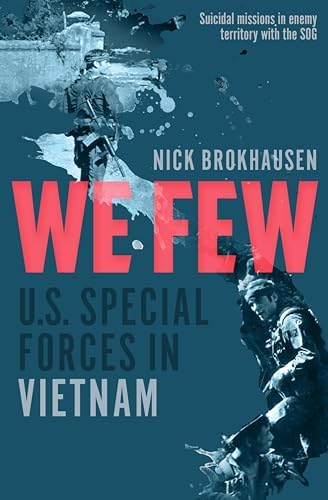
Nick Brockhausen joins the show as a Green Beret veteran with a 17-year career in U.S. Special Forces, including multiple combat tours in Vietnam as part of the highly classified MAC V SOG. He served with Recon Team Habu in Command and Control North, running covert reconnaissance missions deep into enemy territory in Laos and Vietnam. Brockhausen is the author of We Few U.S. Special Forces and co-authored Vagabonds with business partner Jeff Miller.
The conversation covers Brockhausen's childhood in rural Minnesota, his transition from Marine Corps to Army Special Forces, and his intensive combat experience with MAC V SOG. He details the brutal realities of operating with small teams in enemy territory, the exceptional capabilities of Montagnard fighters, and the high casualty rates among special operations personnel.
Brockhausen also discusses his post-military adventures documented in Vagabonds, including rescue operations in Algeria, Guatemala, Mexico, and Chechnya, as well as his current work developing the book into a Netflix series. The interview explores themes of brotherhood, loss, PTSD, and the challenges of transitioning from elite military service to civilian life.
From Farm Boy to Marine: Early Life and Military Entry
Brockhausen grew up on 640 acres in Minnesota raising cattle, hogs, chickens, and grain until 'two years of drought and another two years of floods put us out of the farming business'
His family moved to Glenwood, Minnesota, where his father opened 'a bar, hotel, and restaurant all in one building' and young Nick became 'very adept in the woods' through hunting and running trap lines
He was drafted into the Marine Corps, explaining 'in those days, you couldn't step out of the line and move over and enlist and take a three-year' commitment once designated for the draft
His Marine Corps service included tours in Vietnam and Korea during the Pueblo incident, where his company 'tracked down the last 15 survivors' of a 40-man North Korean commando unit who 'committed suicide at the last minute'
Special Forces Selection and Weapons Training
Special Forces selection consisted of three phases: Phase One at Camp McCall for basic patrolling and survival, weapons training on both foreign and U.S. systems, and Phase Three team operations
Weapons training covered 'small arms, pistols first, then submachine guns and carbines, and then rifles and machine guns' followed by heavy weapons up to the 105 Howitzer with live fire exercises
An instructor named Tony, who 'got a DSC when RT Kansas got wiped out,' taught survival skills and once told students they could 'get high if you take the mortar charges from the Ford Deuce' - which was nitroglycerin that caused capillary damage
Special Forces medics attended 'over a year' of training including the 300 F1 course and dog lab, where 'their job was to treat the wound, manage the wound, heal the wound, bring the dog back' using live tissue training
Assignment to MAC V SOG and RT Habu
Brockhausen arrived at MAC V SOG through his friend Bernie O'Connell's connection, who 'got us assigned to the Special Forces unit' despite warnings that 'the only waiting line in this country is at the airport to get out'
Recon Company Commander Manus assigned him to RT Habu after Brockhausen questioned the voluntary nature of the unit, saying 'you can call me sir, you can call me motherfucker, sir, or you can just hide when I'm looking for you'
RT Habu consisted of Mac McLaughlin as team leader, Jimmy Johnson, and later Robert 'Cookie' Cook from Georgia, with Mac being 'really, really cool, calm, under fire' and never getting flustered
The original MAC V SOG TO&E included '1,174 Americans assigned to it' but only about 48 people were 'on the ground running operations' - 'only half of us survived the war'
Combat Operations and Weapon Modifications
Brockhausen's first mission was 'linear recon' in the A Shau Valley where 'we came under fire immediately' and he used up most of his ammunition - 'I had two magazines left' out of his basic load
He modified a sawed-off RPD machine gun with 'an oil funnel on the front of it' that 'would shoot a gout of blue-green plasma out about six feet' and 'at night, it was horrifying'
His sawed-off shotgun was loaded with 'double-ot buck and slug' initially, then modified with 'five-dong piece' brass coins that 'at close range, both barrels will blow a man in half' - 'I know that for a fact'
Teams typically consisted of 'three of us' Americans and 'six to eight' Montagnard fighters, sometimes taking '10 Martignyards with us up to lunch in case we got tasked with a bright light'
The Montagnard Warriors and Team Dynamics
Brockhausen describes the Montagnards as 'the finest natural warriors I've ever seen' who were 'basically semi-Iron Age tribes' that 'adapted to modern warfare like ducks to water'
Different tribes had distinct characteristics: 'The brew looked like bushmen, real short' while 'the sedang, lighter skinned, and they filed their teeth' so 'they looked like wolves' when grinning
The Montagnard culture centered on 'you're a warrior and you're a member of the tribe' with 'the first duty is to protect the tribe above everything else'
When leaving Vietnam, many Americans considered 'going off in the bush with the yards' because 'they were our family' and the team was stealing equipment for them knowing they would be abandoned
Prisoner Capture and Bright Light Missions
A prisoner snatch operation involved setting up on a high-speed trail where Mac 'shot the first one in the leg' while Brockhausen killed the others, but the prisoner was lost during extraction when he 'bit Kuhman in the face and held on'
The most valuable POW captured by other teams was 'the battalion mess sergeant' because 'he know who he had to feed, what their names were, what units they were, where they were at'
Bright Light rescue missions included extracting downed pilots, with one memorable mission where they found a door gunner who had been left for dead, calling out 'please don't throw another grenade down here'
Impact interrogation was limited to basic questions like 'how many guys were with you?' with the yards handling it, but 'you don't have time to do that' during extraction operations
Post-War Trauma and the Ghost
Brockhausen experienced PTSD through visits from 'a ghost' - a 16-year-old NVA soldier he killed with an entrenching tool who 'was the same age as my little brother'
The ghost appeared in nightmares 'with half his head caved open and one eye falling out' and would visit when Brockhausen was 'worn down' or had drinking problems
His generation dealt with PTSD by pushing 'him back, don't let him in' rather than seeking psychiatric help, which would result in being 'barred from enlistment' due to mental health records
He advocates for psychedelic treatment including '5MeO DMT' and other compounds, noting 'it cures drug addiction' and should be used to address homelessness and addiction nationwide
Berlin Assignment and Healing
Assignment to Detachment A in Berlin was 'like grabbing the brass ring' where the unit 'reported directly to the Joint Chiefs of Staff' with counterterrorism and stay-behind missions
Berlin provided healing through demanding work and interaction with GSG-9, describing them as 'just like special forces' with 'same attitude, same skills' during counter-surveillance training
A memorable incident involved purchasing a Messerschmitt three-wheeler that ended up in the Havel River during a police chase, with the scuba team later recovering his 'leather flying helmet' from the wreckage
The unit eventually lost its independence when 'the commanding general of UCOM' got 'a hatchet man in there' and reorganized it into 'an MP outfit'
Post-Military Adventures and Business Ventures
Brockhausen's post-military career included rescue operations documented in Vagabonds, including 'rescued kidnapped children in Algeria, Guatemala' and 'rescued people in Mexico from kidnap gangs'
A Chechnya operation involved 'renting a Spetsnaz outfit' and using 'friendly isotope' tracking plus money treated with a substance where 'if you touched the money, within 24 hours, you were dead'
Business ventures included a failed airline lease deal for 'six 737-300s' worth $35 million that collapsed due to COVID, leading to the writing of Vagabonds during lockdown
Vagabonds is being developed into a Netflix series called 'American Ronin' with 'filming maybe fall and release in late 26' where 'every chapter can become an episode'
Return to Vietnam and Modern Military Critique
Brockhausen returned to Vietnam twice, finding 'two of my yards' who were 'missing an arm' because 'if the North Vietnamese found' their Special Commando Unit tattoos, 'they chopped their arm off'
He provided money to get the former Montagnards 'out of Da Nang and back up in the highlands' after finding them living 'like street beggars' following their release from education camps
A white paper by 'E8 from 10th Group, a guy named Kevin O'Connor' proposes consolidating all special operations into one branch with warrant officers to eliminate 'massive oversight' and redundancy
Modern special operations became 'one-dimensional' door kickers in Iraq and Afghanistan, but are 'slowly but surely going back to' the original UW mission of 'working with the Indej and training them, equipping them'

These notes may contain occasional inaccuracies. Learn how podbrain notes are made


.svg)