
Joan of Arc: Heroine in Chains (Part 3)
This episode features historians Tom Holland and Dominic Sandbrook exploring Joan of Arc's military campaigns following her triumph at Orléans. The discussion centers on a letter from Guy de Laval, a young nobleman writing to his mother about witnessing Joan's extraordinary presence in June 1429.


- 01
Guy de Laval sold his estates to fund his unpaid service with Joan, writing excitedly to his mother about seeing the 'heroine of the hour' in white armor
- 02
Joan fused male knightly performance with female spiritual power, calling herself 'Joan the Maid' while drawing on virgin archetypes for authority
- 03
The Duke of Suffolk refused capture by non-knights at Jargeau, while 2,000 Englishmen died when Talbot was defeated in pitched battle
- 04
Joan prophesied Troyes would surrender within three days, and after four days of fear the townspeople forced their Burgundian council to capitulate
- 05
Charles VII's coronation at Reims on July 17, 1429 used makeshift regalia and holy oil from Saint-Rémy, with Joan holding her white banner throughout
- 06
Joan's failed assault on Paris on September 8th left 500 men dead and herself wounded, damaging her reputation of divine favor
- 07
After going freelance with 200 men, Joan was captured at Compiègne on May 23, 1430 when the drawbridge closed behind her
- 08
Charles VII never mentioned Joan again after her capture, while his archbishop blamed her pride and folly for God's abandonment
Get the latest ideas from The Rest Is History.
Plus the best new takeaways about military & strategy from other top podcasts — read in minutes, not hours.
By continuing, you agree to podbrain's Terms and Privacy Policy.
These notes may contain occasional inaccuracies. Learn how podbrain notes are made
This episode features historians Tom Holland and Dominic Sandbrook exploring Joan of Arc's military campaigns following her triumph at Orléans. The discussion centers on a letter from Guy de Laval, a young nobleman writing to his mother about witnessing Joan's extraordinary presence in June 1429.
The narrative follows Joan's remarkable fusion of knightly performance and feminine spiritual authority, as analyzed in Joan of Arc and the Dragon Sign by Marina Warner. Joan's ability to inspire hardened military captains while maintaining her identity as 'the Maid' created an unprecedented figure in medieval warfare.
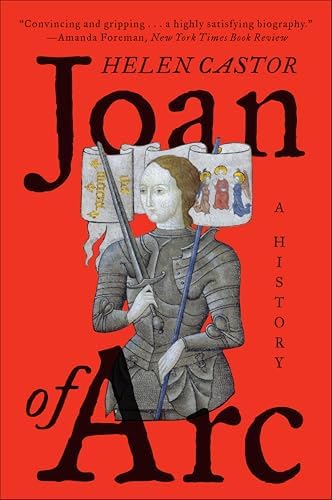
The episode traces Joan's military successes from Jargeau to the coronation at Reims, drawing on Joan of Arc A History by Helen Castor to explain how entire cities surrendered to her reputation. However, the story also covers her eventual downfall, from the failed siege of Paris to her capture at Compiègne and abandonment by Charles VII.
The Miraculous Maid's Military Magnetism
Guy de Laval sold his estates to join Joan's unpaid army, writing breathlessly to his mother about seeing Joan mount her restive horse in white armor with only her head bare.
As Joan of Arc and the Dragon Sign explains, Joan 'accepted neither her peasant birth nor her female condition' but assumed knighthood's most successful guise while remaining distinctly feminine.
Joan's squire Jean Dolan testified that despite seeing her legs bare while dressing wounds, neither he nor any soldiers felt carnal desire - emphasizing her supernatural status as 'the Maid.'
Swift Victories Beyond the Loire
At Jargeau, French artillery called 'the Shepherdess' (named after Joan) battered the Duke of Suffolk, who refused capture by non-knights before surrendering.
The Battle of Patay saw 2,000 Englishmen killed and the legendary Sir John Talbot captured - a devastating blow to English military prestige in pitched battle.
Joan told the Dauphin after these victories: 'God is clearly with you. Now we must seize the moment and advance to Reims' - 130 miles into enemy territory.
The Miracle of Troyes and March to Reims
Joan prophesied Troyes would surrender within three days, riding around the walls commanding men to fill ditches with brushwood for assault preparations.
According to Joan of Arc A History, 'after four days of fear and deepening uncertainty, the sight of these preparations for an assault led by the miraculous maid finally shattered the town's resistance.'
The Burgundian council in Troyes was forced by terrified townspeople to surrender, opening the road to Reims for Charles VII's coronation.
The Coronation at Reims Cathedral
On July 17, 1429, Charles VII was crowned using makeshift regalia and holy oil from Saint-Rémy Abbey, with Joan holding her white banner throughout the ceremony.
Joan fell to her knees before the newly crowned king, saying 'Gentle King, now is accomplished the will of God' - the culmination of her divine mission.
Charles VII granted Joan's family perpetual nobility lasting until the French Revolution, while her father and brothers attended the coronation as honored guests.
The Disastrous Siege of Paris
Joan's September 8th assault on Paris failed catastrophically, leaving 500 men dead and Joan herself wounded in the thigh by a crossbow bolt.
The attack occurred on the Virgin Mary's birthday, casting aspersions on Joan's holiness and suggesting divine disapproval of the timing.
Charles VII had refused to provide full support for the Paris assault, leading Joan to blame the failure on his lack of faith in her mission.
Going Rogue and Final Capture
By March 1430, Joan raised her own company of 200 men including her brother Pierre, effectively becoming a freelance military contractor.
At Compiègne on May 23, 1430, Joan launched a sortie against Burgundian siege positions but was trapped when the drawbridge closed behind her retreating forces.
Surrounded by Burgundian soldiers, Joan was pulled from her horse and surrendered her sword to a captain, becoming prisoner of John of Luxembourg.
Charles VII never mentioned Joan again after her capture, while his Archbishop of Reims blamed her 'pride and folly' for God's abandonment.
These notes may contain occasional inaccuracies. Learn how podbrain notes are made
More in History

682. South Africa: Mandela and the Death of Apartheid (Part 6)
Jun 24, 2026
681. Brazil: The Emperor’s Anthem (Part 5)
Jun 21, 2026679. Germany: The Song Hitler Stole (Part 3)
Jun 14, 2026
Tom Holland Meets Paul McCartney
May 14, 2026Greece vs. Persia: The Battle of Marathon (Part 2)
May 13, 2026


.svg)