
Arsenio Hall
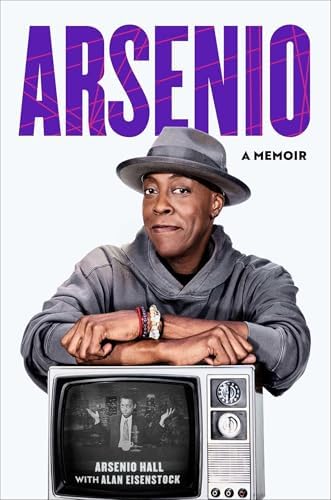
Arsenio Hall, the legendary comedian and talk show host, joins Joe Rogan for an extensive conversation about his remarkable career spanning stand-up comedy, television, and cultural influence. At 70 years old, Hall discusses his new autobiography Arsenio, which chronicles his journey from...

Episode


- 01
Arsenio Hall at 70 looks remarkably youthful and attributes his happiness to simplifying his life after learning from Richard Pryor's wisdom about complexity
- 02
The Arsenio Hall Show revolutionized late-night TV by eliminating the traditional desk barrier and featuring more diverse musical acts than networks wanted
- 03
Bill Clinton's saxophone performance on Hall's show in 1991 fundamentally changed how presidential candidates approach media and connect with younger voters
- 04
Richard Pryor would develop material nightly at the Comedy Store, transforming bombing jokes into hour-long specials through persistent stage work
- 05
Hall opened for major R&B acts like Aretha Franklin and Lou Rawls, learning comedy in hostile environments where audiences didn't want to see him
- 06
Prince sent Hall custom gifts including a suit with no back (matching his famous MTV Awards outfit) and a microphone shaped like a gun
- 07
The Comedy Store under Mitzi Shore was the most important comedy institution, with Shore being the most influential non-comedian in comedy history
- 08
Hall's book Arsenio chronicles his journey from doing basement talk shows at age 11 to hosting one of the most culturally significant shows in television
Get the latest ideas from PowerfulJRE.
Plus the best new takeaways from other top podcasts — read in minutes, not hours.
By continuing, you agree to podbrain's Terms and Privacy Policy.
These notes may contain occasional inaccuracies. Learn how podbrain notes are made
Arsenio Hall, the legendary comedian and talk show host, joins Joe Rogan for an extensive conversation about his remarkable career spanning stand-up comedy, television, and cultural influence. At 70 years old, Hall discusses his new autobiography Arsenio, which chronicles his journey from childhood dreams to becoming one of the most important figures in late-night television history.
The conversation explores Hall's revolutionary approach to talk shows, his relationships with comedy legends like Richard Pryor and Paul Mooney, and his experiences opening for major musical acts. Hall reflects on how his show changed the landscape of late-night television and presidential campaigning, while sharing intimate stories about his interactions with icons like Prince, Bill Clinton, and the comedy community at the legendary Comedy Store.
Throughout the discussion, Hall reveals his philosophy on happiness, the importance of simplicity, and his observations about the evolution of comedy, technology, and American culture. The conversation also touches on his struggles with reading The Alchemist and his decision to step away from the complexity that often accompanies fame and success.
Revolutionary Late-Night Television Format
Hall eliminated the traditional talk show desk after his executive producer Marla Kell Brown observed that it created a barrier between host and guest, allowing for more intimate conversations and physical connection with nervous guests like Rosie Perez
The show faced network pressure to be 'less black' and reduce musical performances, with executives preferring cheaper talk-only formats that would appeal to Johnny Carson's eventual audience
Bill Clinton's 1991 saxophone performance fundamentally changed presidential campaigning: 'I think what my show did that night was changed how you run for the highest office in the land' - Arsenio
Hall's signature phrase 'Things that make you go hmm' became so culturally significant that C+C Music Factory wrote a hit song about it, and major retailers used it in advertising campaigns
Comedy Store Legends and Richard Pryor's Genius
Richard Pryor would work out material nightly at the Comedy Store, developing jokes from five minutes to full hour-long specials, with Paul Mooney providing tags and refinements during post-show cigarette sessions
Pryor once visited Hall's empty condo and said 'This reminds me of when I was happy,' teaching Hall that complexity and wealth don't guarantee contentment
Paul Mooney was a master of topical comedy who could create 15 minutes of material about news events from the day before, always requesting the last spot to perform as long as he wanted
Mitzi Shore, owner of the Comedy Store, was 'the most important person in the history of comedy that's not a comic' - Joe, who shaped careers without nepotism, even making her son Pauly Shore work his way up
Opening for Music Acts and Early Career Struggles
Hall discovered stand-up after losing his magic equipment and drums in a house fire, inspired by watching a comedian slowly win over an Al Green concert audience with just 'a glass of juice, something on the stool'
Opening for R&B acts like Aretha Franklin and Lou Rawls taught Hall to handle hostile audiences: 'I liked that challenge' of making people laugh who 'don't know me and are mad'
Jazz audiences provided the perfect environment for comedy because 'they were mellow' and 'don't scream, get the fuck off' like rock or pop audiences
Hall earned enough money touring with musicians to afford a nice car and condo while other Comedy Store comics struggled financially
Prince Stories and Celebrity Encounters
After Hall joked about Prince's backless pants at the 1991 MTV Awards, Prince sent him a custom suit with all Prince symbols but no back: 'There was no ass' - Arsenio
Hall took Prince to an underground after-hours club in South LA where Prince, wearing an acrylic cane and matching suit and shoes, studied what music moved people in authentic settings
Prince gave Hall a modified gun-shaped microphone where 'the microphone was where the barrel is' and a police hat with chain as gifts
Charlie Murphy's stories about Prince's basketball skills on Chappelle's Show were accurate - Prince 'had a crossover move that was crazy' and could play in heels
Life Philosophy and Aging Gracefully
At 70, Hall has simplified his life after learning from Richard Pryor's wisdom about happiness and complexity: 'I'm really happy. It's just, you know, me and my woman and a scaled-down life'
Hall struggles with reading fiction, particularly The Alchemist: 'I have been on page 12 for like a year and a half. Sit down on a plane and just read The Alchemist at the top of the page, and I'm out'
His autobiography Arsenio covers his journey from doing basement talk shows at age 11 to television success, available in both print and audiobook formats
Hall avoids the complexity that destroyed relationships with staff and business managers: 'What the fuck do I have a staff for?' preferring direct control over his affairs
Cultural Commentary and Modern Comedy
Hall observes that modern political discourse has become team-based rather than issue-based: 'It's like the Dolphins versus the Raiders. It's just you pick a fucking team'
The phone-in-bag policy at comedy clubs protects comedians' creative process: 'I'll say things and try things and not worry about seeing them on YouTube when they're not ready'
Hall notes that successful comedians typically come from difficult backgrounds: 'I've never met a good comic who had a great childhood'
He credits his latchkey kid upbringing for resilience: 'No problems were solved for you. You had to figure it out on your own' compared to today's helicopter parenting

These notes may contain occasional inaccuracies. Learn how podbrain notes are made


.svg)