
James van Geelen on His Viral AI Doom Scenario
Tracy Alloway and Joe Wiesenthal host James Van Gielen, founder of Satrini Research, to discuss his viral substack piece about potential AI-driven economic disruption. Van Gielen runs a thematic equity and macro research firm that has made successful calls on GLP-1 drugs and AI infrastructure investments.

Episode


- 01
James Van Gielen's Satrini Research piece went viral, causing market moves and forcing banks to respond to client questions about the 'Satrini scenario'
- 02
AI capability curve has accelerated from 2 minutes to 8-16 hours of autonomous work on complex tasks in just two years
- 03
Cost of AI inference per cognitive task has dropped 10-30 times over the past year, making previously uneconomical tasks viable
- 04
Private credit systems built on stable assumptions may face stress if AI disrupts white-collar workers with 780 FICO scores
- 05
Agentic AI could eliminate network effect moats by enabling price comparison without human tedium or friction
- 06
Enterprise software pricing power may erode as companies can credibly threaten to use AI alternatives in contract negotiations
- 07
A prediction market on Kalshi now trades the 'Satrini scenario' at 11.6% probability with specific economic triggers
Get the latest ideas from Odd Lots.
Plus the best new takeaways about artificial intelligence from other top podcasts — read in minutes, not hours.
By continuing, you agree to podbrain's Terms and Privacy Policy.
These notes may contain occasional inaccuracies. Learn how podbrain notes are made
Tracy Alloway and Joe Wiesenthal host James Van Gielen, founder of Satrini Research, to discuss his viral substack piece about potential AI-driven economic disruption. Van Gielen runs a thematic equity and macro research firm that has made successful calls on GLP-1 drugs and AI infrastructure investments.
The conversation centers on Van Gielen's scenario piece that went unexpectedly viral, causing market reactions and forcing financial institutions to respond to client concerns. The piece explores a potential 2028 scenario where rapid AI advancement leads to unemployment above 10% and significant market disruption.
The discussion covers AI capability acceleration, the potential breakdown of network effect business models, risks to private credit markets, and enterprise software pricing power. Van Gielen emphasizes this was a scenario analysis rather than a forecast, designed to help investors consider potential outcomes in an environment of unprecedented technological change.
The Viral Moment That Moved Markets
Van Gielen's Satrini Research piece caused unexpected market reactions, with banks and research shops fielding client questions about the 'Satrini scenario' throughout the week.
"Client has been asking us about the Satrini scenario" - Joe, describing notes from sell-side research shops responding to portfolio manager concerns.
The piece started as investment research for a specific audience but 'escaped containment' and received 30 million views, far beyond Van Gielen's expectations.
A prediction market on Kalshi now trades the 'Satrini scenario' at 11.6% probability, with specific triggers including unemployment above 10% and S&P 500 decline of 30%.
AI's Exponential Capability Acceleration
AI autonomous work capability expanded from 2 minutes to 8-16 hours on intellectually complex tasks within just two years, exceeding all expert expectations.
"The cost of inference per cognitive task has gone down so significantly, maybe depending on the forecast, ten to thirty times over the past year" - James.
Van Gielen assigns 10-15% probability to the exponential capability curve continuing without leveling off, creating unprecedented transition speed compared to historical technological revolutions.
Historical precedent shows technological revolutions create jobs over 50-year periods, but current AI advancement suggests much faster disruption timelines of 5-15 years.
Network Effects Under Agentic Commerce Threat
Agentic AI could eliminate traditional business moats by enabling frictionless price comparison, as "AI agents do not experience tedium" unlike human consumers.
Van Gielen envisions AI agents instructed to find cheapest options bypassing network effects, potentially disrupting delivery platforms and payment intermediaries.
The key difference from past comparison shopping is passive automation: "there's a big difference between actively going...to get the best price versus just telling your phone, get me a burrito, get me the best price" - James.
Agentic commerce could enable startups to compete with established platforms by aggregating across multiple services without requiring network scale.
Enterprise Software Pricing Power Erosion
Enterprise software companies face potential margin compression as AI capabilities create credible alternatives to existing systems and workflows.
"Now the person on the other side of the phone can say, you know, OpenAI called me the other day, even if they're bluffing" - James, on contract renegotiation dynamics.
Systems of record companies may benefit from AI reducing coding costs, while workflow automation tools face greater displacement risk from agentic alternatives.
Anthropic's strategy of releasing simple AI tool suites serves as "reminders" of capabilities customers hadn't considered, potentially disrupting existing software relationships.
Financial System Stress Testing Gaps
Private credit systems built on stable income assumptions may face unprecedented stress if AI disrupts white-collar workers with traditionally low default risk (780 FICO scores).
Van Gielen notes Apollo reduced software lending exposure early in 2025, ahead of broader market recognition of AI disruption risks to recurring revenue models.
"Has the financial system ever been stress tested for a scenario like this" - James, questioning preparedness for rapid technological displacement.
Government data collection lacks composition analysis for white-collar job changes, with software job postings up 11% including AI engineers who create self-improving systems.
Policy Response and Historical Context
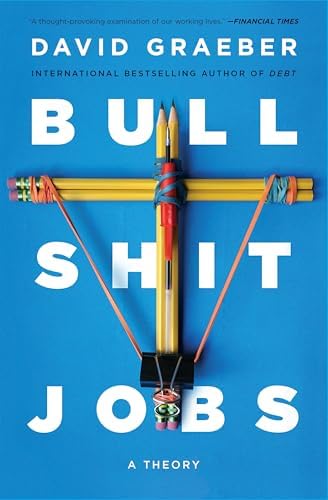
Van Gielen references Bullshit Jobs by David Graeber as one explanation for why Keynes' prediction of a 15-hour work week failed to materialize, suggesting society created meaningless roles instead.
"We have the term Luddite because of the fact that the transition was so abrupt and marked that people were moved to physical violence" - James, emphasizing transition disruption risks.
AI executives are "pleading almost with the government to take this more seriously" regarding fiscal mechanisms to handle potential disruption and redistribution.
"There's virtually no discussion in DC about anything substantive related to like the actual impacts of AI" - Joe, highlighting policy preparation gaps.
These notes may contain occasional inaccuracies. Learn how podbrain notes are made
More in Finance & Business

The Biggest Pivot In AI History Is Happening Right Now | Jordi Visser
Jun 20, 2026
How Substack Creators Are Covering This Strange Markets Era
Jun 20, 2026
#422 Joseph Pulitzer
Jun 20, 2026
World's First Trillionaire, Anthropic Fable Banned, The New Oligarchs, Iran Peace Deal
Jun 19, 2026Anthropic's Co-Founder and Top Economist on Doing Research at the AI Frontier
Jun 19, 2026
.svg)