
Claire Lehmann on the Internet Century
The episode features Claire Lehmann, founder and editor of Quillette, in conversation with Balaji Srinivasan on The Network State podcast. Lehmann founded Quillette a decade ago to counter evidence-free...


- 01
"America is in the denial phase of its declining empire" - Andrew Roberts argues Americans haven't accepted their changing global position, causing cognitive dissonance when confronted with evidence of China's rise
- 02
Australia paid down national debt to 4.7% of GDP before 2008 crisis, demonstrating fiscal discipline rare among Western nations through asset sales and resource-based economy
- 03
AUKUS submarine deal criticized as fundamentally flawed: $300+ billion for 3-5 subs arriving 2039+ when conflict timeline discussed is 2027, with 20-year delivery vs 10-minute destruction risk
- 04
Vivek Ramaswamy's December 2024 tweet on work culture received 121 million views, triggering massive backlash as political spectrum on X shifted 30-40 points right after left's Blue Sky exodus
- 05
"The internet is to America what America was to Britain" - digital innovation has moved online while physical America becomes museum-like, with all cultural dynamism now on screens
- 06
Tech positioned as emerging "market dominant minority" facing potential violent backlash from red-blue coalition, following Amy Chua's framework of groups economically successful but politically vulnerable
- 07
China and internet identified as dual heirs to American empire: China inherits military/manufacturing, internet inherits people/values/language, with Bitcoin representing scalable constitutional principles
- 08
Network School offers $100,000 fellowships for AI-first creators, reducing annual living costs to $18,000 in Singapore-Malaysia zone versus San Francisco's prohibitive expenses
Get the latest ideas from Network State Podcast.
Plus the best new takeaways about history from other top podcasts — read in minutes, not hours.
By continuing, you agree to podbrain's Terms and Privacy Policy.
These notes may contain occasional inaccuracies. Learn how podbrain notes are made
The episode features Claire Lehmann, founder and editor of Quillette, in conversation with Balaji Srinivasan on The Network State podcast. Lehmann founded Quillette a decade ago to counter evidence-free narratives in media and academia, particularly around gender and race, drawing on her psychology training's quantitative approach.
The discussion traces Quillette's evolution from critiquing left-wing orthodoxy during the 2016-2020 woke wave to now addressing illiberalism emerging on the right. Lehmann describes her publication's consistent small-l liberal, small-c conservative values while responding to threats from both political extremes.
Balaji introduces his "history running in reverse" thesis, arguing that ideologies originating partly in America—communism, fascism, capitalism—devastated the 20th century world and now return to destabilize the West itself. The conversation explores how countries with immunity from these ideological experiments may fare better in coming decades.
Topics span Australia's fiscal discipline and resource economy, the AUKUS submarine deal's strategic incoherence, Vivek Ramaswamy's viral tweet and shifting political spectrums, America's calibration on 1950s exceptionalism, tech as an emerging "market dominant minority," and the internet versus China as dual heirs to American empire.
Quillette's Evolution: From Anti-Woke to Anti-Illiberal
Lehmann founded Quillette approximately 2014 after observing "increasingly hyperbolic sort of left-wing narratives particularly in media that were untethered to any kind of evidence or statistical reality," drawing on psychology training emphasizing quantitative analysis of sociological questions.
Launch coincided with 2016 Trump election, triggering "huge wave of cancel culture" through 2020 George Floyd riots, with people "being sacked from their jobs in tech industries, in academia, in artistic communities."
"Now that wokeness is sort of receding slowly we're becoming more sensitive to the illiberalism that is emerging on the right" - Lehmann describes Quillette's shift to addressing both political extremes while maintaining consistent liberal-conservative values.
Balaji argues "the left magics into existence the thing that it constantly preaches against," comparing to 1920s-30s Europe where communists labeled everyone fascists, eventually creating support for genuine fascist movements through exhaustion.
Ideological Origins: America's Export of Extremism
Balaji's thesis: "Both capitalism and actually communism and actually fascism all arguably originate at least in part in America," with left correctly noting Hitler drew from Confederacy/eugenics while right notes Trotsky raised money in New York.
"The ideologies that the rest of the world fought against were sort of cooked up in the wet lab that was America" - these ideologies tore apart Korea, Germany (Weimar, Hitler, East Germany, democracy), Vietnam, and other nations throughout 20th century.
Lehmann adds French Revolution influence, noting "the architects of the French Revolution cited the American Revolution as inspiration because France had helped America" in complex ideological genealogy.
"History is running in reverse" - countries that suffered through communism/socialism (Eastern Europe, China, India) now have "herd immunity" while West faces ideological destabilization for first time.
Australia as Functional Anglo Democracy
Australia nearly eliminated national debt, reaching 4.7% of GDP before 2008 financial crisis from post-WWII highs, demonstrating Western government debt reduction is possible through asset sales including Sydney airport.
Millionaire migration data consistently shows Australia and New Zealand ranking with Singapore and UAE as top destinations, representing "distributed diligence" of global wealth seeking stable jurisdictions.
"We just we're the custodians of the dirt" - Lehmann describes Australia's resource-based economy providing high-paying working-class mining jobs, preventing middle-class hollowing seen in US manufacturing decline.
"My cousin who didn't finish high school will be earning more than my cousins who have gone all the way through university and who have become medical doctors"
Resource economy creates "huge tax revenue base" and "unsophisticated economy" but maintains working-class prosperity
New Zealand pioneered 2% inflation targeting adopted globally, though Balaji notes inflation "arguably should be 0% or even negative because prices should decrease as technology improves."
Lehmann describes Australia as "not a very polarized" country with "wholesale apathy, political apathy" as opposite problem, where compulsory voting means "people just don't want to know about politics."
AUKUS Deal: Strategic Incoherence at Scale
"We're meant to be giving over $300 billion to the United States to build us some nuclear-powered submarines" with extremely stretched timeline, raising reliability concerns about US as defense partner - Lehmann.
Balaji's critique: "If it takes you 20 years and $300 something billion dollars to build like three to five subs and they could get sunk in 10 minutes that is like the dumbest thing I've ever heard."
First submarine delivery projected 2039+ while hypothetical China conflict discussed for 2027
"Australia gets your first sub in 2039. What? It doesn't make any sense at all"
Compared to "paying huge amounts of money for cavalry in 1912 and it's going to arrive in 1932"
"All Australia did was they spent hundreds of billions of dollars to piss off China. They didn't even buy the submarines" - Balaji argues deal imposed political/economic costs without security benefits.
China now has "largest navy in the world, the fastest ship building," with one Chinese shipyard having "more capacity than all of our shipyards combined" according to Secretary of Navy.
Lehmann predicts AUKUS "definitely going to be back on the table after the next election" with eroded "social license" as Australians question becoming US protectorate versus maintaining China trade.
Vivek's Viral Tweet: Spectrum Shift on X
Vivek Ramaswamy's December 27, 2024 tweet on American work culture received 121 million views, "enormous for X, it basically means like essentially almost half the platform saw it."
"There are many many calls to murder on X that get far less outrage than this call to study" - Balaji notes disproportionate reaction to standard immigrant parent lecture about academic excellence.
Timing critical: 20 million left-wing users departed X for Blue Sky in early December 2024, shifting entire political spectrum 30-40 points right, making previously center-right positions suddenly appear leftist.
"The center of arguing for a-racial global meritocracy became the left" after exodus
"The exact same words that would have seemed center right or even right two months earlier now seemed like they were on the left"
Post-election, "white guys on the right didn't feel the need for a proxy to speak for them" - Vivek's role shifted from speaking for MAGA to appearing as ethnic activist, triggering pattern-matching backlash.
References to 1990s shows like "Saved by the Bell" as dysfunctional era backfired; Balaji suggests citing "OnlyFans culture, Me Too" would have faced less argument as baseline for cultural decline.
"Until roughly after the 2024 election, I had never before seen a critical mass of white Americans really feel emotionally that the world was their competition rather than their market" - fundamental shift from expansion mindset to defensive posture.
Wokeness Internalized: Victimhood Across Spectrum
Tech founder complained about Indian "ethnic nepotism" and hiring practices, prompting Balaji's response: "What do you want? You want to do a diversity report on the company? How is that not exactly like saying white privilege?"
"What wokeness did to a generation or a group of people is even if they reacted with sort of the opposite of woke at the surface level, they sort of internalized certain patterns which were emotional and histrionic whining, basically feeling like learned helplessness" - Balaji.
Lehmann confirms: "I completely agree with the internalization of the victimhood culture. That's definitely a thing on the right too now."
First-generation immigrants naturally recruit from social networks for early-stage companies; "by the time you get to second or third generation, people assimilate" as happened with Italians and Poles.
Empire Decline: Grief Cycle and Denial Phase
Andrew Roberts, Winston Churchill biographer, wrote for Quillette that "Americans are currently in the denial phase" of declining empire, comparing to British Empire's phases of grief around 2021 before Ukraine invasion.
"When people are in denial they'll have cognitive dissonance. So they'll react strongly to evidence of whatever it is that they're denying" - Lehmann explains emotional reactions to China superpower thesis.
Roberts' follow-up piece argues "Trump is speeding up this phase" with trade war representing "negotiation phase" of grief cycle as metaphorical framework for imperial transition.
Balaji deleted paragraph from The Network State "because it brought a manly tear to my eye" describing "Uncle Sam as a beloved elder who's passing away" and need to prepare for next step.
"They don't want to plan for it at all, they want to be in denial about it and they want to say that you saying it is like a bad omen and it's demoralizing" - resistance to acknowledging imperial decline.
Cultural Exhaustion: Hollywood's Creative Stagnation
Lehmann observes "exhaustion of Hollywood, you know, with all of their remakes, they can't come up with anything original. There are very few new hero movies that really truly depict a new sort of hero journey in an original and new way."
"It's not like it was in the 1990s where there was just dozens and dozens of classic films coming out from Hollywood" - cultural confidence decline visible in creative output.
"As an Australian, you grow up on American culture. You're sort of marinated in American culture and you develop a very strong sympathy and alliance with a nation that you've never even visited" - soft power erosion through woke content and quality decline.
Fashion and physical culture relatively static across 2000s-2020s compared to distinct 1980s-1990s styles; "all of the innovation and culture has moved to the internet because you can instantly tell a 1990s website, 2000s website, 2010s, 2020s."
"America is becoming a museum" parallel to Europe - physical infrastructure decay (century-old New York subway) while digital innovation continues online, separating cultural dynamism from geographic location.
1950 Calibration: Anchoring on Historical Anomaly
Graph shows economic geocenter at peak Western dominance in 1950 when "everybody else was bombed to smithereens. China was communist, India was socialist, Russia was communist, Japan was atomic bombed."
"People are calibrated on the all-time, all human history high as being the normal" - Americans expect complete global dominance as baseline when it's "incredibly historically abnormal."
Post-war institutions literally called "post-war institutions" established at moment of peak American power, creating structural expectations misaligned with current multipolar reality.
1950s family formation also anomalous: "Women wouldn't get married until their late 20s" in 18th-19th century Western Europe, not age 21; baby boom driven by massive public housing investment for returning soldiers.
Mid-century America had 90% marginal tax rate (versus Soviet 100%), while Soviet Union had childlessness/bachelor tax - "mid-century America was way more communist than we think" and "mid-century Soviet Union was way more socially conservative."
20th Century Technology: Centralization Favored Scale
"Technology favored centralization" in 20th century, enabling giga-states: China, modern India, Soviet Union, USA with scale to dominate rivals through mass media and mass production.
George Orwell observed trend toward "bigness" with Eurasia and East Asia concepts, recognizing technological drivers of extreme centralization and consolidated power.
Peak centralization visible in marginal tax rates, military-industrial complex, "never argue with the man who buys ink by the barrel and you can't fight city hall" cultural attitudes.
Household technology revolution (washing machines, dryers, toasters, vacuum cleaners) in late 19th/early 20th century fundamentally changed daily life, often forgotten in historical analysis.
Stock Market Illusion: Survivorship Bias in Returns
Vanguard post claimed "stock market always goes up" with persistent holding strategy, but Balaji counters: "The reason it goes up is the Fed prints and that can't do that forever."
Chart shows many countries had "negative 100% returns" over 20-year windows in 20th century: Russia, China, Germany, Japan all experienced total wipeouts during various periods.
US, Canada, Australia escaped as only three countries with consistent positive returns, making Australia "the real lucky country" in investment terms.
"Betting on a trend to continue indefinitely is the surest way to lose your shirt" - doesn't account for "tail, long-tail events" that devastated most 20th century markets.
Americans anchored on story that "guy with high school degree can have a house and two kids" while "somebody who's much smarter and harder working in Poland or Vietnam was starving to death or getting shot in war or under communism."
Ukraine as Proxy World War III
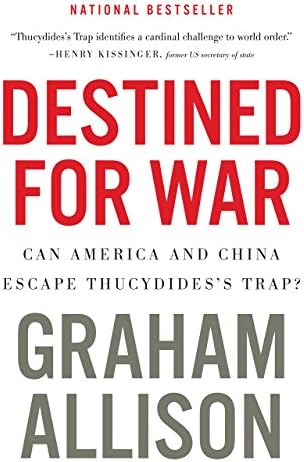
"The Thucydides trap has actually already happened. It was called Ukraine where Ukraine was a US proxy and Russia was a China proxy" - Balaji reframes conflict as superpower competition.
"Russia's only on its feet because China supplied it with stuff" while "Ukraine is only on its feet because the US supplied it with weapons" - proxy war structure with direct suppliers.
"80% of the world did not sanction Russia by population" - majority of global population declined to participate in Western sanctions regime.
"All of NATO combined couldn't beat Russia with China supplying Russia just a little bit. So obviously they can't beat China" - implications for great power competition.
"Putin will probably plant his flag and say Cold War avenged" regardless of exact terms, representing NATO defeat and vindication of Russian resistance to Western expansion.
Military Reality: Hypersonics and Shipbuilding Gap
Hegseth discussed how "China's hypersonics can sink every aircraft carrier" with "15 hypersonic missiles can take out our 10 aircraft carriers in the first 20 minutes of a conflict."
Raytheon CEO stated: "Unlike Russia where we pulled out two weeks after the invasion, you can't do that with China. Too big, too important, and too necessary."
Secretary of Navy: "In some cases their shipyard has more capacity, one shipyard has more capacity than all of our shipyards combined" - China has 13 such shipyards.
"US military is made in China" - graph shows Tomahawk missile components traced to "hundreds of Chinese vendors," creating fundamental supply chain vulnerability.
Houthis (Iran-funded, China-allied proxy's proxy) successfully blockaded Red Sea for 18 months, demonstrating US power projection limitations against distributed threats.
Tariff Catastrophe: Virtualized World War III
"This was virtualized World War III and the US just lost" - Balaji's interpretation of tariff announcement as economic conflict revealing power shift without kinetic warfare.
"They attacked every country at once and they said, 'Oh, it's about China.' That's like a gang member shooting into a crowd, wounding everybody, and saying, 'I'm just trying to get that guy on the other side. Help me get him.'"
"They gave up like a thousand times, a million times to make one times. They destroyed $30 trillion in market cap and all the trade relationships and financial relationships with the US dollar" for minimal tariff revenue gains.
MAGA implements "friend-enemy distinction wrong" - thinks it's American/non-American when "there's many Americans who are not their friend like Elizabeth Warren" and "many non-Americans who are not their enemy like Milei."
Red Americans see cut falling and "think the foreigners are ripping them off, but really the blue Americans were arguably ripping off the foreigners too" - misdiagnosis of who benefits from empire.
Four Forces Down: Red, Blue, Gray, Chinese
"Red America wanted to take down the deep state, but blue America wants to oppose the Trump administration and tech America opposes the regulatory state and China opposes the American state. So all four forces are pointed down on American Empire."
"When all the forces are pointed down, there's nothing pointed up. The only thing that maintains the system in its current position is its initial position. And it can move much faster than you might think."
Red Americans "want to be the man of the house without the responsibility" - want Top Gun power projection without paying for global military presence and alliance maintenance.
"There's only 77 million Trump voters and there's more than a billion people if you add up America, Canada, Australia, New Zealand, UK, Europe, Japan, South Korea" - Putin's "golden billion" concept.
"USSR was bad and it fell and the USA was basically the good guy up until 1991 and then when it was unopposed and it was a hyperpower it quickly became the bad guy" - pattern of unbalanced power corrupting.
China and Internet: Dual Heirs to Empire
"When American empire ends, its two heirs are China and the internet. China inherits the military and the manufacturing and the markets. And the internet inherits the people, the language of English, and the values."
"The constitution doesn't scale beyond America but Bitcoin does" - smart contracts and cryptocurrency represent "code-based order" succeeding "rules-based order" with universal application.
"The internet is to America what America was to Britain" - fundamental succession of innovation centers, with all cultural dynamism now happening on screens rather than physical territory.
"Christianity is not a place, but there are Christian places" - internet as idea that claims territory through network states, digital borders, and physical instantiations like Network School.
Unopposed China would be "bad even for the Chinese people, just like hyperpower America after 1991 ended up bad for Americans" - need for balance between superpowers.
"Chinese people respect the internet because Chinese people hold Bitcoin. Chinese people want VPNs to access the global internet. Chinese people respect AI" - gains from trade with digital world exceed physical autarky.
Tech as Market Dominant Minority
Amy Chua's World on Fire framework: market dominant minorities (Jews in Europe, Indians in Uganda, overseas Chinese) face three backlashes when economically successful but politically outnumbered.
First: backlash against markets targeting them
Second: backlash against democracy by force
Third: violent, sometimes genocidal attacks on minority itself
"Most of the violence in the 20th century was not on the basis of race. It was on the basis of class. Tech is a class" - applying ethnic minority framework to economic class.
Tech includes "a lot of Jewish people, Chinese people, Indian people, black people, and migrants immigrants" - various groups claim "too many" of each, creating "overlapping resentful brew."
First backlash already occurred: "tech lash starting around 2013 where the journalists, the media were mad at tech."
Second phase: Elon-Trump tech alliance as "wealth pushing back," though not anti-democratic since it won election.
Third phase predicted: "Red and blue against tech" with "people setting self-driving cars on fire, hammer attacks, Tesla firebombings, shooting CEOs" and "memes calling for an army of Luigis."
"Bezos, Zuckerberg, Sundar Pichai standing at Trump's inauguration" image "will be used by the socialists for years and years and years to come" - Lehmann on optics problem.
Hyperinflation Endgame: Dollar as Final Default
"I don't think it will be dealt with. I think there's going to be enormous inflation, that hyperinflation is when a government finally defaults on everything" - Balaji on debt-to-GDP trajectory.
"It's defaulted on its security contracts and its security treaties and its trade treaties. The last step is the dollar itself" - sequential breakdown of American commitments.
"The dollar really is a meta financial system that the US used to run or still arguably runs but not for long" - dollar as infrastructure rather than mere currency.
"Trump is accelerating to that point" - Lehmann agrees tariff policy speeds timeline toward dollar crisis and hyperinflation scenario.
Geographic Predictions: Who Wins, Who Loses
"The more leverage you are on either China or the internet or both, the better off you are. And if you're both extremely anti-China and extremely anti-internet, then you're screwed."
America and Canada face worst outcomes: "People who sort of had the worst fall from grace in the 20th century, arguably the Chinese, which went from the Qing dynasty to the century of humiliation" - comparable regression predicted.
Western Europe second-worst: "Massive hit because of how many assets they have that are American, how much dependence they have on the US for security" - will become "American colonies" with uncertain outcomes.
Eastern Europe better than Western Europe; Russia benefits as war winner gets "boost of energy" and attitude shift as "leadership will change and people will basically accept Russia won."
Dubai and Saudi Arabia "have a potentially very good century ahead of them" positioned between China and internet with energy resources and strategic location.
Iran could be "next Vietnam" if allowed to trade: "A lot of really smart people, a lot of Persians in the US that did really well. They're not primitive. They have a long history. The Zoroastrians, all this stuff going back."
China "going to have the best century probably because they're vertically integrated" - Han Chinese nation, CCP party-state, Chinese network, Great Firewall as protective infrastructure.
India "moderately bullish on India, extremely bullish on Indians" - "China is a state, India is a network" with significant human capital and democratic stability as "second version of democracy."
Great Firewall as Digital Border Precedent
"Once you have robots, it's no longer speech. Speech can probabilistically script a human to action, but code can deterministically script a robot to action. So it's less deniable."
"If malware crosses your digital border and it can open up a drone or a robot, it can do terrorism. So that alone will justify something like the Great Firewall around every large enough civilizational sphere."
"The internet is an untrusted network" - any packet from anybody could arrive, necessitating civilizational-scale security perimeters as robotics proliferate.
"Physical goods move across borders more than ideas do" - prediction of digital borders corresponding to civilizational borders, inverting current globalization patterns.
Great Firewall will be reframed from free speech issue to "protecting themselves from mind viruses" and physical security threat from remotely controlled devices.
Network School: Reducing Founder Burn Rate
Network School offers $100,000 fellowships for "AI-first creators, founders" including filmmakers and comic book creators, not just STEM backgrounds, because "prompting is programming."
"Art history is now an applied science" - vocabulary of Cézanne, Picasso, Manet, Rembrandt enables summoning styles on demand, making humanities knowledge practically valuable for AI direction.
Annual cost $18,000 per person with roommates ($36,000 solo) in Singapore-Malaysia zone includes "room, breakfast, lunch, dinner, gym, 24/7 gym, fitness classes, co-working, office pods, everything."
"When I lived in San Francisco, I was there because of tech and I'd wake up and I'd work out and I'd work and that was it. And it cost some ridiculous sum of money per month" - radical cost reduction for same lifestyle.
"If you have a decent remote work job, you're just now banking money because you're just leveling up" - enables savings while maintaining or improving quality of life.
Balaji encourages creators from various cultures: "What about one where Vietnamese people are at the center of the universe? What about one where Australian people are?" - using AI to tell untold 20th century stories.
Quillette's Business Model and Audio Shift
Quillette subscription-based with paywalls after few days; front page open, YouTube completely free with narrated article versions gaining traction.
"We're moving into a post-literate society, which is not great, but there's just a bigger market for audio and video. People don't like to read" - Lehmann's reluctant acceptance of format shift.
Podcasts get ~30,000 downloads; successful YouTube videos exceed 100,000 views; top essays rarely reach 100,000 - "much easier for a video to get 100,000 views than an essay."
"When you're writing an essay, you have to be very careful with the words that you use and be careful about the facts" - edited text offers higher information density and accuracy than spoken content.
Audience demographics: 50% United States, 14% UK, 12% Canada, only 4% Australian despite strong local event attendance - global Anglosphere reach.
Lehmann hires globally via Upwork: "Fantastic video editor based in Vietnam, amazing audio editor in Argentina" - finds "depth of talent" outside Australia/US/UK for creative roles.
Australia's Rubber Band Snap Toward China
"Since the escalation, since the meeting in the Oval Office with Zelensky and then followed by the tariffs, if you turn on the local news, you'll have independent politicians, politicians on both sides of the aisle saying we need to reassess" - Lehmann on shifting defense strategy debate.
"Our economy is based on selling stuff to China. Australians just don't want to be bullied. We don't want to become a vassal state of China. We want to keep our way of life and our freedoms."
"Trump has tried to shake down Ukraine for their minerals and we're thinking, well, how is that not going to happen to us? Our country is full of all of this valuable natural resources."
"China has bullied us a little bit but they haven't completely shaken us down" - comparative assessment of great power pressure tactics.
Balaji predicts: "China will probably play nice for a few years to scoop up the whole world into the Greater East Asia Co-Prosperity Sphere version 2.0" through trade deals while US alienates allies.
Survival Strategy: Hedge Against US Exposure
"Don't go to the US. Leave if you're there. Go back home where you came from. The signals are being sent. Don't trade with the US. Don't set up a business in the US. Don't invest in the US."
"It's almost as if they're doing everybody a favor by saying, 'Back away. We're out of money. Stop trading with us. We're out of guns. Don't rely on our military. Back away.'"
"For a few years it's possible that the rest of the world actually doesn't do that badly" - Chinese goods exports will "drop prices all around the world" benefiting consumers globally.
"It's really a question of how much in the way of US assets you have. If you have Bitcoin, if you have physical gold, if you have your currency in local bank accounts rather than US bank accounts, if you don't have US stocks, if you're not located in the US, I think you'll probably be okay."
"Eventually it's all on China or on-chain. So it's either Hong Kong or blockchains or it's on the internet" - binary future of value storage and economic activity.

These notes may contain occasional inaccuracies. Learn how podbrain notes are made
More in Politics & Society

And, This Is How Democrats Lead Us To A Post Trump World With Brian Tyler Cohen
Jun 25, 2026
Is it Time for a New Sexual Revolution?
Jun 25, 2026And, This Is Why Reid Hoffman Doesn’t Fear Artificial Intelligence
Jun 19, 2026And, This Is Hunter Biden Like You've Never Heard Him Before
Jun 12, 2026
Better Sex, Better Hair, Better Sleep: ‘Humanmaxxing’ Is Here
Jun 11, 2026

.svg)