
Is it Time for a New Sexual Revolution?
In this episode of Interesting Times, host Ross Douthat sits down with Louise Perry, a Wall Street Journal columnist and prominent author, to discuss her landmark book The Case Against the Sexual Revolution...


- 01
In The Case Against the Sexual Revolution, Louise Perry argues that a culture of casual sex disproportionately harms women due to physical and psychological vulnerabilities.
- 02
The birth control pill functioned as a massive technological shock, allowing women to control fertility but creating an artificial expectation of consequence-free sex.
- 03
Drawing from The Two-Income Trap Why Middle-Class Parents Are Going Broke, dual-income norms have bid up housing costs and penalized single-income families.
- 04
Radical feminist critiques like Andrea Dworkin's Pornography Men Possessing Women presciently warned that pornography would reduce women to instruments of male pleasure.
- 05
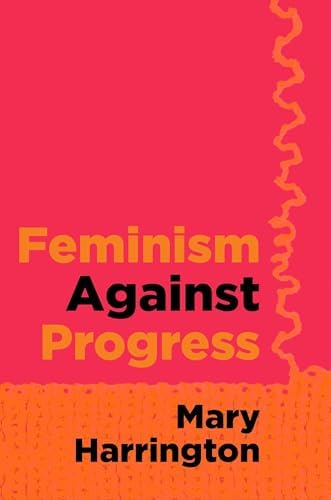
Associated with Mary Harrington's Feminism Against Progress, reactionary feminism asserts that biological differences must be accommodated rather than ignored or erased.
- 06
"If feminist cultures turn out to be cultures that cannot reproduce themselves, then the political project dies within a generation." - Louise
- 07
Perry suggests a concrete rule: women should use contraception within marriage to space births, rather than to facilitate casual, premarital sexual relationships.
- 08
The internet accelerates political polarization by exposing private "locker room" talk to the public, driving young women leftward and young men toward resentment.
Get the latest ideas from Interesting Times with Ross Douthat.
Plus the best new takeaways from other top podcasts — read in minutes, not hours.
By continuing, you agree to podbrain's Terms and Privacy Policy.
These notes may contain occasional inaccuracies. Learn how podbrain notes are made
In this episode of Interesting Times, host Ross Douthat sits down with Louise Perry, a Wall Street Journal columnist and prominent author, to discuss her landmark book The Case Against the Sexual Revolution and the growing cultural alienation between men and women. They trace the history of sexual liberation, starting with the technological shock of the birth control pill and the subsequent economic shifts analyzed in The Two-Income Trap Why Middle-Class Parents Are Going Broke. Perry explains the intellectual roots of her philosophy, drawing contrasts with radical feminist works like Andrea Dworkin's Pornography Men Possessing Women and aligning with Mary Harrington's Feminism Against Progress. The conversation covers the rise of online subcultures like 'tradwives' and the 'manosphere,' the political divergence of young men and women, and the challenges of modern dating. Perry advocates for a return to sexual restraint, arguing that acknowledging biological differences is essential for stable relationships.
The Material and Ideological Shock of the Pill
Louise Perry defines the sexual revolution as both an ideological and material revolution driven by the technological shock of the birth control pill.
"The distinctive thing about the pill compared with other contraception is that women can control it themselves and it's invisible." - Louise
In The Case Against the Sexual Revolution, Perry argues that while she is a beneficiary of these changes, the resulting culture of casual sex disproportionately favors male sexual drives while offloading physical and psychological costs onto women.
Approximately half of all pregnancies in both the United States and Great Britain remain unplanned, demonstrating that contraception has not fully eliminated the physical risks of sex for women.
Economic Fragility and the Two-Income Trap
The mass entry of women into the labor market was driven more by macroeconomic shifts and labor-saving household technologies than pure ideology.
As detailed in The Two-Income Trap Why Middle-Class Parents Are Going Broke, the shift to dual-income households created a fragile domestic economy where families must compete on two paychecks to afford housing.
"If the assumption is that you have two paychecks... then families with a single income are at a disadvantage." - Louise
The Feminist Sex Wars and the Rise of Pornography
The "sex wars" of the 1970s and 1980s pitted radical feminists against individualistic, sex-positive feminists who ultimately won the cultural debate by the 1990s.
Radical critiques like Andrea Dworkin's Pornography Men Possessing Women were highly prescient about how internet pornography would shape male sexual expectations and desire.
"Consent workshops are no match for pornography. Just think of the hundreds of hours that a typical teenage boy might be exposed to pornography compared with 30 minutes of a consent workshop." - Louise
Reactionary Feminism and Biological Realism
Reactionary feminism, a term closely associated with Mary Harrington's Feminism Against Progress, starts from the premise of crucial, immutable biological differences between the sexes.
Perry argues that youthful male energy and high-risk tolerance are biological realities that societies must channel productively rather than pretend do not exist.
"I don't think that the... solution that has been toyed with in our own era of just pretending that men and women are the same psychologically or physically is productive at all." - Louise
Digital Mimesis and the Polarization of the Sexes
The internet damages relations between the sexes by publicizing private, homosocial conversations that were historically kept behind closed doors.
Young women are highly mimetic, which has turbocharged their rapid political radicalization and leftward shift online relative to young men.
While the "manosphere" is often feared for potential violence, Perry argues it is more likely to encourage young men to become "lonely and sad."
The Tradwife Phenomenon and Modern Escapism
The "tradwife" subculture represents an online-generated reaction to the genuine physical and psychological burdens of modern female life, such as childbirth and care work.
"I think that tradwives are angry and sad for the same reasons that progressive feminists are angry and sad, but they have a different set of solutions which they think will solve it." - Louise
Extreme subcultures like "freebirthing" emerge from a misguided belief that modern medical institutions, rather than biology itself, are the source of pain in childbirth.
A Gradualist Path Toward Sexual Restraint
Perry advocates for a culture of greater sexual restraint where individuals treat sex with the gravity of potential parenthood.
"If you would not have sex with this man if you weren't using contraception, then you should not have sex with him at all." - Louise
While a societal-wide return to strict historical norms is unrealistic, individuals with sufficient agency can choose to adopt soft traditional norms to build stable, equal marriages.


These notes may contain occasional inaccuracies. Learn how podbrain notes are made
More in Politics & Society

And, This Is How Democrats Lead Us To A Post Trump World With Brian Tyler Cohen
Jun 25, 2026And, This Is Why Reid Hoffman Doesn’t Fear Artificial Intelligence
Jun 19, 2026And, This Is Hunter Biden Like You've Never Heard Him Before
Jun 12, 2026
Better Sex, Better Hair, Better Sleep: ‘Humanmaxxing’ Is Here
Jun 11, 2026
Introducing: OnlyFantasy (Leon's New Podcast)
May 21, 2026
.svg)