
Chris Dixon on Read Write Own
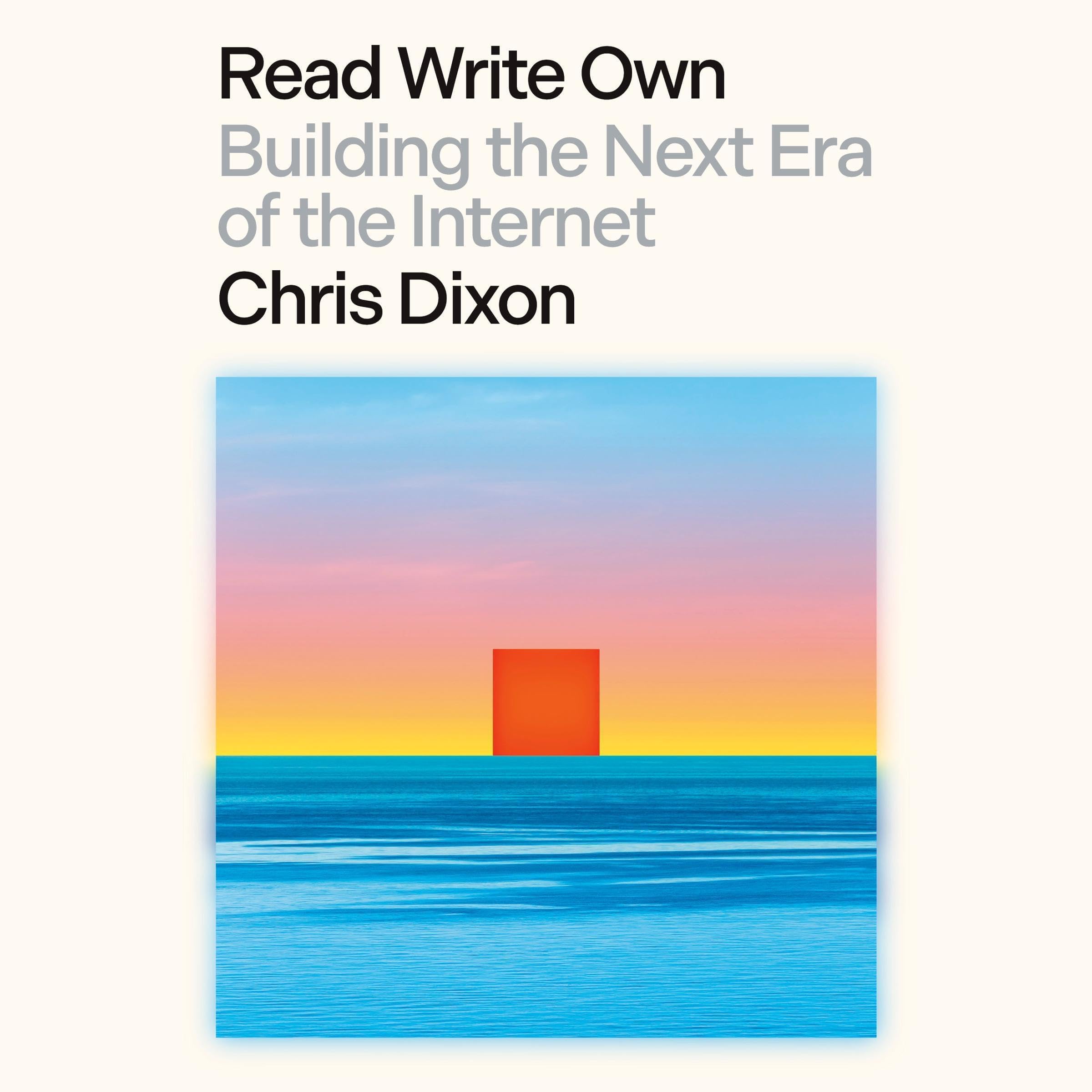
The episode features Chris Dixon, entrepreneur, venture capitalist, and author of Read Write Own, discussing his new book with host Balaji Srinivasan. Dixon is a reformed academic who has spent his career building and investing in internet companies, including early investments in...


- 01
"If you can't explain it to a smart high school student, you don't understand it" - Chris wrote Read Write Own as crypto's 2024 onboarding manual for skeptics
- 02
Web3 combines best of both worlds: societal benefits of protocol networks plus competitive advantages of corporate networks through tokens and blockchain state
- 03
YouTube's revenue share model (close to 50%) exists due to historical competition, while other social networks give creators effectively 0% outside token creator funds
- 04
"Come for the tool, stay for the network" - YouTube subsidized hosting costs to build network effects, a strategy blockchains can replicate through tokens
- 05
Video game industry grew to $180 billion by monetizing virtual goods and status signaling rather than fighting content commoditization
- 06
DNS ownership was web1's killer feature - controlling domain-to-hardware mapping enabled exit rights, but web2 eliminated this with platform-controlled usernames
- 07
RSS had same user count as Facebook/Twitter combined in 2008 but failed due to lack of state storage and funding mechanisms that blockchains now solve
Get the latest ideas from Network State Podcast.
Plus the best new takeaways from other top podcasts — read in minutes, not hours.
By continuing, you agree to podbrain's Terms and Privacy Policy.
These notes may contain occasional inaccuracies. Learn how podbrain notes are made
The episode features Chris Dixon, entrepreneur, venture capitalist, and author of Read Write Own, discussing his new book with host Balaji Srinivasan. Dixon is a reformed academic who has spent his career building and investing in internet companies, including early investments in Oculus.
The conversation covers Dixon's motivation for writing a comprehensive crypto primer aimed at smart high school students, following Peter Thiel's approach with Zero to One. The book took a year to write with multiple rewrites to achieve first-principles clarity.
Dixon and Balaji explore the evolution from web1's open protocols through web2's corporate networks to web3's blockchain-based ownership model. They discuss how RSS lost to proprietary social networks in 2008, a pivotal moment that led to today's consolidated internet.
The discussion examines practical applications of crypto including collaborative storytelling, AI attribution, proof of personhood, and the future of the metaverse. Dixon emphasizes moving beyond Twitter dunking toward substantive policy discussions about maximizing technology's benefits while minimizing harms.
Writing for Smart High School Students
Dixon wrote Read Write Own as crypto 101 2024 - an onboarding manual for people joining Coinbase whose families ask about FTX and speculation
"I wrote it partly to test myself... if you can't explain it to a smart high school student you don't understand it" - Chris, paraphrasing Richard Feynman
Peter Thiel wrote Zero to One for smart high school students according to his agent, which Dixon adopted as guidance for avoiding jargon and passive voice
The writing process required two-week breaks between full reads to clear mental state and evaluate whether concepts were explained adequately or redundantly
Twenty smart readers including CS professors Dan Boneh and Tim Roughgarden provided paragraph-level comments, leading to four months of revisions and a complete refactoring
Kevin Kelly, Wired founder and longtime crypto skeptic, endorsed the book saying "this changed my mind" - the response has been more positive from people less into crypto
The Missing Primitives of Web1
DNS gave users control of domain-to-hardware mapping, enabling exit rights - if your hosting provider turned evil, you could switch without losing your audience or Google ranking
"The ability to exit meant creators, political dissidents, activists could have their own plot of land... Larry Page and Jeff Bezos knew if they built something valuable they would own it" - Chris
Web1's open internet was not inevitable - Bill Gates, Comcast, and Disney proposed a centralized "information superhighway" that competed with the open internet vision
The internet was created bottom-up in an open source way but had missing pieces: payments, search control, digital identity, and reputation systems were gaps
"If you don't step in and fill it with a public good it gets filled with a private good" - Chris. Google filled the website reputation gap with PageRank and made billions from it
The Fall of RSS in 2008
RSS had the same number of users as Facebook and Twitter combined in 2008 - it was a legitimate horse race for social networking architecture
RSS failed for two reasons: features and funding. It couldn't store usernames (stateless protocol) and had no subsidization model for growth
A 2008 Wired article described attempts to build a social network on RSS: "we can do everything except storing the usernames, we have no way to do that"
"What you needed was a blockchain - a community owned decentralized database" - Chris. Proposals at the time included creating a nonprofit to store the social graph like Wikipedia
The fall of RSS in 2008 was the pivotal point leading to today's consolidation where top 1% of social networks control 99% of traffic and revenue
YouTube's Come for the Tool Strategy
YouTube originally launched as a dating site in 2005 before pivoting to user-generated video, beating Google Video by being more risk tolerant with content
"Come for the tool, stay for the network" - YouTube offered free video hosting and bandwidth when hosting costs were expensive, with prominent embed codes for blogs
Nobody visited youtube.com initially - creators used it as free hosting for their blogs, but over time YouTube accumulated content and became the destination
Wall Street analysts value YouTube at $140 billion as part of Google. Twitter and Facebook raised tens of billions largely for subsidization to build network effects
YouTube maintains close to 50% revenue share with creators due to historical competition with other video sites that offered revenue sharing, unlike other social networks at 0%
Blockchains as Synthesis of Protocol and Corporate Networks
"Thesis is protocol networks, antithesis is corporate networks, synthesis is blockchains" - Chris. They combine societal benefits of protocols with competitive advantages of corporations
Blockchains enable subsidization through tokens (like corporate networks) and state storage (unlike stateless protocols) without giving four people in Palo Alto control over global culture
"It's as if AT&T got to decide who made phone calls and took money from every call" - Chris describing current corporate network control
Every Unix command line tool becomes an app: man becomes Stack Overflow, rsync becomes Dropbox, grep becomes Google. Now every protocol can be revisited with global state added
Hundreds of serious attempts to create new protocols in the last 30 years (Jabber, Diaspora, Status.net) failed because they had "one arm tied behind their back" without state and funding
Web2 User Interfaces as Form Factors
User interfaces for YouTube, Twitter, Facebook have remained relatively constant for 10 years - they're now standardized form factors like electrical outlets
Early electrical power outlets had lots of innovation until settling on a few standardized form factors (US, UK, Australia models) that became natural fits
Feed formats are "form factors for our mind" - billions of dollars perfected how Twitter and YouTube look, now every new site can copy and slightly innovate
Web3 apps can copy Twitter's UX and swap out the community, or copy YouTube's UX and swap out the backend with global state and payments
"Web3 needs feature parity at minimum with web2, then it needs advantages that benefit users, developers, and entrepreneurs through ownership" - Chris
The Unabomber and Distribution Scarcity
"The Unabomber killed people so he could get an op-ed in the Washington Post and New York Times - distribution was so scarce he killed for it" - Balaji
In 10-15 years distribution became so abundant that five billion people can tweet and anyone can see it anywhere in the world for the cost of a $10 Android phone
More people now have access to the internet than running water - a remarkable shift from digital divide concerns in the 1990s
The problem shifted from not enough time online to too much screen time - people now spend seven hours per day on the internet, four hours on social networking
Adding Web3 Wallets to Web2 Apps
Adding a web3 wallet with balance and encrypted signing to every web2 app enables completely new functionality like pooling and crowdfunding within WhatsApp groups
Farcaster (Dan Romero's project) adds Twitter functionality but with communities defined by crypto holdings, creating common interest groups
Developer-facing improvements include making apps hackable Lego bricks - creating different clients, interfaces, and services without permission from corporate overlords
"People in tech have Stockholm syndrome where they think it's great to be controlled by a guy that takes all your money" - Chris on App Store mentality
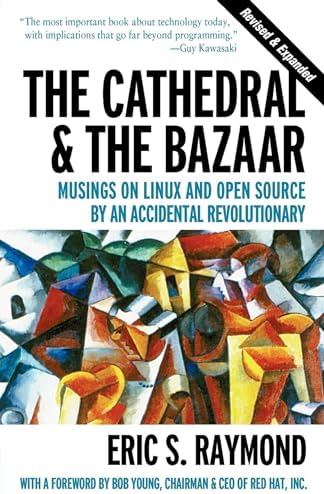
The history of software shows two threads: Eric Raymond's "cathedral and bazaar" - proprietary Microsoft vs open Unix/Linux/web movements driving computing forward
Social Networks Punishing External Links
Social networks moved from user growth to keeping users in-app, now demoting posts with external links to reduce reach and engagement
"If you put a link in your tweet it will get demoted... Substack is the word that can't be said" - Chris on Twitter's link penalties
Substack and Patreon are escape hatches back to the open web, driven by web1 protocols (email, web) that charge 0% instead of 30-90%
"On Twitter you get nothing, on Substack you get 90%" - the economics flip when using open protocols versus corporate platforms
Dixon predicts further consolidation into five apps with occasional website visits becoming rarer, until they overdo it and trigger a counter-movement
Web3 as the New Open Web
Web1 is the crawler-accessible web that Google can index. Web2 is the social web living in Facebook and Twitter databases - better structured but less accessible
Web3 combines best of both: as structured as web2 databases but as open as web1. Block explorers are search engines that get all updates pushed every block
"You don't have to scrape and crawl a bunch of mess to find what changed, you get all the edits pushed to you and it's really rich so you can index it" - Balaji
The timing is critical because AI is making the old open web threatened - Reddit and Twitter restricted APIs because AI systems trained on their content
Stack Overflow traffic is down significantly due to GitHub Copilot, which was partly trained on Stack Overflow content without compensation
AI and Crypto as Counterforces
"AI makes everything fake, crypto is how you can make it real again with cryptographic signing" - Balaji on deepfakes and counterfeit persons
Micro-NFTs allow artists to track attribution and get paid when their work is incorporated into AI-generated content, solving the compensation problem
"How the offline world works: an artist doesn't monetize through the photograph, they monetize through the authentic real piece" - Chris on scarcity layers
AI is incentivizing further closing down of the web - graphic designers may move content behind paywalls unless there's a model for keeping it open
Blockchains commit to open systems and provide business models for creative people in an AI world, which is necessary to keep the internet sustainable
Video Game Industry's Virtual Goods Model
Video game industry grew to $180 billion annual revenue while all other media forms were flat to down - significantly bigger than Hollywood
Grand Theft Auto 6 will be bigger than any Marvel movie. The dominant model is now free games with virtual goods (essentially NFTs)
League of Legends and Fortnite are free games that monetize through virtual goods - they accepted gameplay would be commoditized and monetized something else
Nintendo initially fought game streaming in late 2000s through copyright claims, but the industry eventually embraced it as free marketing generating attention
"Virtual goods are status signaling in a community - they're monetizing people and status signaling within communities" - Chris
Moving status signaling to virtual goods is beneficial because it decouples dispensable online signaling from physical goods consumption
What Digital Ownership Actually Means
"You own your domain name - if your hosting provider jacks up prices you can leave, copy files, redirect DNS without losing followers, email, or Google ranking" - Chris
Most visible consequence of not owning social media names is deplatforming, but subtler effects include arbitrary ranking changes and economic control
Every social network except YouTube makes money through advertising with effectively 0% revenue share to users outside diminimus sub-1% creator funds
"You don't own the Kindle book on your phone... music disappears... these services give you a 50-page terms of service nobody reads or negotiates" - Chris
Users give services all their data, rights, control, and economics while having no power. Web3 vision is real rights where you control data and economics
"We're used to property rights in the offline world. Imagine if instead of owning your house and car, every venue you went to you had to get new clothes they owned" - Chris
TikTok's Deliberate Creator Suppression
TikTok rose in three years driven by 10 big influencers like the D'Amelios and Khaby Lame getting to 100 million followers - very power law distributed
"TikTok deliberately turned the dial down on those 10 and up on new people - they want 10,000 people with a million followers, not 10 with 100 million" - Chris
This is Porter's Five Forces - TikTok was preventing too much supplier power by fragmenting creator influence through algorithmic manipulation
All social networks constantly turn dials through AI for profit maximization. The problem isn't maliciousness but lack of leverage on the other side
Creators can't switch or leave because their entire presence depends on the platform - there's no counterbalance to network effects giving platforms unlimited power
Network Effects vs Other Competitive Moats
"AWS competes on features, service, price - they don't have lock-in from network effects. You're hosting there because it's good, not because you're trapped" - Chris
AWS knows their customers are developers and new dev tools constantly emerge, so they can't abuse customers too much or they'll leave
Network effects are Warren Buffett-style moats but "in some ways an OP moat - just really really powerful" requiring counterbalance through user ownership
Technology changes microeconomic leverage - crypto profiles with ENS let users withdraw entire profiles and move to different sites, giving individuals leverage against giant companies
Collaborative Storytelling as Native Web3
Collaborative storytelling: a crowd of people Wikipedia-style can create the next Marvel, Harry Potter, or Star Wars - a thousand people worldwide working together
"Today you have excited fan communities on Reddit saying 'wouldn't it be cool if Obi-Wan did this' but they're passive observers" - Chris
Creators would be rewarded with tokens proportional to contribution, then evangelize the universe like Dogecoin armies but for meaningful narratives
"Hollywood is stuck in a rut where everything's a sequel because it costs hundreds of millions to market a new narrative world" - Chris
This solves Hollywood's marketing problem through organic communities, globalizes and decentralizes Hollywood, and allows anyone to become a creator
AIs could participate as contributors - like Wikipedia bots that fix commas, AIs could add flourishes to third acts and get paid if they do good work
Crowdsourcing High-Skill Tasks with Crypto
Terence Tao's Polymath Project posted unsolved math problems and had comment sections work on them, making progress through crowdsourced mathematics
Math Overflow (Stack Overflow's math site) is very active and successful, showing crowdsourced math works at high skill levels
Current crowdsourcing is low-skill activities like Mechanical Turk. Balaji envisions high-skill crowdsourcing where someone could tweet a task limited to qualified experts
This would work with crypto resumes containing NFTs proving skills, allowing selective crowdsourcing with attached payments to qualified participants
Users would have public NFT credentials and private data they could selectively share with providers, unlocking massive new application possibilities
Missing Primitives and Proof of Personhood
"The internet was created bottom-up in an open source way but had missing pieces: payments, search control, digital identity, reputation systems" - Chris
Google filled the website reputation gap that wasn't part of the open internet, made it a private good, and made billions from it
"CAPTCHAs don't work anymore, looking at email text won't detect phishing, listening to audio won't verify voice - all that stuff is going away very quickly" - Chris
The gap will get filled either by companies like Facebook or by public goods like shared community services that are part of the open internet
"We need to build those things now before they get subsumed by these companies because it will get filled in some way" - Chris on urgency of crypto solutions
Book Structure and Application Areas
The book is chunked into 3-4 page sections allowing readers to jump around - experts can skip to Part 5 covering seven application areas
"Critics say 'what problems does blockchain solve' but blockchain is a better way to build networks - it's like asking what problem does steel solve" - Chris
Application areas covered: social networking, finance/DeFi/Bitcoin/payments, collaborative storytelling, AI/media business models, metaverse/video games, and others
The AI chapter addresses the implicit economic covenant between distribution (search/social) and content - Google could index but had to send traffic back
"One-boxing is when Google takes your content and shows it without linking back - your traffic drops overnight" - Chris on Stack Overflow's biggest fear
In AI world where systems just give answers without linking, the new economic covenant needs rethinking for media and creative people putting content online
The Metaverse and Spatial Computing
Metaverse is real despite being jargony - whether called metaverse or Apple's "spatial computing," spending time online in 3D experiences is happening
Two aspects: extreme version like Apple Vision Pro, and gradual immersion where game graphics improve, become more social, worlds more persistent
"In 20 years a lot of internet experiences will be 3D - doesn't mean you always have a headset on but they're in 3D worlds" - Chris
Critical question: will 3D spatial world be organized like social networks today (five companies control everything) or like open web (linked areas anyone can set up)?
Tim Sweeney (Epic/Fortnite founder) has a podcast on building an open metaverse using web protocols and is pro-blockchain, unusual for game industry
"How'd you go bankrupt? Gradually then suddenly. That's how the metaverse will work - gradually bigger then boom it's happening" - Chris paraphrasing Hemingway
Elevating Tech Policy Discussion
"I wrote a book because I think all the dunking on Twitter, appeals to authority - I'd like to see tech discussion elevated" - Chris
Smart tech policy for AI or crypto should examine what the technology is and what it's used for, not take sides in a food fight
"Any technology - hammer can destroy or build, nitrogen can be explosives or fertilizer, nuclear can be clean energy or bombs" - Chris on dual use
"Crypto can empower users and shift internet power to the edges or it can be a gambling casino like FTX" - Chris on examining both sides
Current approach is reactive and emotionally charged - using 100-year-old laws to take crypto to court instead of designing policy that maximizes good and minimizes bad
New York Times vs OpenAI lawsuit will play out over 5-10 years with people reading 200-year-old copyright laws - not the right way to do proactive policy


These notes may contain occasional inaccuracies. Learn how podbrain notes are made
More in Politics & Society
And, This Is How Democrats Lead Us To A Post Trump World With Brian Tyler Cohen
Jun 25, 2026
Is it Time for a New Sexual Revolution?
Jun 25, 2026And, This Is Why Reid Hoffman Doesn’t Fear Artificial Intelligence
Jun 19, 2026And, This Is Hunter Biden Like You've Never Heard Him Before
Jun 12, 2026
Better Sex, Better Hair, Better Sleep: ‘Humanmaxxing’ Is Here
Jun 11, 2026

.svg)