
Yat Siu
This conversation features Yat Siu, co-founder and executive chairman of Animoca Brands, one of the world's largest Web3 investors with over 600 portfolio companies. Animoca operates as a gaming company that invests from its own balance sheet rather than as a traditional fund, generating over $300 million in revenue...


- 01
Animoca Brands has over 600 portfolio companies and generated $300 million revenue with $95 million EBITDA in the last year
- 02
Gaming retention is fundamentally about social networks - 80% of players are 'socializers' who play because their friends do
- 03
China's manufacturing dominance is staggering: one Chinese shipyard has more capacity than all US shipyards combined
- 04
The Internet increases variance on everything - from 9-to-5 salaries to billionaires, 30-minute sitcoms to 30-second clips
- 05
Digital borders and physical borders will coincide within 20-30 years as the geography of the cloud crystallizes
- 06
Bitcoin has reached a trillion-dollar valuation without violence, armies, or traditional enforcement mechanisms
- 07
American anarchy and Chinese control represent two extremes, with network states offering a middle path between them
Get the latest ideas from Network State Podcast.
Plus the best new takeaways from other top podcasts — read in minutes, not hours.
By continuing, you agree to podbrain's Terms and Privacy Policy.
These notes may contain occasional inaccuracies. Learn how podbrain notes are made
This conversation features Yat Siu, co-founder and executive chairman of Animoca Brands, one of the world's largest Web3 investors with over 600 portfolio companies. Animoca operates as a gaming company that invests from its own balance sheet rather than as a traditional fund, generating over $300 million in revenue last year.
The discussion explores the intersection of gaming, social networks, and Web3, examining how gaming retention depends more on social connections than technical quality. Siu explains Bartle's taxonomy of gamers, where 80% are 'socializers' who play primarily because their friends do, fundamentally changing how we think about game design and community building.
The conversation expands into geopolitical analysis, examining the rise of China's manufacturing dominance and the Internet as competing powers to traditional American hegemony. Drawing from Tomorrow the World by Stephen Wertheim, they discuss how the American Empire was consciously constructed but now faces challenges from both Chinese state capitalism and Internet-native decentralization.
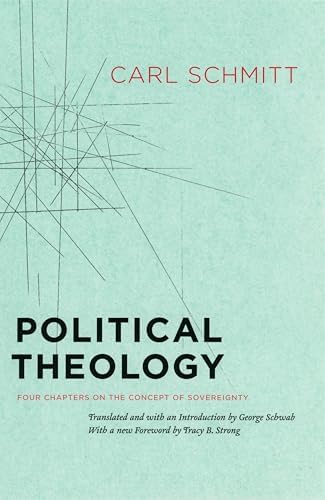
They explore the concept of 'American anarchy' versus 'Chinese control' as two extremes, referencing Political Theology by Carl Schmitt and The God That Failed to explain how state-based ideologies function as religious replacements. The discussion concludes with visions of network states as a potential middle path between centralized control and chaotic decentralization.
Gaming's Social Network Foundation
Animoca Brands operates differently from traditional funds, investing from their own balance sheet with over 600 portfolio companies and $300 million revenue last year.
Gaming retention is fundamentally about social networks rather than technical quality, with 80% of players being 'socializers' according to Bartle's taxonomy who play because their friends do.
"When you ask any of the kids or anyone who plays Roblox, do they play Roblox because it's great adventure... They'll tell you it's because their friends are playing it" - Yat
Gaming companies must build brands and become media companies to create lasting franchises, similar to how crypto projects build tribal belief systems.
The Internet's Variance Amplification Effect
"Nothing that wasn't built on the Internet will survive the Internet" because the Internet increases variance on everything by removing middlemen and moderators.
The Internet transforms content from 30-minute sitcoms to either 30-second clips or 30-episode podcasts, eliminating traditional media formats.
Digital geography differs from physical geography, with languages, networks, and firewalls serving as boundaries rather than rivers and mountains.
China maintains its own 'cloud continent' through the Great Firewall, while 6 billion people on the Anglophone Internet are directly connected in a 'massively online battle arena.'
China's Manufacturing Supremacy vs American Empire
China's shipbuilding capacity is 200X that of America, with one Chinese shipyard having more capacity than all US shipyards combined according to former Navy Secretary statements.
The American Empire was consciously built as described in Tomorrow the World by Stephen Wertheim, explaining how America became globally dominant with McDonald's everywhere and 750 military bases.
"CEO of Raytheon has said you can't decouple from China... Unlike Russia, where we pulled out two weeks after the invasion, you can't do that with China. Too big, too important and too necessary."
The US military is effectively 'made in China' with critical components sourced from Chinese suppliers, making the concept of military confrontation with China logistically impossible.
State Ideologies as Religious Replacements
Democrats have 'replaced God with government' as their central organizing principle, making the loss of state control to Trump a shattering of their faith system.
Political Theology by Carl Schmitt and The God That Failed illustrate how state-based ideologies serve as God replacements when traditional belief systems collapse.
"Government is the only thing we all belong to" was literally a Democratic campaign ad, showing how the state became their central organizing principle.
When Democrats lost control of the American state, some factions turned to 'Luigi left' violent anarchism while others may align with Chinese communism as an alternative power structure.
Network States as the Middle Path
Network states represent a balance between 'American anarchy' and 'Chinese control,' allowing people to choose between different governance models based on shared values rather than geography.
"You preserve democracy, you preserve choice by allowing people to choose between these locations... You go from the two party system to the thousand city system."
Bitcoin demonstrates how a trillion-dollar system can exist 'without violence, without armies' through cryptographic consensus rather than state enforcement.
The blockchain scales constitutional principles to the Internet level, where 'Delaware doesn't protect your property rights, but the blockchain does.'


These notes may contain occasional inaccuracies. Learn how podbrain notes are made
More in Politics & Society

And, This Is How Democrats Lead Us To A Post Trump World With Brian Tyler Cohen
Jun 25, 2026
Is it Time for a New Sexual Revolution?
Jun 25, 2026And, This Is Why Reid Hoffman Doesn’t Fear Artificial Intelligence
Jun 19, 2026And, This Is Hunter Biden Like You've Never Heard Him Before
Jun 12, 2026
Better Sex, Better Hair, Better Sleep: ‘Humanmaxxing’ Is Here
Jun 11, 2026
.svg)