
Luke Gromen
Luke Groman joins the podcast with nearly 30 years of finance experience, having been a partner at two pioneering firms specializing in bottoms-up fundamental research. He founded Forest for the Trees (FFTT) in 2014, focusing on identifying developing economic bottlenecks through analysis of publicly available data.


- 01
Luke Groman identifies developing economic bottlenecks as the biggest driver of investment outperformance over 30 years in finance
- 02
Post-2008, BRICS nations began de-dollarizing commodity markets to avoid repeating the Asian financial crisis of the late 1990s
- 03
US tax receipts fell 8% in 2022-2023 while employment remained stable, suggesting economic data manipulation or misreporting
- 04
Stock market performance drives US tax receipts due to equity-based compensation structure implemented after 1995 Clinton legislation
- 05
China's nuclear power plants cost 6-7 times less per gigawatt than US plants, indicating 85% dollar overvaluation versus yuan
- 06
Russia controls 11-15% of global oil net exports, making complete sanctions economically impossible without crashing Western bond markets
- 07
Physical gold reserves are shifting from Western central banks to BRICS nations as preparation for dollar devaluation
- 08
US military supply chains depend on Chinese manufacturing, creating strategic vulnerability in any potential conflict
Get the latest ideas from Network State Podcast.
Plus the best new takeaways about economics from other top podcasts — read in minutes, not hours.
By continuing, you agree to podbrain's Terms and Privacy Policy.
These notes may contain occasional inaccuracies. Learn how podbrain notes are made
Luke Groman joins the podcast with nearly 30 years of finance experience, having been a partner at two pioneering firms specializing in bottoms-up fundamental research. He founded Forest for the Trees (FFTT) in 2014, focusing on identifying developing economic bottlenecks through analysis of publicly available data.
The conversation explores Groman's unified theory of global monetary transition, examining how post-2008 policies led BRICS nations to begin de-dollarizing commodity markets. They discuss the structural problems with US economic data, particularly the disconnect between tax receipts and employment figures during 2022-2023.
Key topics include the relationship between stock market performance and US tax revenues, China's manufacturing advantages, the strategic implications of resource dependencies, and the technological challenges facing the dollar-based payment system. The discussion references Unrestricted Warfare and Treasury's War in analyzing monetary warfare tactics.
Economic Bottlenecks and Investment Strategy
Groman describes his investment approach as identifying developing economic bottlenecks, comparing himself to 'a giant catfish at the bottom of the Ohio River just waiting for stuff to come downstream.'
The key insight is finding conflicts between investing consensus and actual evidence: 'when I've got investing consensus over here and I've got this big body of evidence way over here saying this is actually going to happen.'
In housing downturns, sector positioning matters more than individual company quality - 'it didn't matter if you owned the best home builder, it was only down 90% while all the others went down 95 to 100%' - Luke
BRICS De-Dollarization Strategy Post-2008
Post-2008 crisis showed BRICS nations that continued dollar dominance would export inflation and drain their FX reserves, recreating the Asian financial crisis conditions of the late 1990s.
The reaction was 'not necessarily doing because they wanted to hurt America or hate America per se, but simply out of enlightened self-interest' to avoid another Southeast Asia financial crisis - Luke
This led to systematic shifts toward gold pricing and yuan clearing banks globally, while price-insensitive treasury buyers (global central banks) stopped net purchases of US debt.
US Economic Data Manipulation and Stock Market Dependency
Tax receipts fell 8% in 2022-2023 while employment remained stable, creating an unprecedented disconnect from historical recession indicators dating back to 1947.
Clinton's 1995 tax legislation made cash compensation over $1 million non-deductible but excluded stock-based compensation, fundamentally linking US tax revenues to equity markets.
'The US economy is the stock market. The stock market is the US economy because so much of the marginal shift in consumer spending is driven by stocks' - Luke
Annual net capital gains plus taxable IRA distributions alone represent 200% of the annual growth in personal consumption expenditures, a $17-18 trillion economy component.
China's Manufacturing Cost Advantage and Dollar Overvaluation
Josh Wolf's 2023 Congressional testimony revealed US nuclear power plants cost 6-7 times more per gigawatt than Chinese equivalents, despite identical physics requirements.
'A GW is a GW. There's no special physics in the US or China' - the cost differential indicates the dollar is 85% overvalued versus the yuan - Luke
China's 'overproduction' complaints miss the point: 'imagine complaining about overproduction of war' when manufacturing scale becomes a strategic advantage.
Strategic Vulnerabilities and Resource Dependencies
Russia controls 11-15% of global oil net exports, making complete sanctions impossible: 'if you took Russian oil off the market, you would spike oil up several hundred dollars a barrel and literally blow up the treasury market within hours' - Luke
A $400 million Pentagon study revealed that famous American weapons like Tomahawk and JDAM have supplier chains terminating in Shenzhen or Shanghai for hundreds of components.
'You can't go to war with China to stop them from doing this because they won't sell you the rare earth magnets that you need to make the weapons to point at them' - the lead time for redeveloping these capabilities is decades.
Monetary System Transition and Technological Disruption
General Qiao Liang's 2015 speech, author of Unrestricted Warfare, warned that technological payment platforms would undermine dollar hegemony: 'When we start to settle trade without the dollar payment rails, will the dollar currency hegemony still exist?'
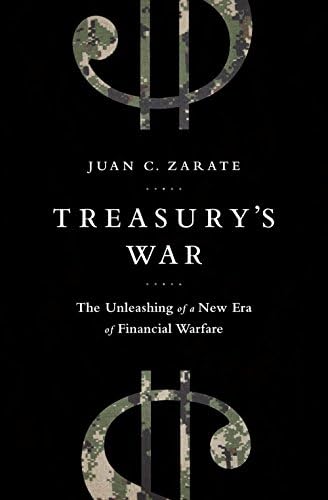
Treasury's War by Juan Zarate explains how the US weaponized financial control, but kicking Iran out of SWIFT in 2012 was 'one of the great strategic mistakes in history' - Luke
The dollar system represents a four-layer database structure (Fed, allied central banks, licensed banks, citizens) that crypto and Chinese payment systems can bypass entirely.
Internet-native payment systems like WeChat, Alipay, and UPI represent superior technology compared to pre-internet dollar infrastructure like ACH and SWIFT.

These notes may contain occasional inaccuracies. Learn how podbrain notes are made
More in Politics & Society

And, This Is How Democrats Lead Us To A Post Trump World With Brian Tyler Cohen
Jun 25, 2026
Is it Time for a New Sexual Revolution?
Jun 25, 2026And, This Is Why Reid Hoffman Doesn’t Fear Artificial Intelligence
Jun 19, 2026And, This Is Hunter Biden Like You've Never Heard Him Before
Jun 12, 2026
Better Sex, Better Hair, Better Sleep: ‘Humanmaxxing’ Is Here
Jun 11, 2026
.svg)