
David Friedberg
David Sacks visits Singapore for the first time and discusses the city-state's rise as Asia's capital hub, with thousands of family offices relocating there in recent years. The conversation explores global power shifts, with Singapore displacing Hong Kong and Tokyo, while Miami emerges as a potential successor to New...


- 01
China produces 2 terawatts of energy going to 8 by 2040, while US produces 1 going to 2 - a 4X capacity gap that's widening
- 02
Chinese research papers in major scientific journals went from 50% of US output in 2015 to 150% today across all categories
- 03
San Francisco's managed alcohol program gives homeless addicts up to 17 shots of vodka per night at $5-10 million annually
- 04
Political billionaires in San Francisco allocate ~$1 billion per person annually, making them 10-100X more influential than market billionaires
- 05
More than half of Americans now earn majority income from government employment, contractors, or benefits - crossing the point of no return
- 06
The NSF acceptable use policy repeal in 1991 legalized commercial Internet traffic, beginning the dot-com era and network vs state competition
- 07
American nuclear costs increased 100X while China's decreased dramatically, with China building 400 reactor sites currently
- 08
Exit taxes and wealth taxes are coming as states get 'grabbier' when people leave, creating negative feedback loops like East Germany
Get the latest ideas from Network State Podcast.
Plus the best new takeaways from other top podcasts — read in minutes, not hours.
By continuing, you agree to podbrain's Terms and Privacy Policy.
These notes may contain occasional inaccuracies. Learn how podbrain notes are made
David Sacks visits Singapore for the first time and discusses the city-state's rise as Asia's capital hub, with thousands of family offices relocating there in recent years. The conversation explores global power shifts, with Singapore displacing Hong Kong and Tokyo, while Miami emerges as a potential successor to New York's financial dominance.
The discussion examines the fundamental tension between network states (decentralized, Internet-enabled communities) and traditional nation-states, with Sacks arguing that technology favors decentralization while states desperately try to maintain control through regulation and taxation. Key themes include the fractal frontier of special economic zones, the role of deregulation in enabling innovation, and why China's centralized model may be winning against America's increasingly dysfunctional governance.
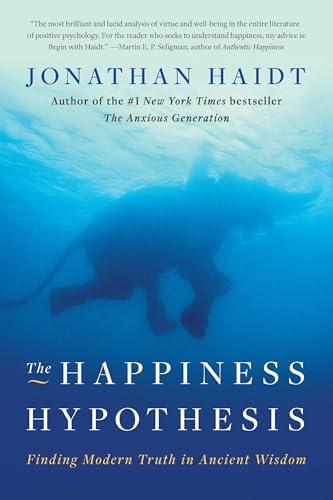
Central to their analysis is how government intervention in housing, education, and healthcare created runaway cost inflation, while the New Deal marked America's transition from rugged individualism to state dependency. They reference Three New Deals to show FDR's influences and The Happiness Hypothesis to explain how stagnant purchasing power drives political unrest and the search for oppressor narratives.
Singapore's Rise and Global Capital Migration Patterns
Singapore has become Asia's undisputed financial capital, with an estimated 4,000+ family offices established in the last decade, surpassing Hong Kong and Tokyo in regional influence.
Miami represents the 'Singapore of Latin America' where cross-border deals between Mexican and Paraguayan businesspeople occur due to Spanish-speaking population and political neutrality from Cuban immigrant influence.
The global shift sees London losing to Dubai, Asian capitals consolidating in Singapore, and potentially New York being challenged by Miami, representing a broader decentralization of financial power.
The Fractal Frontier: Special Economic Zones as Escape Velocity
The frontier thesis explains American dynamism - Frederick Jackson Turner identified 1890's frontier closing as creating the 'steel cage match' that led to trade unions and communism since dissatisfied people could no longer 'go West.'
Today's fractal frontier includes hundreds of special economic zones globally, startup cities, abandoned Japanese houses, and towns for sale in America - collectively representing significant territory for coordinated migration.
Network coordination through the Internet enables moving 100+ people simultaneously to these zones, overcoming the historical difficulty of individual relocation to frontier areas.
The Nonprofit Industrial Complex and Political Billionaires
San Francisco's managed alcohol program distributes up to 17 shots of vodka nightly to homeless addicts in hotel lobbies, costing $5-10 million annually while the homeless population increases.
Political billionaires allocate ~$1 billion in cash annually (San Francisco's $13 billion budget divided by supervisors/mayor), making them 10-100X more influential than market billionaires who only liquidate portions of net worth.
The viral loop: nonprofits cause problems, reallocate money to address problems, cause more problems - with their KPI being budget growth, not problem resolution. 'If they're so woke, why are they so rich?' - Sacks
California's high-speed rail exemplifies the model: minimal track built but maximum jobs created, functioning as '$100 billion bribe' distributed across 10,000 people at $100,000 each.
The New Deal's Legacy and State Expansion Dynamics
America's founding principle of rugged individualism shifted during the New Deal when the state promised to solve the Great Depression, establishing the pattern of 'I can do more and provide you a higher standard of living.'
Federal programs in housing, education, and healthcare removed market checks - colleges can raise tuition knowing students get unlimited loans, creating administrative bloat from 10% to 60% of staff.
More than half of Americans now earn majority income from government employment, contractors, retirement, or benefit programs, crossing the 'point of no return' where everyone incentivizes continued state growth.
Three New Deals reveals how FDR was influenced by Mussolini and Hitler before WWII, showing the broader centralization arc where he was 'the least bad communist dictator' during technology's centralization period.
China's Execution Advantage and America's Regulatory Paralysis
China produces 2 terawatts of energy going to 8 by 2040, while the US produces 1 going to 2, with China building 400 nuclear reactor sites currently versus America's regulatory gridlock.
Chinese research papers in major scientific journals went from 50% of US output in 2015 to 150% today across all categories, with some papers being restricted from publication when they get too far ahead.
American nuclear costs increased 100X while China's decreased dramatically due to regulatory accumulation - 'You want to move at the speed of physics, not permits' - Sacks
The NSF acceptable use policy repeal in 1991 legalized commercial Internet traffic, demonstrating how 0/1 deregulation decisions matter more than marginal tax or tariff adjustments.
Network vs State Competition and the Coming Reboot
The state won in the East (Chinese state dominates Chinese network) but the network is winning in the West (American network stronger than American state), evidenced by crypto defeating regulatory attacks.
Exit taxes are inevitable as states get 'grabbier' when people leave - California's proposed 5% net worth tax on 200 billionaires could force massive stock liquidations, crashing markets.
The Happiness Hypothesis shows happiness correlates with year-over-year income change, not absolute wealth - stagnant purchasing power from inflation drives the search for oppressor narratives and political unrest.
The solution: Freedom cities with 10th Amendment authority, deregulated zones supervised by state rather than federal government, creating regulatory competition and facts on the ground before political reversals.

These notes may contain occasional inaccuracies. Learn how podbrain notes are made
More in Politics & Society

And, This Is How Democrats Lead Us To A Post Trump World With Brian Tyler Cohen
Jun 25, 2026
Is it Time for a New Sexual Revolution?
Jun 25, 2026And, This Is Why Reid Hoffman Doesn’t Fear Artificial Intelligence
Jun 19, 2026And, This Is Hunter Biden Like You've Never Heard Him Before
Jun 12, 2026
Better Sex, Better Hair, Better Sleep: ‘Humanmaxxing’ Is Here
Jun 11, 2026
Introducing: OnlyFantasy (Leon's New Podcast)
May 21, 2026
More episodes with David
ICE Chaos in Minneapolis, Clawdbot Takeover, Why the Dollar is Dropping

Inside America’s AI Strategy: Infrastructure, Regulation, and Global Competition

Inside America's AI Strategy: Infrastructure, Regulation, and Global Competition
All-In's 2026 Predictions

Why AI will dwarf every tech revolution before it: robots, manufacturing, AR glasses from CES 2026

.svg)