
White Identity Is Galvanizing the Right
Jeremy Carl, senior fellow at the Claremont Institute and author of The Unprotected Class, joins Ross Douthat to discuss his controversial nomination for Assistant Secretary of State for International Organization Affairs. Carl's background is in environmental and energy policy...

Episode

- 01
Jeremy Carl argues in The Unprotected Class that white Americans face more discrimination than black Americans on average
- 02
The 1971 Griggs v. Duke Power case created disparate impact doctrine, making companies liable for unintentional racial discrimination
- 03
Carl claims anti-white discrimination intensified dramatically around 2013-2014, particularly in creative class professions like Hollywood and academia
- 04
The Hart-Celler Immigration Act of 1965 transformed America from 85.5% white to 57% white non-Hispanic today
- 05
Carl advocates for 'net zero immigration' to allow time for cultural assimilation and reconstitution of American identity
- 06
Despite writing about white discrimination, Carl explicitly condemns white nationalism and advocates for civic nationalism instead
- 07
Carl believes Trump's administration has a de-radicalizing effect on young right-wing activists by showing system change is possible
Get the latest ideas from Interesting Times with Ross Douthat.
Plus the best new takeaways from other top podcasts — read in minutes, not hours.
By continuing, you agree to podbrain's Terms and Privacy Policy.
These notes may contain occasional inaccuracies. Learn how podbrain notes are made
Jeremy Carl, senior fellow at the Claremont Institute and author of The Unprotected Class, joins Ross Douthat to discuss his controversial nomination for Assistant Secretary of State for International Organization Affairs. Carl's background is in environmental and energy policy, but he pivoted to writing about anti-white discrimination, multiculturalism, and immigration after Trump's first election.
The conversation centers on Carl's 2024 book The Unprotected Class, which argues that white Americans are becoming second-class citizens due to systematic discrimination. Carl traces this back to the 1971 Griggs v. Duke Power Supreme Court case and the Hart-Celler Immigration Act of 1965, arguing that both legal changes and demographic shifts have created an environment where whites face institutional disadvantages.
Carl discusses the intensification of anti-white discrimination since 2013-2014, particularly in elite professions, while defending his use of provocative language like 'cultural genocide.' He advocates for civic nationalism over racial nationalism, calling for reduced immigration to allow cultural assimilation while explicitly condemning white nationalism.
The Legal Foundation of Anti-White Discrimination
The 1971 Griggs v. Duke Power case created disparate impact doctrine, where companies face liability even without discriminatory intent if hiring results don't match demographic proportions
Carl argues that while the Civil Rights Act theoretically protects all races, 'functionally, it hasn't been that way' for whites, making them an 'unprotected class'
Affirmative action programs and DEI initiatives create formal disadvantages for white applicants in college admissions, federal contracting, and employment
Drawing from The Quest for Cosmic Justice by Thomas Sowell, Carl argues that race-based preferences are dangerous and socioeconomic factors should be considered instead
Immigration's Role in Demographic and Cultural Transformation
The Hart-Celler Immigration Act of 1965 transformed America from 85.5% white in 1960 to 57% white non-Hispanic today, with Hispanics shifting from 80% U.S.-born to largely foreign-born
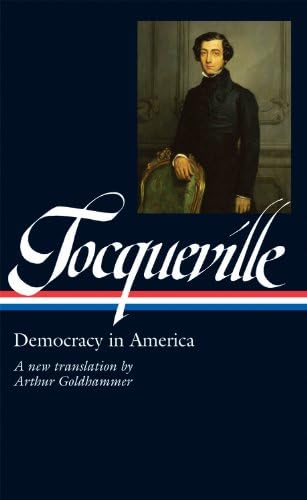
Carl references Democracy in America by Tocqueville, noting he 'doesn't mention the word immigrant or immigration even once' because the U.S. was only 2% foreign-born at that time
Unlike previous immigration waves, current immigration involves 'visual differences' that create 'more challenges to assimilation' compared to European immigrants
Carl advocates for 'net zero immigration' to allow time for cultural reconstitution, arguing America has 'lost so much cultural confidence since the 1960s'
The 2013-2014 Acceleration of Anti-White Discrimination
Carl identifies a 'significant break' around 2013-2014 when discrimination became 'much more radical' than previous decades
In creative class professions like Hollywood, media, and academia, it 'suddenly just becomes really, really hard to get an entry-level job' if you're white or a white man
Carl notes that 'liberal whites have become far more left-wing over the last decade plus on all of these issues than actually minorities are'
Even after the Supreme Court's 2023 affirmative action ruling, 'Asian American percentages have gone up very significantly at these schools. White percentage, I believe, is actually down a little bit'
Defending Provocative Language and Rejecting White Nationalism
Carl defends using terms like 'cultural genocide,' explaining he was 'partially, again, to troll any leftist media' and referenced Raphael Lemkin's original concept
He explicitly condemns white nationalism 'completely overtly' in his book and 'many times,' advocating instead for civic nationalism
Carl prefers discussing 'our common American culture, which is derived from European cultures, but it's not European and nor is it exclusively racial to white people'
He tells his own children: 'you need to understand that this discrimination is out there. At the same time, you cannot use it as an excuse because it'll just destroy you'
Trump's De-Radicalizing Effect and Future Vision
Carl views 'Trump as one of the main engines of de-radicalization' because young people who were 'very radicalized and blackpilled' now see they can 'advocate for things I believe' within the system
He disagrees with Elon Musk's South Africa analogy, stating 'we are not going to wind up in a South Africa-type situation. And I think that it is wrong and foolish to suggest that we are'
Carl's next book has the working title 'What's the Matter with Minnesota?' (referencing What's the Matter with Kansas? by Thomas Frank) examining why white liberals have 'gone so insane'
His vision for future America includes 'freedom, but within a sense of community,' directness, religious revival, and patriotism where 'every American' is proud of the American experiment




These notes may contain occasional inaccuracies. Learn how podbrain notes are made
More in Politics & Society

And, This Is Why Reid Hoffman Doesn’t Fear Artificial Intelligence
Jun 19, 2026And, This Is Hunter Biden Like You've Never Heard Him Before
Jun 12, 2026
Better Sex, Better Hair, Better Sleep: ‘Humanmaxxing’ Is Here
Jun 11, 2026
Introducing: OnlyFantasy (Leon's New Podcast)
May 21, 2026
Three young leaders changing the world one step at a time
May 21, 2026
.svg)