
How to Improve Your Memory & Cognitive Function at Any Age | Dr. Alan Castel
In this episode, host Dr. Andrew Huberman, professor of neurobiology at Stanford, sits down with Dr. Alan Castel, professor of psychology at UCLA and author of Better with Age The Psychology of Successful Aging. Together, they explore the mechanics of human...



- 01
Good learning happens through making mistakes and active retrieval failure, as outlined in Dr. Alan Castel's book Better with Age The Psychology of Successful Aging.
- 02
High confidence doesn't necessarily mean high accuracy when it comes to memory reconstruction and eyewitness testimony, warns Dr. Castel.
- 03
Cardiovascular exercise like walking three to four times weekly can increase hippocampal volume by 1%, reversing age-related cognitive decline.
- 04
Subjective age—how old a person feels—is a stronger predictor of lifespan than actual chronological biological age.
- 05
The ABCs of successful aging are defined by Dr. Castel as maintaining a positive attitude, physical/mental balance, and social connection.
- 06
Andrew Huberman's upcoming book Protocols An Operating Manual for the Human Body compiles scientifically substantiated protocols for sleep, exercise, and stress control.
- 07
As discussed in Walter Isaacson's biography Steve Jobs, an intense, mission-driven focus can shape how individuals maximize their finite lifespan.
- 08
Re-reading foundational texts like Principles of Neurobiology allows experienced scientists to synthesize old details into deeper, thematic frameworks.
Get the latest ideas from Huberman Lab.
Plus the best new takeaways about longevity from other top podcasts — read in minutes, not hours.
By continuing, you agree to Podbrain's Terms and Privacy Policy.
These notes may contain occasional inaccuracies. Learn how Podbrain notes are made
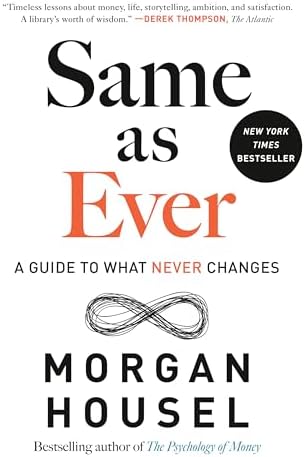
In this episode, host Dr. Andrew Huberman, professor of neurobiology at Stanford, sits down with Dr. Alan Castel, professor of psychology at UCLA and author of Better with Age The Psychology of Successful Aging. Together, they explore the mechanics of human memory, cognitive aging, and the reconstructive nature of our past experiences. The conversation touches on how memory errors and active retrieval failures actually facilitate deeper learning, contrasting with passive repetition. They discuss the psychological and physical strategies that distinguish "super agers," including the profound impact of subjective age and the "ABCs" of aging. Dr. Huberman references Morgan Housel's books The Psychology of Money and Same as Ever A Guide to What Never Changes to illustrate the unpredictable nature of reconstructed memories. They also examine the role of goal-setting, the neuroscience of the anterior midcingulate cortex, and the value of intergenerational connection. Finally, Huberman highlights foundational texts like Principles of Neurobiology and Principles of Neural Science, and previews his own upcoming work, Protocols An Operating Manual for the Human Body.
The Reconstructive and Error-Prone Nature of Memory
Memory is not a literal recording but a reconstructive mental representation of the past that is rarely perfectly accurate.
"Memory is really a mental representation of the past, and by its very nature, it's reconstructive." - Alan
Passive exposure does not guarantee strong recall; for example, most people cannot accurately draw the Apple logo despite seeing it daily.
Active retrieval failure and making mistakes are essential for neuroplasticity and deep learning.
"Good learning happens through making mistakes. Just seeing something many times doesn't mean you'll remember it well." - Alan
The reconstructive nature of memory means the past can feel highly unpredictable, a concept Huberman links to Morgan Housel's discussions in The Psychology of Money and Same as Ever A Guide to What Never Changes.
Cognitive Aging, Super Agers, and Brain Plasticity
Biological age is a poor indicator of cognitive health; some 100-year-olds remain highly functional while some 60-year-olds experience rapid decline.
Cardiovascular exercise directly impacts brain structure; walking 3 to 4 times a week for 40 minutes was shown to increase hippocampal volume by 1% over a year.
Dr. Castel's book Better with Age The Psychology of Successful Aging outlines the "ABCs" of successful aging: Positive Attitude, Physical/Mental Balance, and Social Connection.
Subjective age—how old a person feels—is a stronger predictor of longevity than chronological age, with most adults over 40 feeling 20% younger than their actual age.
The Role of Purpose, Goals, and Lifespan Perspectives
Having goals and pushing into physical or mental friction activates the anterior midcingulate cortex, a brain structure that maintains volume in super agers.
Walter Isaacson's biography Steve Jobs illustrates how an intense, mission-driven focus can drive individuals who unconsciously sense their limited lifespan to maximize their time.
Legendary UCLA basketball coach John Wooden shared that the two most important words for a fulfilling life are "love" and "balance," as detailed in Better with Age The Psychology of Successful Aging.
Intergenerational connection, such as spending moderate time (around 5 hours a week) with grandchildren, is strongly correlated with improved memory performance in older adults.
Foundational Texts and Practical Health Protocols
Huberman advocates for revisiting foundational textbooks like Liqun Luo's Principles of Neurobiology to synthesize complex details into broader, thematic frameworks.
While comprehensive references like Principles of Neural Science provide exhaustive detail, more accessible textbooks help maintain cognitive frameworks over time.
Huberman introduces his upcoming book Protocols An Operating Manual for the Human Body, which compiles scientifically substantiated protocols for sleep, stress, and fitness.
Simple physical tests, like balancing on one leg with eyes closed, serve as vital diagnostic tools for tracking cerebellar health and preventing dangerous falls.




These notes may contain occasional inaccuracies. Learn how Podbrain notes are made
More in Health & Wellness
#399 ‒ The evolution of Alzheimer's disease and dementia care: how early detection, personalized treatment, new therapies, and a multimodal approach are changing the landscape | Gayatri Devi, M.D.
Jul 13, 2026
Essentials: The Science of Eating for Health, Fat Loss & Lean Muscle | Dr. Layne Norton
Jun 25, 2026
281. Dr. Phil Reveals The Exercise That Rewires Your Brain in Minutes
Jun 25, 2026
Will Harlow: STOP Losing Muscle After 50 (Do This Instead)
Jun 23, 2026Science of Attraction, Compatibility & Romance | Dr. Paul Eastwick
Jun 22, 2026.svg)