
Explaining Frontier era America
This episode features hosts Ruyard and Austin discussing the American frontier period from 1790 to 1890, exploring how Anglo-American settlers expanded from the Appalachian Mountains to the Pacific Coast in just one century.


- 01
The American frontier period spanned exactly 100 years (1790-1890), from the American Revolution to the defeat of the final Native American tribe at Wounded Knee
- 02
America's population doubled every 15 years during the frontier period, creating enormous westward demographic pressure that governments couldn't control
- 03
The frontier was conquered in two phases: first the rapid crossing to California by 1848, then the filling in of the Great Plains after agricultural innovations like barbed wire and new plows
- 04
"Frontier America is probably the holistically healthiest society in history" - Ruyard, citing optimal balance of challenge, social mobility, wealth, and cultural vitality
- 05
The cotton gin, invented by a Connecticut Yankee, paradoxically caused massive expansion of slavery despite founding fathers' expectations it would die out naturally
- 06
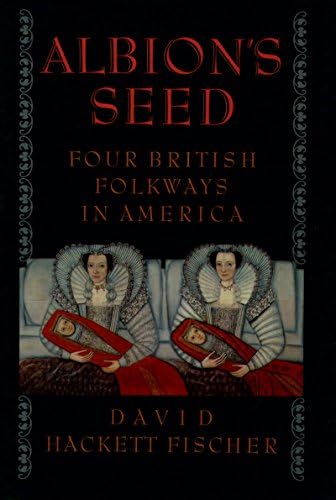
Four distinct East Coast cultures (New England Yankees, Pennsylvania Quakers, Virginia Cavaliers, Scots-Irish Appalachians) each colonized westward in parallel bands visible in modern genetic maps
Get the latest ideas from History102.
Plus the best new takeaways from other top podcasts — read in minutes, not hours.
By continuing, you agree to Podbrain's Terms and Privacy Policy.
These notes may contain occasional inaccuracies. Learn how Podbrain notes are made
This episode features hosts Ruyard and Austin discussing the American frontier period from 1790 to 1890, exploring how Anglo-American settlers expanded from the Appalachian Mountains to the Pacific Coast in just one century.
Ruyard brings personal connection to the topic, with multiple ancestors who participated in frontier settlement, including five who died in the Indian Wars, and a family pattern of following the frontier westward through Ohio, Indiana, and Nebraska across generations.
The conversation covers the distinct cultural regions that colonized the West, the technological innovations that enabled settlement of the Great Plains, the role of figures like Andrew Jackson and Kit Carson, and the transformation from a decentralized frontier society to a transcontinental empire.
Topics include the ecological impact of westward expansion (buffalo near-extinction, deer overpopulation), the economics of slavery and cotton, the Mexican-American War, Mormon settlement of Utah, and how the closing of the frontier fundamentally changed American society and government structure.
Ecological Transformation and Animal Populations
Buffalo herds stretched from Pittsburgh to Alaska and the Rockies in numbers so vast early explorers compared them to "entire human cities," before mass hunting nearly drove them to extinction
Carrier pigeons once blocked out the sky across Appalachia but are now extinct due to unrestricted hunting during the frontier period
Modern America has more deer than during the Native American period due to removal of predators and strict hunting regulations implemented as overcompensation for 1800s mass killings
Pennsylvania has 13 million people and 20 million deer
Deer overpopulation causes ecological issues and disease outbreaks
Hunters must memorize bird species and follow strict tag limits
Wilderness has been expanding in the US since the 1970s, with mountain lions returning to upstate New York and wolves increasing their range dramatically
The Great Plains Agricultural Revolution
The Great Plains were called "the great American desert" and considered unfarmable until the 1880s-90s, which is why early settlers jumped across to Utah and California first
The soil in Nebraska and Kansas was so thick from glacial deposits that normal plows would break, requiring invention of new plow designs that could "slick the fertilizer off"
Barbed wire invention was essential for Great Plains farming because there weren't enough trees to build traditional fences to keep cattle out of corn fields
America spent "a ludicrous amount of its total national revenue" on building fences before barbed wire
This technology enabled the transition from cowboy culture to farmer culture
The musical Oklahoma (set in 1903) depicts the cultural conflict between "cowmen and the farmers" as the Great Plains transitioned from open range to agriculture
Cowboy Culture's Brief Twenty-Year Window
Cowboys only existed as a distinct culture for approximately 20 years, during the period when Americans lacked technology to farm the Great Plains but could herd cattle there
Thousands of cows lived on the Great Plains with cowboys riding them to Kansas City, Austin, or St. Louis for butchering, then shipping refrigerated meat to the Northeast and Europe
"Cow towns had higher violence than general towns. General towns were like Chicago rate today. Cow towns were about five times more violent, 100 out of 100,000" - Austin, noting early years reached 1,000 per 100,000
Herding cultures share archetypal similarities across geography, prioritizing "mobility, warrior aggression, masculinity, independence, lawlessness, and a strong warrior spirit"
Government Weakness and Militia-Based Expansion
"The American government was so weak that you should view the frontier period as the Anglo-American people spreading west and then the government just happens to keep tabs on them" - Ruyard
British policy prohibiting white settlement west of the Appalachians was completely unenforceable, with Scots-Irish settlers already crossing by the American Revolution
Frontiersmen were legally required to own guns for militia duties to defend towns and families, establishing the roots of American gun culture
"The frontier period should better be seen as a tribal war in a place like Africa than actual national governments fighting each other" - Ruyard, describing conflicts between white militias and Native tribes
Internal conflicts were common, with Scots-Irish frequently fighting Quaker settlers in Pennsylvania, and battles between Puritans and Quakers over New Jersey territory
Mormon Settlement and Persecution
Joseph Smith founded Mormonism in 1840s upstate New York during the Second Great Awakening, claiming the angel Gabriel gave him gold tablets that he subsequently lost
Mormons were systematically pushed westward from Ohio to Missouri to Utah, with locals in Scots-Irish and Midlander areas implementing "shoot on sight" policies against Mormon settlers
Mormons claimed territory they called "Desert" spanning from Los Angeles to Canada to Denver, but the US military forced them to abandon polygamy before granting Utah statehood in the 1890s
The Mormon church strategically directed settlement locations across the American West, functioning as a centrally managed theocracy that "seeded Mormons strategically to grow as much as possible"
"The Mormons were the society in the world which treated women the best, which is funny because they also practice polygamy" - Ruyard
Four Cultural Regions Colonizing the West
New England Yankees populated upstate New York, northern Pennsylvania, Ohio, Michigan, Wisconsin, and Minnesota, building towns around churches as extensions of their theocratic culture
Pennsylvania Quakers spread through Ohio, Indiana, Illinois, Nebraska, and Kansas, building towns around markets in a pluralistic, mercantile society where Methodism dominated (one-third of Americans by mid-19th century)
"The culture that became general American culture - the average American accent, food, building style - came from 19th century Ohio, Pennsylvania, and upstate New York" - Ruyard
Scots-Irish Appalachians spread lightly across the frontier with herding culture, following the saying "if you can see another man's smoke stack, your area is too crowded"
Virginia exported more people to western states than every northern state combined due to slavery's ecological unsustainability depleting Virginia's land and economy
Modern genetic maps show these four East Coast cultural groups created distinct westward bands extending to the 100th parallel, with genetic differences between North and South so large "there should be a desert or mountain range on the Mason-Dixon line"
Andrew Jackson and the Southern Frontier
Andrew Jackson "is probably the most emblematic frontier character possible," growing up poor Scots-Irish in North Carolina and fighting a British soldier as a child during the Revolution - Ruyard
Jackson is "the American president who by far has killed the most people outside of war," constantly fighting duels and building his reputation through violence
At the Battle of New Orleans in the War of 1812, Jackson defeated the British army that had fought at Waterloo, and crushed the Creek Confederacy that ruled Alabama and Mississippi
Jackson forced the Cherokee and other "seven civilized tribes" (who practiced capitalism, had libraries, and converted to Christianity) westward on the Trail of Tears, which passed by only one vote
As president, Jackson destroyed the Bank of America based in Philadelphia, representing "the frontier getting enough power to outvote the east coast" and ending old aristocratic control
Davy Crockett was the only Tennessee representative to vote against the Trail of Tears, then went to Texas to start a revolution, showing the complexity of frontier politics
Cotton Gin and Slavery's Unexpected Expansion
"At the time of the American Revolution, it was widely assumed that slavery would die out because slavery was actually not economical" - Ruyard, noting founding fathers expected natural extinction
A Connecticut Yankee working for General Nathanael Greene invented the cotton gin, which compressed cotton and made processing vastly easier, paradoxically causing massive slavery expansion
By the Civil War era, "anti-slavery opinions were not allowed in a lot of the South," a complete reversal from founding fathers' near-universal opposition to slavery
The South's power center shifted from Virginia to Mississippi and Alabama as the "cotton kingdom" exported to Northern factories and to Britain and France during the Industrial Revolution
The Deep South operated as "practically a police state where all white men had to own guns and go on patrol to keep the slaves down" in the only majority-black region of America
Slave breeding plantations in the upper South "purposely just produce baby slaves to grow up as individuals to sell them further south," matching demand from agricultural expansion
Mexican-American War and Territorial Conquest
Mexico offered Anglo-Americans settlement in Texas, but 40,000 Anglos immediately outnumbered the 4,000 Latino population, leading to independence demands and escalating tensions
Texas declared independence and existed as a separate country for nearly 10 years, but the North blocked incorporation because "they didn't want to incorporate an area the size of France into the South's alliance"
President Polk "is probably one of our best presidents ever and he is the only president who completed every single campaign promise" - Ruyard, noting his goal was conquering Mexico
"The Mexican-American War is one of the most disastrous defeats for a nation ever" - Ruyard, with Americans seizing Veracruz, capturing Mexico City, and taking half of Mexico's land
An adventurer named Fremont "just conquered California with his buddies" before the formal war even concluded
"The Mexicans were in California for centuries and within 2 years of the Americans conquering it, they struck gold" - Ruyard, establishing California's character as a society of "daring gold strikes"
Kit Carson and Western Exploration
Kit Carson was "the premier western trailblazer" who established early trails and guided expeditions, with all serious westward travel done on mules rather than horses for reliability
The West featured "a crazy mix of Spanish colonial remnants" with "grimy conquistador cultures" blended with natives, creating random battles between Spanish cavaliers with long spears and cowboys
While fleeing Apaches through Texas, Carson's expedition discovered major Mesoamerican archaeological sites and desperately recorded findings for an entire night despite the danger
Two archaeologists stayed behind the rest of the crew in an "absolutely insane" decision
The site remained unvisited for a long time after their passage
Pre-Civil War western expansion featured "random military figures pretending to conquer towns" with maybe "50 people fight 50 people one time," but post-Civil War these schemes became automatic with surplus officers and soldiers
Frontier's End and Imperial Transformation
The 100th parallel marked the breakdown of "Albion's Seed America" (British-derived East Coast cultures) and required federal government bureaucracy rather than local militias to maintain control
The transcontinental railroad from Missouri to California, built during the Civil War after the South could no longer block it, created what Meinig calls "a continental iron line" binding America together
"Even at the time people said the end of the frontier will lower quality of life in America. And that was completely true" - Ruyard, citing loss of labor fluidity and social mobility
The late 19th century saw consolidation of enormous industrial firms in timber, oil, and steel, with "New York, Chicago, and Philadelphia divided up the continent economically"
"Within 5 years of the final defeat of the Sioux, the Americans were conquering the Philippines and Cuba" - Ruyard, showing rapid transformation from continental frontier to transcontinental empire
By the Civil War, Americans had "wiped out every major population center and every single bit of arable land west of the Mississippi," leaving only hunter-gatherer tribes in the Great Plains




These notes may contain occasional inaccuracies. Learn how Podbrain notes are made
More in History

682. South Africa: Mandela and the Death of Apartheid (Part 6)
Jun 24, 2026
681. Brazil: The Emperor’s Anthem (Part 5)
Jun 21, 2026679. Germany: The Song Hitler Stole (Part 3)
Jun 14, 2026
Tom Holland Meets Paul McCartney
May 14, 2026Greece vs. Persia: The Battle of Marathon (Part 2)
May 13, 2026
.svg)