
Excellent Advice for Living
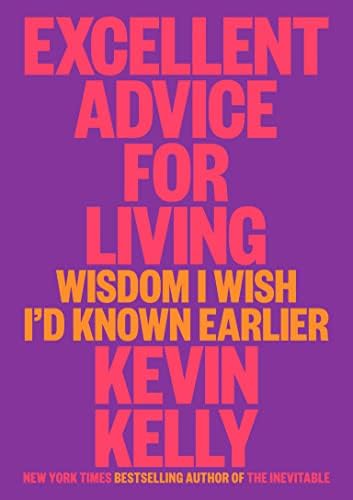
This episode features a deep dive into Kevin Kelly's Excellent Advice for Living Wisdom I Wish I'd Known Earlier, a collection of 450 pieces of life wisdom that Kelly began compiling on his 68th birthday. The host discovered the book randomly through a...

Episode


- 01
Kevin Kelly compiled 450 pieces of life advice from Excellent Advice for Living, starting with 68 bits on his 68th birthday
- 02
"Don't be the best. Be the only" - focus on uniqueness rather than competition in your field
- 03
"The rule of three in conversation: ask someone to go deeper three times to reach the closest truth"
- 04
"It is much easier to change how you think by changing your behavior than to change your behavior by changing how you think"
- 05
"Always demand a deadline because it weeds out the extraneous and prevents perfectionism" - echoing Ed Catmull's insights from Creativity, Inc.
- 06
"The reward for good work is more work" - a principle for those playing infinite games
- 07
"Over the long term, the future is decided by optimists who imagine improved problem-solving abilities"
- 08
"Choose to believe that the entire universe is conspiring behind your back to make you a success"
Get the latest ideas from Founders Podcast.
Plus the best new takeaways from other top podcasts — read in minutes, not hours.
By continuing, you agree to podbrain's Terms and Privacy Policy.
These notes may contain occasional inaccuracies. Learn how podbrain notes are made
This episode features a deep dive into Kevin Kelly's Excellent Advice for Living Wisdom I Wish I'd Known Earlier, a collection of 450 pieces of life wisdom that Kelly began compiling on his 68th birthday. The host discovered the book randomly through a friend's Instagram story and read it in one sitting, then decided to share the highlighted advice that resonated most.
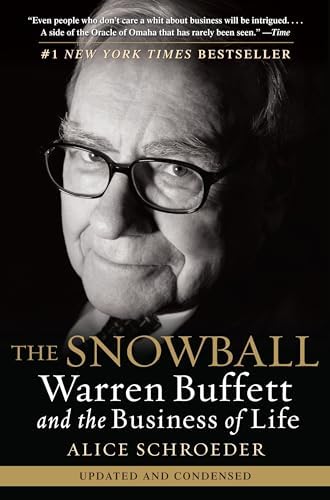
Kelly describes his advice as "seeds" that could each be expanded into full essays, representing timeless wisdom channeled from the ages. The advice spans personal relationships, work habits, decision-making, and life philosophy. Throughout the discussion, the host connects Kelly's insights to lessons from other influential figures and books, including Warren Buffett's approach in The Snowball, Ed Catmull's creative principles from Creativity, Inc., and the entrepreneurial philosophies found in Direct from Dell and James Dyson's Against the Odds.
The episode explores recurring themes in Kelly's advice: the importance of kindness and empathy, the power of habits over inspiration, the value of taking others' perspectives, and the benefits of playing infinite games rather than finite ones. Many of the maxims focus on practical wisdom for building better relationships, making better decisions, and maintaining long-term thinking in both personal and professional contexts.
The Power of Listening and Deadlines in Creative Work
"While listening to someone you love, keep asking them, is there more? Until there is no more" - listening well is described as a superpower that works in both personal and professional relationships.
"Always demand a deadline because it weeds out the extraneous and the ordinary" - deadlines prevent perfectionism and force necessary decisions, as Ed Catmull explains in Creativity, Inc.: "without a deadline, people can always justify more time and more money in the name of making it better."
Christopher Nolan views deadlines as "creative accelerators, not creative killers, because they force decisions" - his creative process actually ramps up under deadline pressure.
Playing Your Own Game and Measuring Success
"Don't measure your life with someone else's ruler" - the host connects this to infinite game players like Michael Dell and James Dyson, whose autobiographies Direct from Dell and Against the Odds show they had no interest in conforming to others' standards.
"The advantage of a ridiculously ambitious goal is that it sets the bar very high. So even if your effort falls short, it may exceed an ordinary success."
Warren Buffett's approach in The Snowball exemplifies collecting and sharing knowledge: "He collected a lot of information, synthesized it, added his own perspective, and spent enormous time sharing that knowledge through shareholder letters and talks."
The Compound Power of Habits and Small Improvements
"Recipe for greatness: become a teeny bit better than you were last year and repeat that every year" - emphasizing consistency over intensity.
"Habit is far more dependable than inspiration. Make progress by making habits" - Rockefeller's metaphor: "Habits are like ropes. We spin a rope every day, and finally it's too thick to break."
"The purpose of a habit is to remove that action from self-negotiation. You no longer expend energy deciding whether to do it. You just do it" - Kobe Bryant would write out training programs to avoid mid-workout negotiations with himself.
"All of the great prizes in life in wealth, relationships, or knowledge come from the magic of compounding interest by amplifying small, steady gains."
Understanding Others and Building Relationships
"The best way to get to a yes in a negotiation is to truly understand what yes means for the other party" - much of Kelly's advice centers on understanding how others view things rather than being self-absorbed.
"The more you are interested in others, the more interesting they'll find you. To be interesting, be interested."
"The rule of three in conversation: To get to the real reason, ask a person to go deeper than what they just said. Then again, and then once more. The third time's answer is the one that's closest to the truth."
"Mastering the view through the eyes of others will unlock so many doors" - this enables heartfelt empathy, persuasion abilities, and great design thinking.
Forgiveness, Kindness, and Letting Go
"When you forgive others, they may not notice, but you will heal. Forgiveness is not something we do for others. It's a gift to ourselves."
"Hatred is a curse that does not affect the hated, it only poisons the hater. Release a grudge as if it were a poison."
"Forgiveness is accepting the apology you will never get" - Kelly repeatedly emphasizes freeing yourself from the burden of holding grudges.
"Don't reserve your kindest praise for a person until their eulogy. Tell them while they are alive when it makes a difference to them. Write it in a letter so they can keep it."
Learning, Teaching, and Protecting New Ideas
"The best way to learn anything is to try to teach what you know" - the host experiences this constantly, realizing gaps in understanding when explaining concepts to others.
"Separate the process of creating from improving. You can't write and edit or sculpt and polish or make and analyze at the same time. If you do, the editor stops the creator."
Charles Kettering, Henry Ford, and Ed Catmull from Creativity, Inc. all emphasized protecting fragile new ideas: "Ideas grow very much like plants. When the shoots first come through the ground, they are quite tender and vulnerable."
"To get to one good idea, you've probably gone through hundreds, if not thousands, of bad ideas. A multitude of bad ideas is necessary for one good idea."
Long-term Thinking and Life Philosophy
"Over the long term, the future is decided by optimists. To be an optimist, you don't have to ignore problems. You just imagine how much our ability to solve problems improves."
"Miraculous things can be accomplished if you give it 10 years. A long game will compound small gains that will be able to overcome even big mistakes."
"The trick to making wise decisions is to evaluate your choices as if you were looking back 25 years from today. What would your future self think?"
"Choose to believe that the entire universe is conspiring behind your back to make you a success" - described as one of the host's favorite lines in the entire book.



These notes may contain occasional inaccuracies. Learn how podbrain notes are made
More in Finance & Business

The Biggest Pivot In AI History Is Happening Right Now | Jordi Visser
Jun 20, 2026
How Substack Creators Are Covering This Strange Markets Era
Jun 20, 2026
#422 Joseph Pulitzer
Jun 20, 2026
World's First Trillionaire, Anthropic Fable Banned, The New Oligarchs, Iran Peace Deal
Jun 19, 2026Anthropic's Co-Founder and Top Economist on Doing Research at the AI Frontier
Jun 19, 2026
.svg)