
If You Want To Have $100K Saved, Do This | Ep 956
Alex Hormozi shares his personal roadmap to accumulating the first $100,000 in savings, emphasizing that this milestone was more psychologically impactful than his later multi-million dollar business exits. He explains how reaching $100K eliminated daily financial stress and enabled long-term strategic thinking.

Episode


- 01
The wealthiest feeling came at $100K saved, not millions in exits - 'that was when I stopped having to worry about tomorrow' - Alex
- 02
Cut ALL costs: no eating out, discount groceries only, keep current clothes for two years, cheapest possible housing arrangements
- 03
Use 4-4-4 time blocks: four hours promotion, four hours delivery, four hours building for maximum productivity without day job
- 04
Learning requires behavior change: 'same condition, new behavior' - consuming content without action isn't real learning
- 05
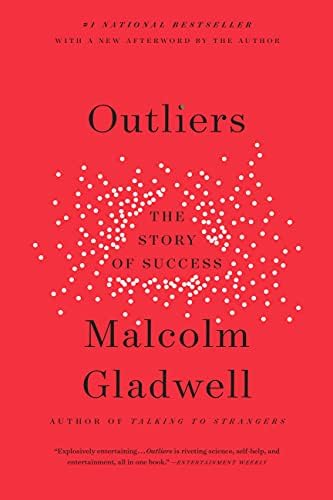
Malcolm Gladwell's 10,000 hours concept reframed as '10,000 iterations' with feedback loops for skill mastery
- 06
Spend saved money on three buckets: tools, implementation help, and trial attempts to accelerate learning
- 07
Never increase lifestyle with income - 'you want to be rich, not look rich' - bank the difference
- 08
Research skills people already pay for: analyze your credit card statement to find consumer needs or B2B services businesses buy
Get the latest ideas from Alex Hormozi.
Plus the best new takeaways from other top podcasts — read in minutes, not hours.
By continuing, you agree to podbrain's Terms and Privacy Policy.
These notes may contain occasional inaccuracies. Learn how podbrain notes are made
Alex Hormozi shares his personal roadmap to accumulating the first $100,000 in savings, emphasizing that this milestone was more psychologically impactful than his later multi-million dollar business exits. He explains how reaching $100K eliminated daily financial stress and enabled long-term strategic thinking.
The conversation covers six concrete steps: radical cost-cutting, time optimization using maker-manager principles, researching profitable skills, systematic learning through iteration, strategic spending on tools and education, and maintaining lifestyle discipline. Hormozi draws from his experience sleeping on gym floors and sharing bedrooms while building his first successful business.
He references Malcolm Gladwell's work from Outliers The Story of Success while reframing the famous 10,000-hour rule as 10,000 iterations with feedback loops. The discussion includes practical frameworks like the 4-4-4 time allocation method and the 111 rule for business focus.
Radical Cost-Cutting: Eliminating All Non-Essential Expenses
Cut ALL costs to create cash flow for reinvestment: 'no eating out anymore for anything. And if you're hungry, you deal with it' - Alex
Housing should be as cheap as possible - Alex shared a bedroom paying $300-400/month even after making $20K monthly income
Keep current clothing for two years minimum, use discount grocery stores only, drive a paid-off clunker to eliminate car payments
The goal is creating cash flow margin: 'you're working and making money, but right now you're probably spending all of it' - Alex
Time Optimization: The 4-4-4 Method and Maker-Manager Framework
Use available time chunks efficiently: 'Your nine to five job is not killing your dreams' - focus on 5-9am and 5-9pm windows
Implement 4-4-4 split for full-time entrepreneurs: four hours promotion, four hours delivery, four hours building future opportunities
Separate maker time (deep work) from manager time (meetings/communications) to avoid productivity-killing task switching
Block first 4-6 hours daily for maker time: 'a single habit that has changed my output was having my first four to six hours of my day to myself' - Alex
Skill Research: Finding What People Already Pay For
Research skills with existing market demand rather than inventing new categories: 'go find what people are already paying for'
For B2B: focus on advertising, content creation, outreach, funnel building - 'each of those are skills that on their own, you could go build yourself a million dollar plus business off of'
For B2C: analyze your own spending patterns - 'print out your credit card statement or your bank statement and look at what you actually spend money on'
Apply the 111 rule: 'sell one product or service to one avatar on one channel until you make $1 million' - Alex
Learning Through Iteration: Beyond the 10,000 Hour Rule
True learning requires behavior change: 'same condition, new behavior. If you're in the same condition...and what you're doing every day is not changing, you are not learning' - Alex
Reframe Outliers The Story of Success concept: 'it's not 10,000 hours but 10,000 iterations' with feedback loops for improvement
Analyze top 10% performers: 'What are the top 10% of sales calls? What are the top 10% of content?' to identify success patterns
Fastest learning method: 'find somebody who's really good and hire them one-on-one' even when barely affordable
Generate high volume for pattern recognition, then avoid bottom 90% mistakes while replicating top 10% behaviors
Strategic Spending: Tools, Implementation, and Trial Attempts
Allocate saved money across three buckets: tools (software, CRM), implementation help (courses, tutoring), and trial attempts (ad spend, testing)
Invest in one-on-one tutoring: 'for some reason, this is like font out of vogue. But if you can get someone to just give you one-on-one help, my God, it's so valuable' - Alex
Accept minor investments for major time leverage: choose existing tools over rebuilding everything from scratch
Focus on increasing active income first: 'most billionaires who are self-made made their money from making money, meaning they had active income'
Lifestyle Discipline: Banking the Difference
Maintain low expenses despite income growth: 'I know guys who are making $40,000 a month and made it for years...and spent every single dollar' - Alex
Goal is $100K in bank account, not revenue: 'You want to be rich, not look rich...Everything minus food and shelter is your profit'
Continue investing in learning: 'the day that you stop spending money on learning is the day you decide that you do not want to make more' - Alex
$100K milestone enables long-term thinking: 'we could do nothing and fuck off for three and a half years...that was when I was able to really start thinking long term' - Alex
These notes may contain occasional inaccuracies. Learn how podbrain notes are made
More in Finance & Business

The Biggest Pivot In AI History Is Happening Right Now | Jordi Visser
Jun 20, 2026
How Substack Creators Are Covering This Strange Markets Era
Jun 20, 2026
#422 Joseph Pulitzer
Jun 20, 2026
World's First Trillionaire, Anthropic Fable Banned, The New Oligarchs, Iran Peace Deal
Jun 19, 2026Anthropic's Co-Founder and Top Economist on Doing Research at the AI Frontier
Jun 19, 2026
.svg)