
How to Grow Your Brand In 2026 | Ep 958
Alex Hormozi, entrepreneur and author of $100M Offers and $100M Leads, presents his framework for building personal brands that generate massive revenue. In the past year, his social media achieved 3 billion impressions, gained 4.5 million subscribers, and...

Episode


- 01
Branding is a deliberate pairing of things through an outcome - connecting your product with what customers like through positive experiences
- 02
Alex Hormozi's social media hit 3 billion impressions in 12 months, bringing 4.5 million new subscribers and breaking world records for nonfiction book sales
- 03
Strong brands can charge 2-10x more than competitors for identical products, like Yeti charging $40 vs $10 for similar cups
- 04
Good branding improves advertising response rates by up to 6x while enabling premium pricing and customer loyalty
- 05
Brand strength is measured by three metrics: influence (likelihood to change behavior), direction (towards or away), and reach (how many people)
- 06
Warren Buffett: 'The single most important decision in evaluating business is pricing power' - brands enable this power
- 07
Bad pairings can hurt brands instantly, but recovery happens by overwhelming customers with positive associations they like
- 08
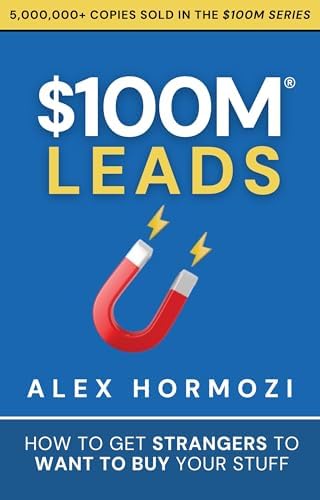
$100M Offers and $100M Leads are offered as free resources to help business owners scale and make money
Get the latest ideas from Alex Hormozi.
Plus the best new takeaways about marketing from other top podcasts — read in minutes, not hours.
By continuing, you agree to podbrain's Terms and Privacy Policy.
These notes may contain occasional inaccuracies. Learn how podbrain notes are made
Alex Hormozi, entrepreneur and author of $100M Offers and $100M Leads, presents his framework for building personal brands that generate massive revenue. In the past year, his social media achieved 3 billion impressions, gained 4.5 million subscribers, and broke world records for fastest-selling nonfiction book with over $105 million in weekend sales.
The presentation covers three core areas: defining what branding actually is (beyond vague marketing concepts), explaining why strong brands generate premium pricing and customer loyalty, and providing tactical steps for building and growing a personal brand. Hormozi uses examples from Nike, Apple, Bud Light, and his own business to illustrate how deliberate brand pairing creates competitive advantages.
Throughout the talk, Hormozi emphasizes that branding is about making money through strategic associations, not abstract concepts like feelings or presence. He offers his books $100M Offers and $100M Leads as free resources to demonstrate value-based brand building in action.
Redefining Branding Beyond Marketing Jargon
Traditional branding definitions are vague and unhelpful - 'A brand is a person's gut feeling' or 'emotional shorthand' don't provide actionable guidance for building one
Branding is actually 'a deliberate pairing of things through an outcome' - like Coca-Cola pairing their product with the 'yum' experience customers want
Learning means 'same condition, new behavior' - if definitions don't change your actions, no learning occurred and nothing will improve
Good branding pairs your business with positive outcomes for ideal customers, while bad branding creates negative associations that hurt sales
How Brand Pairings Drive Premium Pricing and Loyalty
Strong brands transform $5 generic t-shirts into $60 premium products through strategic associations with champions like LeBron and Tiger Woods
Warren Buffett: 'If you've got the power to raise prices without losing business to a competitor, you've got a very good business' - branding creates this pricing power
Good branding improves advertising response rates dramatically - generic products might get 0.5% click-through rates while branded versions get 3% or higher
Brand loyalty compounds profits as customers buy repeatedly without considering competitors, like Apple users who automatically upgrade to new products
Brands outperform commodities in every industry because they provide lasting competitive advantages that take decades to build but can be destroyed quickly
The Bud Light Case Study: Good Advertising vs Bad Branding
The Dylan Mulvaney collaboration was excellent advertising (letting people know about the product) but terrible branding for Bud Light's core audience
Sales suffered because more customers disliked the pairing than liked it, making it objectively bad branding regardless of personal opinions
Bud Light recovered by pairing with Shane Gillis and UFC - associations their target audience of 'constructive males' actually appreciated
The same Dylan Mulvaney pairing could have been good branding for a different company with a different target audience - context matters more than the pairing itself
Building Brand Bouquets: The Flower Assembly Method
Brand building is like assembling a bouquet - individual elements (flowers) become powerful when deliberately arranged together around a theme
Narrow your brand by focusing on one topic area (all taco content) or expand by branching into related areas (tacos to Mexican food to restaurants)
Random, distant pairings hurt brands because customers can't make coherent associations - avoid mixing unrelated elements like bikes, socks, and burgers
One bad pairing can damage an entire brand, like a dead flower ruining a beautiful bouquet, but recovery happens by overwhelming with positive associations
Most brands happen by accident through random associations, while successful brands curate their pairings deliberately like tending a garden
Measuring Brand Strength: The Three-Metric Framework
Brand strength has three measurable components: influence (likelihood to change behavior), direction (towards or away), and reach (how many people)
Strong brands don't have to be polarizing - Taylor Swift and Apple have massive positive influence without equal numbers of haters
Even small audiences can have high influence, like parents who change their children's behavior despite low reach compared to celebrities
Every new brand pairing risks losing some audience members while potentially gaining others - success means netting more positive associations than negative ones
'Don't let the five mean comments stop you from gaining the 500 new people who like the new thing' - focus on net growth over perfect approval
Hormozi's Personal Brand Strategy and Free Resources
Hormozi deliberately pairs his brand with business value by creating content that helps small business owners make money and grow their companies
He offers $100M Offers and $100M Leads as free video courses at acquisition.com/training to reinforce value-based associations
The books are also available as free podcast episodes starting around episode 570 on 'The Game' podcast for audio learners
For brand-building beginners, he created a free community at school.com/games with tools, training, and friendly competition to get started
The entire presentation serves as brand building in action - if attendees use the information to make money, positive branding has occurred

These notes may contain occasional inaccuracies. Learn how podbrain notes are made
More in Finance & Business

The Biggest Pivot In AI History Is Happening Right Now | Jordi Visser
Jun 20, 2026
How Substack Creators Are Covering This Strange Markets Era
Jun 20, 2026
#422 Joseph Pulitzer
Jun 20, 2026
World's First Trillionaire, Anthropic Fable Banned, The New Oligarchs, Iran Peace Deal
Jun 19, 2026Anthropic's Co-Founder and Top Economist on Doing Research at the AI Frontier
Jun 19, 2026
.svg)