
Find Something Worth Suffering For | Ep 950
This monologue explores the misconception around 'following your passion' and reframes entrepreneurial suffering as necessary and meaningful. The speaker draws from personal experience building multiple businesses, including sleeping on a gym floor for six months, to challenge the popular advice given to young...

Episode


- 01
Passion's Latin root 'pasio' means suffering - it's about finding something worth suffering for, not doing what you love
- 02
95% of successful business ownership involves tasks unrelated to your original passion, making passion-following impractical for entrepreneurs
- 03
Suffering is a fixed cost across all life paths - the key is picking something that pays better or matters more
- 04
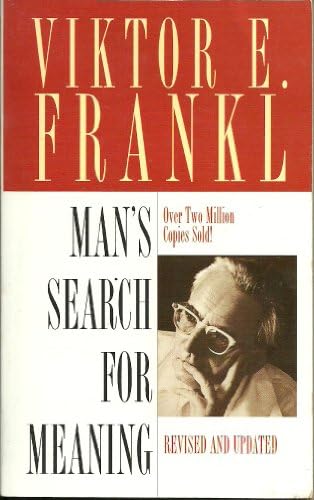
Viktor Frankl's principle: 'If a man has a big enough why, he can overcome almost any how' - the goal becomes your passion, not the path
- 05
Research shows pain tolerance triples when people believe their suffering protects loved ones, demonstrating the power of meaningful purpose
- 06
Growth requires becoming someone capable of handling current struggles - the stretch between who you are and who you need to become is the pain of growth
- 07
Every successful person shares the same path of uncertainty and sacrifice - the only difference is committing to not stopping
- 08
Subjective well-being returns to baseline after major life changes, making the 'why' behind your work more important than external rewards
Get the latest ideas from Alex Hormozi.
Plus the best new takeaways about entrepreneurship from other top podcasts — read in minutes, not hours.
By continuing, you agree to podbrain's Terms and Privacy Policy.
These notes may contain occasional inaccuracies. Learn how podbrain notes are made
This monologue explores the misconception around 'following your passion' and reframes entrepreneurial suffering as necessary and meaningful. The speaker draws from personal experience building multiple businesses, including sleeping on a gym floor for six months, to challenge the popular advice given to young entrepreneurs.
The discussion covers the etymology of passion, the reality of business ownership, the fixed nature of suffering across all life paths, and the importance of having a meaningful 'why' that transcends personal comfort. Key insights come from Viktor Frankl's work in Man's Search For Meaning and research on pain tolerance when protecting others.
The speaker shares specific examples from mentoring entrepreneurs with $10+ million businesses, personal anecdotes about gym ownership, and the decision to continue working despite financial independence, all to illustrate that meaningful work requires embracing difficulty rather than avoiding it.
The True Etymology of Passion and Its Business Reality
The Latin root 'pasio' means suffering, not enjoyment - passion originally referred to Christ's crucifixion story, making it about enduring pain for something meaningful rather than doing what feels good.
A young entrepreneur quit his job for entrepreneurship but became disillusioned when he didn't love every moment, illustrating the dangerous misconception that passion means constant enjoyment.
Even in businesses built around your supposed passion, 95% of daily tasks won't involve that passion - successful business owners spend most time on operations, management, and growth rather than their original interest.
Passion only exists 'in the vague, not in the specific' - the rare moments of doing what you love become less enjoyable if done constantly, like eating at a favorite restaurant every meal.
Suffering as a Fixed Cost Across All Life Paths
"Growing a business is really painful and sucks. Being in a plateaued business is really painful and sucks. Being in a decaying business is really painful and it sucks. Entrepreneurship is hard. Being an employee is hard."
The core entrepreneurial mistake is believing current suffering indicates a wrong path, when changing paths simply creates different suffering without eliminating it.
"Success and failure are on the same path. Failure is just an earlier exit" - the difference between outcomes isn't the presence of difficulty but persistence through it.
Using a hypothetical of three life paths costing the same amount of suffering, the speaker argues for choosing the path with the biggest potential reward since the pain is constant regardless.
Viktor Frankl's Why and the Power of Meaningful Purpose
Man's Search For Meaning provides the framework: "If a man has a big enough why, he can overcome almost any how" - the goal becomes your passion, not the daily activities.
Research demonstrates that people's pain tolerance triples when told their suffering protects loved ones in another room, showing how meaningful purpose amplifies human endurance.
"The man who loves the journey will walk further than the man who loves the destination. But the man who walks to protect his family will walk until the other man dies."
Love is operationally defined as what you're willing to sacrifice to maintain something - making the 'why' behind work more important than enjoying the work itself.
Personal Mission and the Reality of Entrepreneurial Sacrifice
The speaker's passion is "helping men provide" - something he's willing to suffer for despite not enjoying many downstream effects of his work.
Despite taking $42 million in distributions before a $46 million exit at 31, he chose to continue working because taking a year off left him miserable without a quest.
"A man must have a quest" - the need to drive toward something meaningful is essential, and society wrongly tells people that encountering obstacles means they're on the wrong path.
Sleeping on a gym floor for six months involved sleeping on sweat-covered turf, getting woken by cars overhead, working until 11 PM and starting at 4:15 AM, losing social status among peers, and showering at LA Fitness without flip-flops.
The Commitment to Not Stopping and Reframing Success
"I committed to not stopping. I didn't know when I would succeed or if I would succeed, but I did know that I wouldn't stop. And that if I didn't stop, that I couldn't be called a failure."
Subjective well-being returns to baseline after major life changes - people are roughly as happy after achieving goals as before, making the pursuit itself the constant rather than the reward.
"Everything is hard and no one cares" - accepting this reality allows you to choose your path based on meaning rather than seeking an easier alternative that doesn't exist.
The grandfather's wisdom: "You have two hands and one mind. That's it" - emphasizing that work is core to identity and that all paths require using these limited resources despite inevitable suffering.
These notes may contain occasional inaccuracies. Learn how podbrain notes are made
More in Finance & Business

The Biggest Pivot In AI History Is Happening Right Now | Jordi Visser
Jun 20, 2026
How Substack Creators Are Covering This Strange Markets Era
Jun 20, 2026
#422 Joseph Pulitzer
Jun 20, 2026
World's First Trillionaire, Anthropic Fable Banned, The New Oligarchs, Iran Peace Deal
Jun 19, 2026Anthropic's Co-Founder and Top Economist on Doing Research at the AI Frontier
Jun 19, 2026
.svg)