
What Happens to Design After AI?
In this episode, Andreessen Horowitz General Partner Anish Acharya hosts a conversation with Microsoft VP of Design John Maeda and Impeccable founder and CEO Paul Backes. The speakers explore the shifting relationship between design and technology, tracing its evolution from the mobile-driven era discussed in...



- 01
"Designers get better results from Claude than engineers because they use precise vocabulary like 'vertical rhythm' or 'negative space'." - Paul
- 02
"Before mobile, desktop experiences could be crappy... but mobile had high usage and therefore it was bad all the time." - John
- 03
"LLMs have been trained on the output of humanity, not on the input," meaning they approximate taste without knowing why decisions were made. - Paul
- 04
"In rooms where decisions actually happen, taste is a whisper and velocity is a megaphone," driven by organizational incentives over meaning. - John
- 05
"Great APIs are not just shape, but performance," as demonstrated by how Macintosh's QuickDraw API enabled the creation of Photoshop. - John
- 06
"The reason why someone's willing to pay that much more for that bespoke better thing is they're paying for human trust." - John
- 07
"I've been pushing, moving from UX to AX, agentic experience," where designers build non-visual affordances for AI agents. - John
- 08
"Steve Jobs was one of the greatest editors... He said no to so many things as opposed to saying yes." - Paul
Get the latest ideas from a16z.
Plus the best new takeaways about artificial intelligence from other top podcasts — read in minutes, not hours.
By continuing, you agree to podbrain's Terms and Privacy Policy.
These notes may contain occasional inaccuracies. Learn how podbrain notes are made
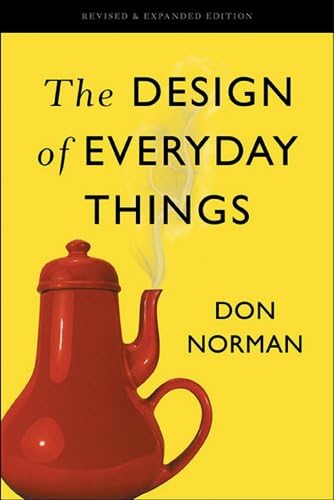
In this episode, Andreessen Horowitz General Partner Anish Acharya hosts a conversation with Microsoft VP of Design John Maeda and Impeccable founder and CEO Paul Backes. The speakers explore the shifting relationship between design and technology, tracing its evolution from the mobile-driven era discussed in The Design of Everyday Things to the rise of automated design systems.
The discussion details how Impeccable brings a structured design vocabulary to AI agents, helping developers avoid generic outputs. Maeda connects these computational shifts to principles in The Laws of Simplicity, emphasizing how automation can raise the floor of routine work so human designers can focus on raising the ceiling of creative expression.
Finally, the guests explore how modern design engineers must learn How to Speak Machine Laws of Design for a Computational Age to guide AI agents effectively. They discuss the transition from traditional user experience (UX) to agentic experience (AX), where designers build for AI agents rather than human eyes, and debate how human taste and conviction survive in an era of automated commodity.
From Mobile Usability to the Era of Auto-Design
John notes that design gained massive prominence around 2014 due to the rise of mobile: "Before mobile, desktop experiences could be crappy... mobile had high usage and therefore it was bad all the time." - John
The transition to automated design builds on historical precedents, such as Muriel Cooper's work at the MIT Media Lab predicting desktop publishing.
This shift from physical to digital interfaces mirrors the evolution of user-centered design outlined in The Design of Everyday Things.
How Impeccable Codifies Design Vocabulary for AI
Paul explains that designers get better results from LLMs because they use domain-specific terms: "Engineers don't use the words, things like vertical rhythm or negative space or make this bolder or quieter." - Paul
Impeccable acts as an open-source agent skill that injects this vocabulary, a quality layer, and a visual iteration mode directly into the developer's codebase.
This computational approach to design systems reflects the core thesis of How to Speak Machine Laws of Design for a Computational Age, where code becomes the design substrate.
John compares Impeccable's impact to the release of PostScript or Kai's Power Tools in the late 1980s, which expanded the capabilities of Adobe Photoshop.
The Battle Against AI Slop and the Power of Defaults
AI design "slop" is a moving target; while it used to be purple gradients, it has shifted to "beige backgrounds, tinted backgrounds, instrument serif, eyebrow text." - Paul
Paul attributes the early ubiquity of purple gradients to Tailwind's default theme, comparing it to how he "colored the whole web orange overnight" with jQuery UI's default theme.
To combat this algorithmic homogeneity, Impeccable uses anti-attractors and random seeds to steer models away from predictable latent spaces.
Designing for Agents: The Shift from UX to AX
John predicts a major shift from user experience (UX) to agentic experience (AX): "Agentic experience is non-visual. It is the world of robots.txt, it's lms.txt, it's command line --help." - John
Designing for AX requires optimizing for machine consumption, focusing on API design, command-line interfaces, and clear error messages.
This transition to non-visual interfaces requires applying the core principles of The Laws of Simplicity to reduce friction for autonomous agents.
While AI raises the floor for average design, human designers will focus on raising the ceiling through motion, temporal resolution, and high-end craft.
The Role of Human Conviction and Taste in Leadership
John highlights the structural challenge of defending design in corporate settings: "In rooms where decisions actually happen, taste is a whisper and velocity is a megaphone." - John
To overcome this, leaders must have multi-disciplinary conviction: "It is a bet, but it's a bet aimed at the global maximum, not the local maximum." - John
Paul shares an anecdote about Steve Jobs testing employees' conviction by calling their ideas "stupid" to see if they would defend their work or cave.
Ultimately, the premium for bespoke human design persists because "they're paying for human trust and accountability." - John


These notes may contain occasional inaccuracies. Learn how podbrain notes are made
More in Science & Tech

Is Reality Really Real? With Donald Hoffman
Jun 26, 2026
CEO-Led AI Gets 3X the ROI
Jun 25, 2026
Leslie Lamport on the Science of Distributed Systems
Jun 25, 2026
The Chopping Block: Is Strategy the Luna for Suits?, ETH Labs Shakeup & CME vs Perps
Jun 25, 2026Marc Andreessen on AI, Technology, and the Future of Humanity
Jun 25, 2026.svg)