
Is Reality Really Real? With Donald Hoffman
In this episode of StarTalk Special Edition, host Neil deGrasse Tyson, co-host Gary O'Reilly, and comedian Chuck Nice welcome cognitive neuroscientist Dr. Donald Hoffman, professor emeritus at UC Irvine. The group explores the nature of reality, consciousness, and the limits of human perception.


- 01
"The probability is zero that any organism has ever been shaped to see objective reality as it is." - Donald, drawing from The Case Against Reality How Evolution Hid the Truth from Our Eyes.
- 02
In On the Origin of Species, Darwin's evolutionary fitness is defined mathematically as the probability of successfully surviving long enough to raise offspring.
- 03
Spacetime is not fundamental and ceases to exist at the Planck scale of 10 to the minus 33 centimeters.
- 04
"Neurons do not exist when they are not perceived," representing a headset interface rather than objective physical entities. - Donald
- 05
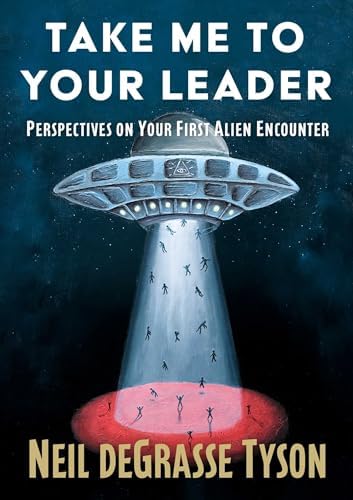
Neil's book Take Me to Your Leader provides a scientific and cultural guide for humans during a first alien contact scenario.
- 06
Donald's research team is launching the Trace Research Institute in June 2026 to mathematically model observers using recursive trace logic.
- 07
"Once you know the rules of the headset, you can play the game and no one knows you're doing it." - Donald
- 08
As explained in Visual Intelligence How We Create What We See, the human brain actively constructs 3D shapes on the fly.
Get the latest ideas from StarTalk Radio.
Plus the best new takeaways from other top podcasts — read in minutes, not hours.
By continuing, you agree to podbrain's Terms and Privacy Policy.
These notes may contain occasional inaccuracies. Learn how podbrain notes are made
In this episode of StarTalk Special Edition, host Neil deGrasse Tyson, co-host Gary O'Reilly, and comedian Chuck Nice welcome cognitive neuroscientist Dr. Donald Hoffman, professor emeritus at UC Irvine. The group explores the nature of reality, consciousness, and the limits of human perception.
Dr. Hoffman presents arguments from his book The Case Against Reality How Evolution Hid the Truth from Our Eyes, explaining how evolution hides objective truth. The discussion spans evolutionary game theory, which mathematizes concepts from Charles Darwin's On the Origin of Species, and the active construction of visual perception detailed in Visual Intelligence How We Create What We See.
The speakers also discuss Neil's book Take Me to Your Leader to analyze alien perception, referencing Voltaire's classic Micromégas. Together, they examine how mathematical models of observation might eventually replace spacetime as a fundamental framework in physics.
The Mathematical Case Against Objective Reality
Dr. Donald Hoffman explains the core thesis of The Case Against Reality How Evolution Hid the Truth from Our Eyes, asserting that evolution shapes sensory systems for survival rather than truth.
"The probability is zero that any organism has ever been shaped at any time to see any aspect of objective reality as it is." - Donald
Evolutionary game theory mathematizes the principles of natural selection first laid out in Charles Darwin's On the Origin of Species, proving that fitness payoffs do not contain information about objective reality.
"We were shaped not to have a window on the world, but to have a VR headset that lets us play the game of life." - Donald
Extraterrestrial Senses and the Limits of Perception
In his book Take Me to Your Leader, Neil deGrasse Tyson outlines how humans should prepare for first contact and represent the species to highly advanced extraterrestrials.
To illustrate different sensory scales, the hosts discuss Voltaire's 1752 philosophical work Micromégas, which features an alien with 7,000 senses who struggles to comprehend tiny humans.
"What I see as an ant, the reality that I'm interacting with, is so transcendent... but my headset turns it down into a tiny little ant." - Donald
The Brain as a Real-Time Rendering Engine
As detailed in Visual Intelligence How We Create What We See, the brain constructs 3D shapes on the fly using shading gradients and lines, rather than passively recording an external world.
"Neurons do not exist when they're not perceived." - Donald, comparing physical reality to the rendering mechanics of video games like Grand Theft Auto.
Hoffman notes that companies hire him to use these visual rules for marketing, such as altering denim stitching to manipulate 3D body shape perception. "Once you know the rules of the headset, you can play the game." - Donald
How Trace Logic Predicts the Death of Spacetime
High-energy theoretical physicists agree that spacetime is "doomed" and ceases to be a fundamental continuum at the Planck scale of 10 to the minus 33 centimeters and 10 to the minus 43 seconds.
Hoffman is launching the Trace Research Institute in June 2026 to prove eight mathematical conjectures showing how spacetime and quantum field theory emerge from a deeper theory of observers.
The mathematical model relies on a "trace logic" uniting Markov chains, where different observer perspectives function like different views of a single matrix.
"The red-green guy, his counter isn't going to go as fast... That, we claim, will lead directly to time dilation in Einstein's relativity." - Donald



These notes may contain occasional inaccuracies. Learn how podbrain notes are made
More in Science & Tech

CEO-Led AI Gets 3X the ROI
Jun 25, 2026
Leslie Lamport on the Science of Distributed Systems
Jun 25, 2026
The Chopping Block: Is Strategy the Luna for Suits?, ETH Labs Shakeup & CME vs Perps
Jun 25, 2026
Marc Andreessen on AI, Technology, and the Future of Humanity
Jun 25, 20265 Ways Claude Tag Could Change How You Use AI
Jun 24, 2026.svg)