
Replit's CEO on Vibe Coding, Wealth Building, and What Most People Get Wrong About AI
Amjad Masad is the CEO and founder of Replit, a company that democratizes software development by allowing anyone to build applications through AI without coding knowledge. Growing up in Jordan in a lower-middle-class family, Masad was motivated by economic disparity and taught himself programming despite not being...

Episode


- 01
Replit's revenue jumped from $2.5 million to $250 million in just over a year using AI automation
- 02
"I think I can build a trillion-dollar company" - Amjad refused a $1 billion acquisition offer at six employees
- 03
AI can now produce working apps in under an hour without any coding experience required
- 04
"Not having a coding background is becoming an advantage" because coders get lost in technical details
- 05
The easiest path to wealth is building equity through startups rather than optimizing for salary
- 06
"Money is money, like cash, like dollars, are worthless" - focus on accumulating appreciating assets instead
- 07
AI models fail at out-of-distribution queries, limiting their ability to achieve true general intelligence
- 08
"If you're really intent on finding success, you're going to find success, no matter who you are"
Get the latest ideas from a16z.
Plus the best new takeaways about artificial intelligence from other top podcasts — read in minutes, not hours.
By continuing, you agree to podbrain's Terms and Privacy Policy.
These notes may contain occasional inaccuracies. Learn how podbrain notes are made
Amjad Masad is the CEO and founder of Replit, a company that democratizes software development by allowing anyone to build applications through AI without coding knowledge. Growing up in Jordan in a lower-middle-class family, Masad was motivated by economic disparity and taught himself programming despite not being able to afford a computer.
The conversation covers Masad's journey from hacking his university's grading system to building a billion-dollar company that transforms how software is created. When Replit hit a billion-dollar valuation with just six employees, Masad refused acquisition offers because he believes he can build a trillion-dollar company.
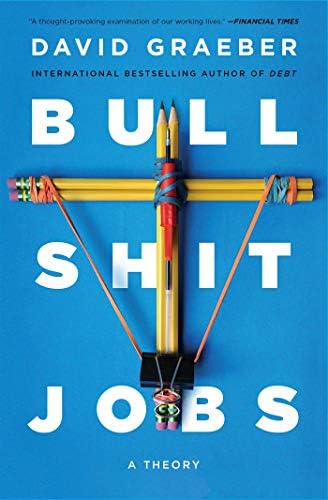
The discussion explores practical strategies for building million-dollar apps using AI, the democratization of technology similar to how the Gutenberg press revolutionized literacy, and why Masad believes AI won't destroy humanity. Drawing from The Lean Startup methodology and Bullshit Jobs observations about meaningless work, Masad argues we're entering an era where proximity to problems matters more than technical expertise.
Building Million-Dollar Apps in Minutes with AI
Replit's AI agent can produce a working minimum viable product in 10 minutes, with most people having a user-ready app within 1-2 hours of iteration.
Success stories include a finance professional who built an investment banking automation app overnight and secured $500K in letters of intent, now raising at a $35 million valuation.
"Professional software engineers are not coding anymore" - the platform increasingly removes coding features because automation handles the technical implementation.
The five-step process: find a unique idea tied to trends, break it into specific requirements, use Replit to build the MVP, iterate based on AI feedback, and test with target users.
The Democratization of Software Development
"Not having a coding experience is becoming an advantage because coders get lost in the details" while product-focused people concentrate on solving real problems.
The shift mirrors historical democratization patterns like the Gutenberg printing press breaking the priesthood's monopoly on literacy, leading to revolutions and new forms of governance.
Big tech companies initially dismissed Replit as a "toy for kids" but now build competing products as the company's 100x revenue growth proves market demand.
Silicon Valley's gatekeeping model is threatened because tools like Replit reduce the capital requirements for building software companies.
Rejecting Billion-Dollar Acquisition Offers
"When we were very small, not a lot of people, I think six people were offered a billion dollars" by a competitor seeking to eliminate the threat.
Masad refused because "I think I can build a trillion-dollar company" and would regret not achieving the company's full potential more than missing guaranteed wealth.
"Yes, I would be rich, but I would be yet another rich asshole" - building meaningful impact for customers and entrepreneurs outweighed immediate financial gain.
The decision required betting against established juggernauts while believing in the team's ability to execute on their democratization mission.
AI's Impact on Jobs and Automation
Drawing from Bullshit Jobs, Masad argues most office work involves easily automatable tasks like data entry, repetitive processes, and manual copy-pasting between systems.
AI should be viewed as a tool for "generalist automators" who can identify inefficiencies across entire businesses rather than just replacing workers.
Enterprise customers see ambitious employees creating "billions of dollars of value" by building solutions that were previously blocked by engineering bottlenecks.
The most obvious automation opportunities involve any regular copy-pasting of data between systems like Salesforce, Excel, and Snowflake.
Why AI Won't Achieve General Intelligence
"Machine learning models are trained by consuming a super large corpus of content" but fail at out-of-distribution queries they weren't specifically trained on.
AI excels at binary outcomes like coding but struggles with soft reasoning problems that require thinking beyond prior training material.
True scientific breakthroughs come from "Eureka moments" and paradigm shifts that aren't based on strict prior training, referencing A refref-book-a-history-of-western-philosophyrefref-book-a-history-of-western-philosophyHistory of Western Philosophy and how historical scientists like Pythagoras approached discovery spiritually.
"Science used to be more spiritual" - Newton spent most of his time on religious texts and alchemy, while Tesla credited dreams for his ideas, suggesting mechanistic thinking limits true innovation.
Building Wealth Through Equity Over Salary
"Money is money, like cash, like dollars, are worthless" - they depreciate faster than a 1976 Honda Civic, making asset accumulation essential.
At his first US job, Masad took $70,000 in expensive New York City to maximize equity: "you can just like pay me enough to eat. Just give me as much equity as it can give me."
The wealth-building hierarchy: start a business for maximum equity, join a growing startup for equity participation, or invest existing capital in appreciating assets.
"Early Replit employees are already rich" through liquidity events, demonstrating how equity participation in growing companies creates generational wealth.



These notes may contain occasional inaccuracies. Learn how podbrain notes are made
More in Science & Tech

The 5-Minute AI Weekly Recap: Realignment Week
Jun 20, 2026
Why Kalshi's John Wang Says Perps Are 'the Most Pure Trading Instrument'
Jun 19, 2026Your Company Doesn’t Need an AI Strategy
Jun 19, 2026
The data black hole at the center of AI
Jun 19, 2026
The New Rules of Media | Marc Andreessen & Ben Horowitz
Jun 19, 2026
.svg)