
Marc Andreessen on Evaluating Founders and AI's Consumer Surplus
Harry Stebbings speaks with Mark Andreessen, co-founder of Andreessen Horowitz (A16Z), which manages over $90 billion and has invested in generational companies like Facebook. This conversation, originally from the 20-minute VC podcast, represents a 10-year goal for Stebbings, who started his show at 18 with...

Episode


- 01
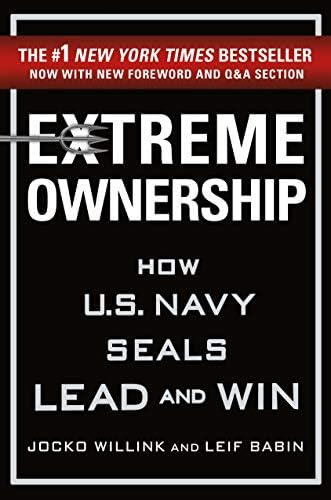
"Life just gets a lot simpler if you just assume everything is your own fault" - Mark on Extreme Ownership philosophy
- 02
"I think every time we passed on a promising venture company over price, I think it's been a mistake" - Mark on valuation discipline
- 03
"The tech industry is more centralized in Silicon Valley than it has been in its entire existence" due to AI concentration
- 04
"This entire labor displacement thing is 100% incorrect. It's wrong" - Mark on AI replacing jobs
- 05
"Essentially, every large company is overstaffed. I think a lot of them are overstaffed by 75%" - Mark on current corporate bloat
- 06
"Something close to 99% of AI's economic value will accrue not to the companies building it, but to the billions of people using it"
- 07
"Don't ever do diamonds in the rough, only do diamonds" - Mark on avoiding contrarian investing for its own sake
Get the latest ideas from a16z.
Plus the best new takeaways about artificial intelligence from other top podcasts — read in minutes, not hours.
By continuing, you agree to podbrain's Terms and Privacy Policy.
These notes may contain occasional inaccuracies. Learn how podbrain notes are made
Harry Stebbings speaks with Mark Andreessen, co-founder of Andreessen Horowitz (A16Z), which manages over $90 billion and has invested in generational companies like Facebook. This conversation, originally from the 20-minute VC podcast, represents a 10-year goal for Stebbings, who started his show at 18 with Andreessen as one of three dream guests.
The discussion spans venture capital philosophy, founder evaluation, the scalded stove phenomenon where past losses create future blind spots, and why Silicon Valley has become more centralized than ever due to AI. Andreessen shares insights on extreme ownership philosophy from Extreme Ownership, the economics of AI value distribution, and why he believes labor displacement fears are fundamentally wrong.
Key topics include the mistakes of omission versus commission in venture investing, why great founders matter more than business plans, the future of geographic decentralization in tech, wealth inequality, and Andreessen's personal philosophy of competing with himself rather than external benchmarks.
The Scalded Stove Phenomenon in Venture Capital
"If you invest in the category, or if you invest in a kind of company, or you invest in a kind of founder, then it doesn't go well. It's extremely easy to learn from the mistake, right? And to basically say, all right, I touched that hot stove. I'm never doing it again" - Mark on how past losses create future blind spots
AI exemplifies this pattern - "AI was a tremendously good way to lose a lot of money in venture capital from 1945 to 2017" yet became the biggest opportunity after 2017
The mistake of omission (not investing in Google) costs $100 billion in opportunity while the mistake of commission (losing $10 million) is far less damaging in venture economics
"We're generally not advocating for or against a deal. But what we are trying to do is to get everybody to constantly have this, let's say, risk-forward, worry about the mistake of omission, over the mistake of commission mindset" - Mark on firm culture
Founder Evaluation: Resume vs. Business Plan
Arthur Rock's conclusion after 30 years: "he would have been a better venture investor had he fed all of the business plans and pitch decks straight into the shredder upon receiving them and if he had spent 100% of his time on the resume"
Three core founder attributes: "high IQ as table stakes," courage ("embrace the suck" mentality), and primal drive to build something demonstrating personal capability
"Don't ever do diamonds in the rough, only do diamonds" - Mark warns against contrarian investing, noting "if it's got merit to be investable for venture, there are a lot of really smart and hungry VCs out there"
Great founders often show early building patterns: "when they were 14, they built this, when they were 17, they built that, when they were 20, they did this" rather than pure credential achievement
Extreme Ownership and Personal Philosophy
Mark embraces Extreme Ownership philosophy: "Life just gets a lot simpler if you just assume everything is your own fault" because "it gives me ownership of the problem and it gives me something that I can do"
"I'm competing with myself. I am trying to figure out how to be the best possible version of what I can be and what I can do" - Mark on his current motivation
The extreme ownership mindset "drains away resentment" and creates intrinsic rather than extrinsic motivation, essential for getting up "when it really, really sucks"
Mark discovered "retard maxing" philosophy through internet memes - a simpler form of letting go: "Go to work, do a good job, come home. It's fine. Start a company, succeeds, fails, it's fine"
AI Concentration and Silicon Valley Centralization
"The tech industry is more centralized in Silicon Valley than it has been in its entire existence" with "something very close to 100% of the quality AI companies are in California, and specifically in a 20-mile radius of where I'm sitting right now"
COVID initially promised decentralization: "I was very enthusiastic between 2020 and let's say 2023 that we had cracked the code on how to finally get away from the geographic constraints of Silicon Valley"
AI reversed this trend completely: "I think that that process has like whiplash reversed in an incredible way" in the last two years
Despite geographic concentration in building AI, "the benefits of AI, the power of AI diffuses out globally, like to a degree people are really not expecting" through democratized access
AI Economics and Labor Displacement Myths
"Something close to 99% of the economic value arrives in the market, not in the form of economic benefit to the companies that make the thing, but rather to the customers" - citing Schumpeterian economics research
"This entire labor displacement thing is 100% incorrect. It's completely wrong" because AI makes workers more productive, not unemployed - "They're far more productive. Are they working fewer, more or fewer hours than before? More"
Current layoffs are not AI-driven but result from COVID overhiring and interest rate changes: "AI until like literally until like December was not actually good enough to do any of the jobs that they're actually cutting"
"Essentially, every large company is overstaffed. We could debate how much. It's at least overstaffed by 25%. I think most large companies are overstaffed by 50%. I think a lot of them are overstaffed by 75%"
Venture Capital Strategy and Firm Building
"I think every time we passed on a promising venture company over price, I think it's been a mistake" - Mark on valuation discipline in venture
Early stage remains core: "The core of the business is a founder or a small founding team with a dream and a clean sheet of paper, ideally a garage" with first two years being critical for "baking the cake"
Growth stage investing serves two purposes: "fixing the mistakes of omission" and "doubling down on the companies that are working" while preserving Silicon Valley mentality on cap tables
"There's nothing that we're missing today that we could solve by going public" - Mark on A16Z's private status, contrasting with public company investor challenges
These notes may contain occasional inaccuracies. Learn how podbrain notes are made
More in Science & Tech

The 5-Minute AI Weekly Recap: Realignment Week
Jun 20, 2026
Why Kalshi's John Wang Says Perps Are 'the Most Pure Trading Instrument'
Jun 19, 2026Your Company Doesn’t Need an AI Strategy
Jun 19, 2026
The data black hole at the center of AI
Jun 19, 2026
The New Rules of Media | Marc Andreessen & Ben Horowitz
Jun 19, 2026
.svg)