
Marc Andreessen on AI Winters and Agent Breakthroughs
Mark Andreessen, co-founder and general partner at A16Z, discusses his perspective on the current AI revolution with Swix and Alessio Finelli from the Latent Space podcast. Andreessen brings a unique historical perspective, having coded in Lisp during the 1980s AI boom and co-founded Netscape during the early internet...

Episode


- 01
Mark Andreessen calls the current AI moment an '80-year overnight success' - drawing on eight decades of foundational research catalyzed by four breakthroughs: LLMs, reasoning, agents, and self-improvement
- 02
The combination of language model + Unix shell + file system represents 'one of the most important software architectures in a generation' - enabling agents that can modify themselves
- 03
AI agents can now migrate between different runtime environments while retaining all their memories and capabilities stored as files
- 04
Every dollar invested in GPU capacity is immediately turning into revenue due to chronic supply shortages that will persist for 3-4 years
- 05
Older NVIDIA chips are becoming more valuable over time due to software improvements - 'something that's literally never happened before'
- 06
Professional management class may become obsolete as AI enables return to founder-led 'bourgeois capitalism' with AI handling managerial tasks
- 07
Real-world adoption will be constrained by institutional resistance - 35% of economy requires professional certification, creating barriers to AI integration
Get the latest ideas from a16z.
Plus the best new takeaways about artificial intelligence from other top podcasts — read in minutes, not hours.
By continuing, you agree to podbrain's Terms and Privacy Policy.
These notes may contain occasional inaccuracies. Learn how podbrain notes are made
Mark Andreessen, co-founder and general partner at A16Z, discusses his perspective on the current AI revolution with Swix and Alessio Finelli from the Latent Space podcast. Andreessen brings a unique historical perspective, having coded in Lisp during the 1980s AI boom and co-founded Netscape during the early internet era.
The conversation covers Andreessen's framework for understanding AI as an '80-year overnight success,' the architectural breakthrough of combining language models with Unix shells, and the economic implications of current GPU shortages. Andreessen argues that four fundamental breakthroughs - LLMs, reasoning, agents, and self-improvement - have finally made AI practically viable.
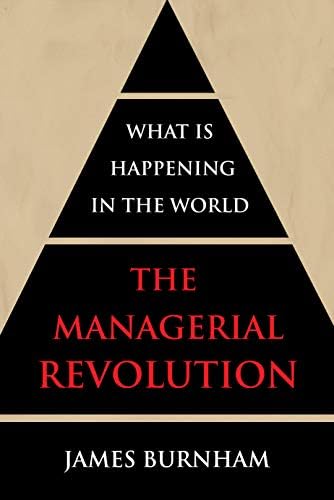
Drawing from The Managerial Revolution by James Burnham, Andreessen explores how AI might enable a return to founder-led companies by automating managerial tasks, while acknowledging that institutional resistance will significantly slow real-world adoption across regulated industries.
The 80-Year Overnight Success: From Neural Networks to ChatGPT
Andreessen frames current AI progress as an '80-year overnight success' - the original neural network paper was published in 1943, followed by the Dartmouth AGI conference in 1955 where researchers thought 10 weeks would solve artificial general intelligence
Four fundamental breakthroughs have finally made AI practically viable: 'LLMs, reasoning, agents, and then now RSI (recursive self-improvement)' - Mark
The reasoning breakthrough with O1 and R1 models answered skeptics who claimed LLMs were 'just pattern completion' and proved AI could work in critical fields like coding, medicine, and law
'If Linus Torvalds is saying that AI coding is no better than he is, that's never happened before' - Mark, describing the coding breakthrough as unprecedented validation
The Unix Shell + LLM Architecture Revolution
The breakthrough combination is 'a language model, and then above that, it's a bash shell, and then the agent has access to the shell, and then it's a file system' - creating agents that can modify themselves
This architecture enables agent portability: 'Your agent is now actually independent of the model that it's running on because you can actually swap out a different LLM underneath your agent'
Agents gain full introspection capabilities: 'The agent actually has full introspective knowledge of how it itself works and is able to modify itself' - something no widely deployed software system has ever had
Users can tell agents to 'add new functions and features to itself' by simply describing desired capabilities, with the agent writing and implementing the necessary code autonomously
GPU Economics and the Coming Supply Crunch
Every dollar invested in GPU infrastructure 'is being turned into revenue right away' due to universal capacity starvation across the industry
Older NVIDIA chips are appreciating in value: 'The pace of improvement of the software is faster than the depreciation cycle of the chip' - creating unprecedented hardware economics
Supply constraints will persist for 3-4 years: 'Entire supply chain is sold out or selling out' with chronic shortages driving infrastructure investment
Current models are 'inferior versions of what we would have if not for the supply constraints' - suggesting dramatic capability improvements once capacity unlocks
The Return of Bourgeois Capitalism Through AI
The Managerial Revolution by James Burnham described the transition from founder-led 'bourgeois capitalism' to professional management due to scaling limitations of individual leaders
'AI is the thing that would lead you to think maybe there's a third model' - combining founder vision with AI handling managerial tasks that previously required professional managers
'What is the thing that these bots are really good at? They're really good at doing paperwork, filling out forms, writing reports' - automating core managerial functions
This could enable the 'best of both worlds' - maintaining founder innovation while scaling through AI rather than hiring professional managers
Institutional Resistance and Real-World Adoption Barriers
'It requires 900 hours of professional certification training to become a hairdresser in the state of California' - illustrating how 35% of the economy operates under professional licensing cartels
Dock workers successfully struck against automation: '25,000 dock workers have incredible political power' and won commitments to prevent robotic implementation despite Asian ports being fully automated
Government agencies have employees with 'civil service protections and public sector unions' who only report to work 'one day per month' with buildings empty '58 days at a time'
'Both the AI utopians and the AI doomers are far too optimistic because they believe that because the technology makes something possible, that 8 billion people all of a sudden are going to change how they behave'
These notes may contain occasional inaccuracies. Learn how podbrain notes are made
More in Science & Tech

The 5-Minute AI Weekly Recap: Realignment Week
Jun 20, 2026
Why Kalshi's John Wang Says Perps Are 'the Most Pure Trading Instrument'
Jun 19, 2026Your Company Doesn’t Need an AI Strategy
Jun 19, 2026
The data black hole at the center of AI
Jun 19, 2026
The New Rules of Media | Marc Andreessen & Ben Horowitz
Jun 19, 2026
.svg)