
Marc Andreessen: Monitoring the Situation and the Future of Media
Mark Andreessen, co-founder and general partner at Andreessen Horowitz, joins Theo Jaffe on the inaugural episode of Monitoring the Situation (MTS), a new always-on media network covering tech, business, politics, and culture in real time.

Episode


- 01
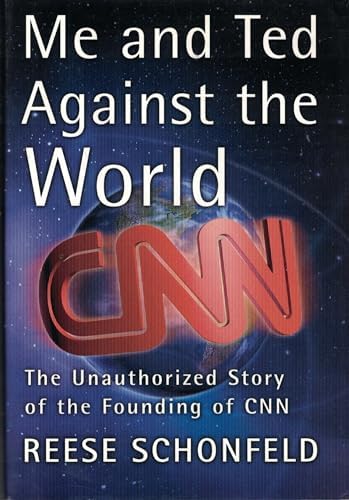
Me and Ted Against the World reveals CNN's original concept of 'randomium' - locking onto the most compelling current event and covering it continuously until the next one emerges
- 02
Understanding Media predicted today's reality: 'if it's on the internet, it's a viral social media meme' - even alien invasions would become viral content
- 03
Marshall McLuhan's 'global village' concept explains why social media overwhelms us: humans evolved for 150 relationships (Dunbar's number), not 8 billion simultaneous connections
- 04
Each viral social media cycle lasts approximately 2.5 days before being replaced by the next 'current thing,' making political predictions impossible months in advance
- 05
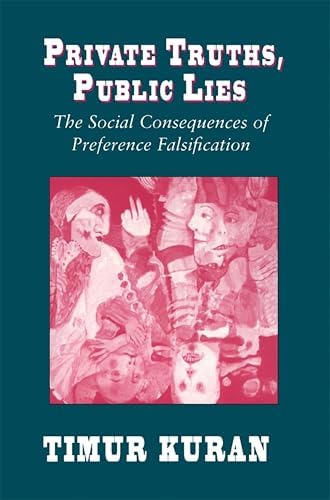
Private Truths, Public Lies identifies 'availability entrepreneurs' who deliberately inject events into public consciousness to create cascading social movements, like Rosa Parks
- 06
Political violence is at all-time lows despite online anger - virtual combat channels energy that historically led to street violence
- 07
The first true 'internet candidate' hasn't emerged yet - even Trump remains a TV-internet hybrid who monitors television to gauge public sentiment
- 08
Trust in centralized institutions has collapsed since 1970, accelerating media's shift from three networks to infinite fragmented voices
Get the latest ideas from a16z.
Plus the best new takeaways from other top podcasts — read in minutes, not hours.
By continuing, you agree to podbrain's Terms and Privacy Policy.
These notes may contain occasional inaccuracies. Learn how podbrain notes are made
Mark Andreessen, co-founder and general partner at Andreessen Horowitz, joins Theo Jaffe on the inaugural episode of Monitoring the Situation (MTS), a new always-on media network covering tech, business, politics, and culture in real time.
The conversation explores how media evolved from centralized 24-hour news cycles to today's fragmented, viral-driven landscape. Drawing heavily from Me and Ted Against the World and Marshall McLuhan's media theory in Understanding Media, Andreessen traces the path from CNN's original 'randomium' concept to social media's current dominance.
They examine why current events cycle faster than ever, how viral outrage patterns follow predictable 2.5-day cycles, and whether this represents progress or regression from previous media eras. The discussion touches on political violence, conspiracy theories, and the bridge between legacy and new media formats.
CNN's 'Randomium' Blueprint for Modern Media Cycles
Me and Ted Against the World documents how Reese Schonfeld convinced Ted Turner to create 24-hour news based on 'randomium' - continuously covering whatever was the most compelling current event at any moment.
"Ted Turner wanted to be a 16-hour news channel because he assumed that there would be nobody watching over the nine hours overnight. And Reese was like, nope, 24 hours. People are going to stay up all night to watch this thing" - Mark
The 1991 Gulf War proved the concept when CNN provided live coverage from Baghdad during bombing raids, creating "the most incredible show in the world" that people watched around the clock.
"The internet reinvented randomium" - social media platforms now deliver the same continuous current-thing coverage that CNN pioneered, but with global participation instead of centralized production.
McLuhan's Media Theory Explains Social Media Chaos
Understanding Media introduced two concepts that perfectly describe today's internet: the 'global village' and 'the medium is the message' - both of which McLuhan viewed as observations, not endorsements.
"The global village expects you to have a Dunbar number of like 8 billion people, right? Because they're all right there and they're all up in your grill" - Mark explains why social media overwhelms human psychology.
McLuhan's TV observation "if it's on television, it's a television show" becomes "if it's on the internet, it's a viral social media meme" - every real event gets transformed into viral content regardless of importance.
"If an alien invasion happens later this afternoon, it will be turned into a social media meme and it will go viral" - demonstrating how the medium shapes the message completely.
The 2.5-Day Viral Cycle and Political Unpredictability
"Each social media basically experiences like a two and a half day basically panic cycle" before being replaced by the next current thing, creating endless emotional shotgun blasts.
"How many two and a half day cycles are there between April 20th and November 6th?" - Mark argues this makes election predictions impossible since voters will experience 100+ viral cycles before voting.
"Whatever is the thing that we think is the thing that's going to tilt the election today is going to be 100 social media meme cycles old. Like nobody's going to remember anything that's happening right now."
The cycle requires tribal formation where "people will line up on each side, and sort of tribes will form, and then people will go to war with each other on social media."
Availability Entrepreneurs and the Rosa Parks Model
Private Truths, Public Lies by Timur Kuran identifies 'availability entrepreneurs' who deliberately inject specific events into public consciousness to create 'availability cascades' - viral social movements.
"Rosa Parks was like an actual, she was a trained activist. Like she, she went to like the, there was this whole like school of activists" - illustrating how movements that seem organic often begin as coordinated operations.
"Just because things start as ops doesn't mean they're not real, right? And if the op leads to real outcomes, then you might as well consider, you know, it's like at some point, it's just a matter for historians."
Modern influence operations exploit legal loopholes: "If I pay an influencer to take a position on a moral topic that is not a product that is sold or a political candidate... It's fully legal to do that in the dark."
Why Virtual Combat Reduces Physical Violence
"Political violence is an all-time low in Western society" despite constant online anger, contradicting the perception that we live in a politically violent era.
Previous media formats directly enabled physical violence: "Radio was the Nazi regime's native media format. Radio was the way that basically the fascist regimes got established."
"The ability to directly participate in online virtual combat is shunting away a lot of the energy that in the past would have translated to street violence."
Historical context shows constant conflict: "It was not that long ago that like grown men like in serious positions of power and authority in the US, if they got mad at each other, they would literally have a physical duel."
Orwell's Atrocity Cycle and Modern Viral Videos
Homage to Catalonia revealed how propaganda works through specific atrocities: "The truth or falsehood of the atrocity, it doesn't matter at all. Like, if the atrocity is made up, the political value of the atrocity is just as high."
"All of the really effective viral videos basically since then... they've all had that characteristic. They all start halfway through the event" - losing crucial context that would change interpretation.
"The first viral video that mattered was actually Rodney King" - establishing the pattern of videos that begin mid-event without showing what led to the situation.
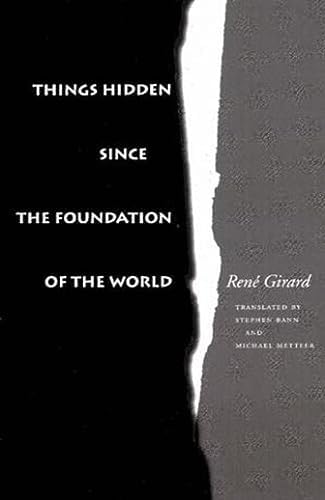
René Girard's scapegoating theory from Things Hidden Since the Foundation of the World explains why "the scapegoating cycle always works because people always forget that there's a scapegoating cycle."
The Coming Internet-Native Political Candidate
"I actually think the first internet election hasn't happened yet" despite 2008 Obama fundraising, 2016 Trump social media, and 2024 being the 'podcast election.'
Trump remains a TV-internet hybrid: "He cares enormously about what's on TV. And he's on TV a lot. And he watches TV all the time famously."
"There will be an internet president who gets elected, I believe, entirely based on the internet where they don't pay any attention at all to what's on TV because it doesn't matter to them one bit."
"My guess is 32" - predicting the 2032 election will feature the first truly internet-native candidate who ignores traditional media completely.


These notes may contain occasional inaccuracies. Learn how podbrain notes are made
More in Science & Tech

The 5-Minute AI Weekly Recap: Realignment Week
Jun 20, 2026
Why Kalshi's John Wang Says Perps Are 'the Most Pure Trading Instrument'
Jun 19, 2026Your Company Doesn’t Need an AI Strategy
Jun 19, 2026
The data black hole at the center of AI
Jun 19, 2026
The New Rules of Media | Marc Andreessen & Ben Horowitz
Jun 19, 2026
.svg)