
The Rise and Fall of the Voting Rights Act, Part II
This episode features Peter, Rhiannon, and Michael from the Five to Four podcast, which analyzes Supreme Court cases that have eroded civil liberties. The hosts examine how conservative legal movements systematically dismantled the Voting Rights Act of 1965 through strategic Supreme Court litigation.

Episode


- 01
Between 1982-2006, the DOJ rejected over 700 proposed voting changes and modified 800 more - totaling 1600 discriminatory attempts over 24 years
- 02
John Roberts at age 26-27 led Reagan administration opposition to 1982 Voting Rights Act amendments, arguing they would make voter dilution challenges 'much easier'
- 03
William Rehnquist engaged in Operation Eagle Eye voter intimidation in the 1960s, demanding minority voters read the Constitution aloud at polling places
- 04
Texas implemented previously rejected voter ID laws within 24 hours of the 2013 Shelby County decision striking down preclearance
- 05
The 2006 VRA reauthorization passed the Senate 98-0 after producing 15,000 pages of legislative record with hundreds of witnesses
- 06
Scalia called unanimous VRA support 'perpetuation of racial entitlement' during Shelby County oral arguments, comparing it to social pressure
- 07
Studies show turnout gaps between whites and minorities widened twice as fast in former preclearance jurisdictions after Shelby County
- 08
Louisiana v. Calay threatens Section 2 by arguing governments cannot consider race when addressing racially discriminatory voting problems
Get the latest ideas from 5-4.
Plus the best new takeaways from other top podcasts — read in minutes, not hours.
By continuing, you agree to podbrain's Terms and Privacy Policy.
These notes may contain occasional inaccuracies. Learn how podbrain notes are made
This episode features Peter, Rhiannon, and Michael from the Five to Four podcast, which analyzes Supreme Court cases that have eroded civil liberties. The hosts examine how conservative legal movements systematically dismantled the Voting Rights Act of 1965 through strategic Supreme Court litigation.
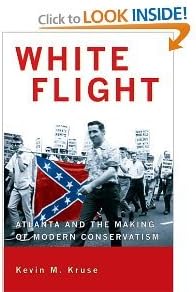
The discussion traces the evolution from violent segregationist resistance in the 1950s to the more sophisticated conservative rebranding that emerged through white flight to suburbs. Drawing from White Flight by historian Kevin Kruse, the hosts explain how this geographic separation laid groundwork for modern conservative ideology around property rights and individual freedoms.
Key figures examined include William Rehnquist, who engaged in voter intimidation before joining the Court, and John Roberts, who as a young Reagan administration lawyer led efforts to weaken voting rights protections. The episode covers landmark cases from Mobile v. Bolden (1980) through Shelby County v. Holder (2013) and previews the pending Louisiana v. Calay case.
White Flight and Conservative Rebranding Strategy
After violent segregationist tactics became politically toxic in the 1950s, conservative movements rebranded using language around property rights and parental choice rather than explicit racial supremacy.
White Flight by Kevin Kruse documents how community organizations attempted to re-segregate neighborhoods through property buybacks, but when Black residents refused to sell, 'they bombed one of the houses' - showing the violence underlying 'respectable' tactics.
White flight to suburbs created conditions for racial gerrymandering by leaving inner cities majority-minority while starving them of tax dollars and services through property tax-based school funding.
The repeated failure of community-based white solidarity led to embracing 'rugged individual every man for himself ideology' that characterizes modern conservatism - Michael
Mobile v. Bolden: Supreme Court Narrows Voting Rights
In 1980, the Supreme Court ruled that at-large voting schemes in Mobile, Alabama didn't violate the Voting Rights Act despite discriminatory effects, requiring proof of discriminatory intent instead.
Mobile's at-large voting was implemented in 1911 during Jim Crow, just after Alabama's 1901 constitutional convention explicitly aimed to 'establish white supremacy in this state.'
The decision inserted 'a lot of room for racism and discrimination into the legal world' by presuming good faith from jurisdictions with documented histories of voter suppression - Rhiannon
Young John Roberts Leads Anti-Voting Rights Campaign
At age 26-27, John Roberts served as Reagan's special assistant to the Attorney General, leading opposition to 1982 amendments that would reverse Mobile v. Bolden.
Roberts wrote that the amendments 'would make challenges to a broad range of voting practices much easier' and worried that 'widely accepted practices as at large voting would be subject to attack.'
Roberts represented the 'first generation of conservative to not come from the segregationist swamp' but maintained the same goals using language about 'federal interference with tried and true state voting practices' - Peter
Despite Reagan administration opposition, Congress passed a compromise requiring proof that minorities have 'less opportunity than other members of the electorate to participate in the political process.'
William Rehnquist's History of Voter Intimidation
Before joining the Supreme Court, William Rehnquist participated in Operation Eagle Eye, an RNC-backed voter intimidation operation in the 1960s that targeted minority voters.
Operation Eagle Eye involved 'demanding that they've read a copy of the U.S. Constitution out loud, taking pictures of people as they scream at them and ask them whether or not they speak English' - Rhiannon
As early as 1958, Rehnquist served as a poll watcher in Arizona, 'directly and personally involved in challenging voters at the polls, challenging that they are American, asking if they could pass a literacy test.'
Rehnquist opposed Phoenix city ordinances prohibiting racial discrimination in theaters and restaurants, wanting segregated public accommodations to remain legal in the 1960s.
Preclearance Success: 1600 Discriminatory Attempts Blocked
Between 1982-2006, the DOJ rejected over 700 proposed voting changes, handled 100 private preclearance actions, and required modifications to 800 more proposals - totaling over 1600 discriminatory attempts.
This averages to 'about 67 discriminatory voting changes per year for 25 years' that would have required individual court challenges without preclearance - Michael
The volume demonstrates why 'you need the system' because 'you can't possibly play whack-a-mole forever with this bullshit' without preclearance requirements - Peter
2006 Reauthorization: Bipartisan Success Story
Despite Republican control of Congress and the presidency, the 2006 VRA reauthorization passed the Senate 98-0 after producing over 15,000 pages of legislative record.
Republican House Judiciary Chair James Sensenbrenner, who had been skeptical in 1982, became convinced of Section 5's necessity and 'kept a copy of the 82 reauthorization in his office along with the pen Reagan used to sign it.'
Mel Watt compiled testimony from dozens of witnesses while the ACLU produced an 800-page report, creating a comprehensive record of continued discrimination.
'There is always value in doing the work in fighting for a better country' regardless of political conditions - Michael
Shelby County: Roberts Completes His Mission
In 2013, Chief Justice John Roberts wrote the Shelby County decision striking down the preclearance formula, claiming Congress exceeded its power because the data was 'outdated.'
The decision's constitutional reasoning was fabricated: 'there's no citation of the Constitution at all, they cite two cases that were about states being allowed into the union' - Peter
Roberts argued that voting improvements proved preclearance was unnecessary, creating the absurd logic of 'throwing away your umbrella in a rainstorm because you're not getting wet.'
Texas implemented previously rejected voter ID laws within 24 hours, followed by over 100 restrictive voting laws in 29 states over the subsequent decade.
Scalia's 'Racial Entitlement' Theory
During Shelby County oral arguments, Scalia called the unanimous 2006 reauthorization evidence of 'perpetuation of racial entitlement' rather than genuine need for voting protections.
Scalia argued that politicians faced improper 'social or cultural pressure' to support voting rights, making it the Court's responsibility to 'extricate them from that pressure.'
'There is a term for massive social pressure on politicians to vote in a certain way. It's called politics' - Michael
Scalia's own confirmation passed the Senate 98-0, largely because he was the first Italian American justice - 'in other words, a racial entitlement' - Peter
Post-Shelby Impact and Future Threats
Studies show turnout gaps between whites and minorities have widened twice as fast in former preclearance jurisdictions compared to non-preclearance areas since Shelby County.
Louisiana v. Calay threatens Section 2 by arguing that governments cannot consider race when addressing racially discriminatory voting problems, mirroring affirmative action arguments.
Unlike previous eras when Congress could override Supreme Court decisions, modern political dysfunction means 'Congress is not stepping back in' to fix judicial overreach - Peter
The pattern reveals a 'political movement that is comfortable with minoritarian rule and is not particularly interested in democratic ideals' - Peter
These notes may contain occasional inaccuracies. Learn how podbrain notes are made
More in Politics & Society

And, This Is Why Reid Hoffman Doesn’t Fear Artificial Intelligence
Jun 19, 2026And, This Is Hunter Biden Like You've Never Heard Him Before
Jun 12, 2026
Better Sex, Better Hair, Better Sleep: ‘Humanmaxxing’ Is Here
Jun 11, 2026
Introducing: OnlyFantasy (Leon's New Podcast)
May 21, 2026
Three young leaders changing the world one step at a time
May 21, 2026
.svg)