
Uncapped #36 | Pat Grady & Alfred Lin from Sequoia
This conversation features Pat Grady and Alfred Lin, the newly appointed co-stewards of Sequoia Capital, discussing their transition into leadership roles and the firm's investment philosophy. Pat Grady leads Sequoia's growth investing practice, while Alfred Lin oversees early-stage investments, both bringing decades...

Episode


- 01
"Consensus versus non-consensus does not matter at all. Presence of conviction is what matters" - Pat, based on over a decade of internal voting data
- 02
Sequoia's best fund (Venture 12) had a 50% write-off rate but included billion-dollar gains from Airbnb, Unity, and Dropbox
- 03
"If three people are nines and three people are ones, we should probably make the investment" - Alfred on their 0-10 voting system
- 04
Growth team maintains 70% coverage of deals done by 30-40 comparable investors, tracking this as a key sourcing metric
- 05
"Our seventh or eighth person is still in the top 10" when stack-ranking all venture partners across the industry - Pat
- 06
ServiceNow went public with most code still written by one person, founder Fred Luddy, demonstrating thousand-X engineering productivity
- 07
Sequoia needs six investments to be 10x+ returns per fund, with three requiring $100M+ gains for fund success
- 08
"The most important decision is actually not the final decision. The most important decision is the mid-funnel decision that determines what gets to a Monday" - Pat
Get the latest ideas from Uncapped with Jack Altman.
Plus the best new takeaways about investing from other top podcasts — read in minutes, not hours.
By continuing, you agree to podbrain's Terms and Privacy Policy.
These notes may contain occasional inaccuracies. Learn how podbrain notes are made
This conversation features Pat Grady and Alfred Lin, the newly appointed co-stewards of Sequoia Capital, discussing their transition into leadership roles and the firm's investment philosophy. Pat Grady leads Sequoia's growth investing practice, while Alfred Lin oversees early-stage investments, both bringing decades of experience from their previous roles as partners at the legendary venture firm.
The discussion covers Sequoia's systematic approach to venture investing, from their data-driven sourcing methodology to their conviction-based decision making process. They explore how the firm evaluates investments across five key capabilities: sourcing, picking, winning, building, and harvesting, while maintaining their core values of performance and teamwork.
Key topics include their proprietary talent mapping system built over a decade, the psychology of risk-taking in venture capital, and how they balance individual partner autonomy with firm-wide frameworks. The conversation also touches on their approach to working with founders and the importance of building long-term relationships in the outlier business of venture investing.
Stewardship Philosophy: Enabling Outliers Rather Than Managing
"Our basic job is to get out of their way. Our basic job is to let them run and enable it" - Pat, describing their role as co-stewards versus traditional CEO management
The stewardship model focuses on "freedom within frameworks" where partners operate autonomously within established values and capabilities guidelines
"You can't field a team of outliers if you're telling them what to do. You can't field a team of outliers if you're managing them" - Pat on why traditional management doesn't work in venture
Different partners use dramatically different approaches: Jim Goetz focuses on thematic whiteboarding, Doug Leone on high-volume networking, Dean Meyer on talent node mapping in Israel
Data-Driven Sourcing and Coverage Metrics
Growth team maintains 70% coverage rate, defined as seeing companies that 30-40 comparable investors ultimately fund, with 70% being the optimal balance
"Good sourcing is finding the great companies and figuring out whether they're worth the time to put in more effort" rather than seeing everything and passing on everything - Alfred
Sequoia built a proprietary talent mapping system over 10+ years, creating "page rank for people" by systematically asking portfolio company executives to identify top talent
Their CRM system now provides more pre-meeting information about companies than Sequoia had when making final investment decisions 15 years ago
Early stage sees 50-60% coverage while venture sees 60-70%, with seed funds providing information flow for later-stage deal sourcing
Conviction-Based Decision Making Over Consensus
"Our internal data shows that consensus versus non-consensus does not matter at all. It's just not a factor. Presence of conviction is what matters" - Pat, based on decade+ of voting data
Using a 0-10 voting system (no 5s), "if everybody's a six, probably shouldn't make the investment" due to lack of conviction despite consensus
"If three people are nines and three people are ones, we should probably make the investment" because strong conviction signals matter more than opposition - Alfred
Examples include DoorDash Series A (consensus hot), Okta (four consecutive rounds with no other investors), HubSpot (only term sheet), and Zoom (mocked by other investors)
"We're trying to build the future. The future does not look like the past. And so if everything looks consensus, it's usually because we have something that looks like the past" - Pat
The Mathematics of Venture Fund Success
Sequoia needs approximately 6 investments to be 10x+ returns out of 45-55 total investments per fund, with 3 of those 6 requiring $100M+ gains
Their best performing fund (Venture 12) had a 50% write-off rate but included billion-dollar gains from Airbnb, Unity, and Dropbox, plus 10 companies with $100M+ gains
"Good picking isn't not losing money. Good picking is a high enough inclusion rate of asymmetry" - focus on capturing outlier upside rather than avoiding losses
"You have to actually have conviction. If you don't own enough, it's just not enough" - position sizing matters as much as picking the right companies
Founder-Market Fit as Primary Investment Lens
"The market determines how big the company can get, and the founder determines how big the company will get" - Pat's framework for evaluating opportunities
"Was this person made for this company?" is the top question when meeting founders, assessed through deep questioning beyond prepared pitches
Alfred asks founders about industry knowledge, why the industry interests them, and what other problems they want to solve beyond their initial focus
"Most companies that are around for a long period of time and are considered legendary, they're around for a few decades" - looking for founders who can execute multiple acts
The approach emphasizes curiosity over predetermined visions: "You have to ask questions five levels deep of why, five levels deep of what"
Building Courage in Risk-Averse High Achievers
"The people we hire are these competitive overachievers. Most of them got straight A's their whole lives" but haven't experienced much failure - Pat
"What's your biggest mistake?" is a key interview question, often requiring multiple follow-ups to get past superficial answers to real failures
For partners who consistently find reasons to pass on good opportunities: "We're going to invest in that company now" - forcing action to build risk tolerance
"Once you've done it a few times, you actually get comfortable with taking the risk" - courage is developed through guided experience rather than instruction
"Fear of missing out and fear of looking stupid are the two fears that prevent people from making the right decisions" - psychological barriers to good investing
Post-Investment Partnership and Trust Building
"If the founder actually trusts you by the time you're a year in, you're good" - trust building as the primary first-year objective for board members
Trust requires both competence and intention: "Let me show you how much I understand" rather than "let me show them how valuable I am"
Board members go through employee onboarding and conduct one-on-ones with key VPs to understand the business from an operator's perspective
"I have two objective functions: to maximize returns for LPs and to help you become the absolute best possible version of yourself" - Pat's framework for founder relationships
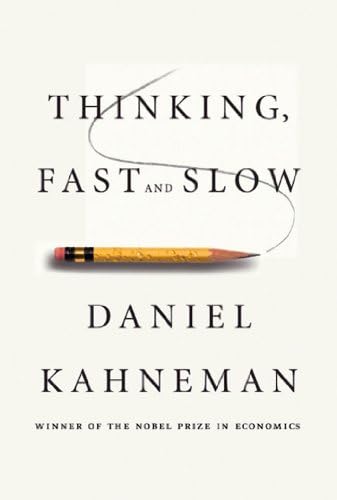
The decision-making process incorporates Thinking, Fast and Slow principles: "We want to be able to marry thinking fast and thinking slow" through structured post-meeting debriefs
These notes may contain occasional inaccuracies. Learn how podbrain notes are made
More in Finance & Business
The Biggest Pivot In AI History Is Happening Right Now | Jordi Visser
Jun 20, 2026
How Substack Creators Are Covering This Strange Markets Era
Jun 20, 2026
#422 Joseph Pulitzer
Jun 20, 2026
World's First Trillionaire, Anthropic Fable Banned, The New Oligarchs, Iran Peace Deal
Jun 19, 2026Anthropic's Co-Founder and Top Economist on Doing Research at the AI Frontier
Jun 19, 2026
.svg)