
I Just Revealed My Current Portfolio… | Anthony & John Pompliano
In this episode, host Anthony Pompliano is interviewed by John Pompliano to analyze the macroeconomic landscape, Federal Reserve policy, and emerging technology investments. The conversation begins with an evaluation of the Magnificent Seven sell-off, attributing it to temporary inflation fears and misunderstood AI...



- 01
The profit margin of the S&P 500 has increased 58% since 2011, reflecting a structural shift from analog to highly efficient digital business models.
- 02
Anthony predicts a 60% chance of a Federal Reserve rate cut in 2026, driven by declining energy prices and cooling inflation.
- 03
SpaceX is fundamentally an AI company, with enterprise AI representing the vast majority of its projected $30 trillion total addressable market.
- 04
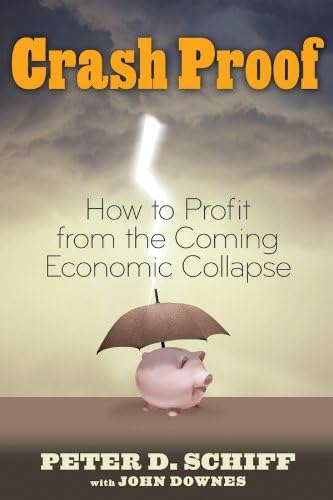
Despite the skepticism of critics like Peter Schiff, author of Crash Proof How to Profit From the Coming Economic Collapse, Bitcoin has secured permanent institutional adoption.
- 05
Anthony advocates for a barbell investment strategy, holding highly resilient large-caps and highly asymmetric assets while completely avoiding mid-sized growth companies.
- 06
Federal Reserve Chair Kevin Warsh executed an 'economic sleight of hand' by reforming Fed metrics and ending forward guidance without changing interest rates.
- 07
The average credit card interest rate in America has reached 23%, making rising delinquencies a credit pricing issue rather than a consumer spending problem.
- 08
AI companies are shifting from token maximization to efficiency, forcing developers to optimize architectures and caching to manage rising token expenses.
Get the latest ideas from The Pomp Podcast.
Plus the best new takeaways about artificial intelligence from other top podcasts — read in minutes, not hours.
By continuing, you agree to podbrain's Terms and Privacy Policy.
These notes may contain occasional inaccuracies. Learn how podbrain notes are made
In this episode, host Anthony Pompliano is interviewed by John Pompliano to analyze the macroeconomic landscape, Federal Reserve policy, and emerging technology investments. The conversation begins with an evaluation of the Magnificent Seven sell-off, attributing it to temporary inflation fears and misunderstood AI CapEx projections rather than structural valuation issues. Anthony outlines his barbell investment strategy, which focuses on highly durable large-cap tech and highly asymmetric assets like Bitcoin and physical AI, while avoiding the fragile middle market. He details his personal portfolio allocations, including Tesla, RoboStrategy, Ondas, and private software startups like Replit. The discussion transitions to monetary policy, where Anthony analyzes Federal Reserve Chair Kevin Warsh's recent structural reforms and predicts a 60% chance of a rate cut in 2026. Finally, they address Bitcoin's institutional adoption, contrasting retail sentiment with institutional stability, and reference the shifting stance of long-time critics like Peter Schiff, whose economic warnings in Crash Proof How to Profit From the Coming Economic Collapse contrast with Bitcoin's growing role as a hedge against monetary debasement.
Demystifying the Magnificent Seven Sell-Off and AI CapEx
The recent sell-off in the Magnificent Seven is driven by short-term inflation anxieties and overblown fears regarding AI capital expenditure (CapEx) spending.
Energy prices are responsible for 60% of the recent inflation spike, meaning that if oil drops back to $60, inflation will rapidly cool in Q3 and Q4.
Google is currently trading at a cheaper valuation than Apple despite growing at a faster rate, presenting a significant buying opportunity due to mispriced AI CapEx fears.
The profit margin of the S&P 500 has expanded by 58% since 2011, proving that modern digital businesses are structurally superior to those of the dot-com era.
Managing Token Expenses and the Shift to AI Efficiency
While building their financial AI product, CFO Sylvia, Anthony's team experienced run-away token costs due to unlimited query exposure for users.
To optimize token usage, the CFO Sylvia team eliminated low-value features, implemented caching, and restructured their technical architecture.
The broader AI industry is shifting from 'token maxing' to efficiency, with companies demanding the same high-quality output with lower token consumption.
One anonymous company shifted its working hours to 1:00 AM to 10:00 AM because model usage is cheaper, less congested, and yields more accurate answers during off-peak hours.
The Barbell Strategy and Physical AI Portfolio Allocations
Anthony avoids the 'fragile middle ground' of mid-sized growth companies, choosing instead to barbell his portfolio between large-cap indexes and highly asymmetric assets.
SpaceX is structurally positioned as an AI company rather than a space company, with enterprise AI accounting for the vast majority of its addressable market.
Anthony holds Tesla stock due to Elon Musk's potential monopoly on humanoid robots and self-driving cars, predicting a merger between SpaceX and Tesla before 2030.
To gain exposure to private robotics, Anthony invests in RoboStrategy, a publicly traded closed-end fund targeting the physical AI sector.
Anthony holds Ondas stock due to its unique M&A model, which acquires proven drone technologies from startups and commercializes them for national defense.
Federal Reserve Reforms and Kevin Warsh's Strategy
Anthony estimates a 60% probability of a Federal Reserve rate cut before the end of 2026, rejecting predictions of a premature rate hike.
Federal Reserve Chair Kevin Warsh executed an 'economic sleight of hand' by leaving interest rates unchanged while completely restructuring internal Fed operations.
Warsh's structural reforms include creating a new task force, changing the primary inflation metrics, and completely eliminating forward guidance.
"Inflation is an economic concept that central bankers and sophisticated investors care about. Affordability is what the average American cares about." - Anthony
The average credit card interest rate in America is approximately 23%, indicating that rising delinquencies are a credit-pricing issue rather than a consumer spending weakness.
Bitcoin's Institutional Era and Volatility Compression
Bitcoin has transitioned from a highly volatile, retail-driven asset into an institutional grade asset, compressing its volatility from 80 down to 35 or 40.
Anthony projects a base-case return of 25% to 30% annually for Bitcoin over the next decade, outperforming the broader stock market.
Even prominent critics like Peter Schiff, author of the bearish guide Crash Proof How to Profit From the Coming Economic Collapse, have publicly admitted that Bitcoin is unlikely to go to zero.
The information landscape for Bitcoin has shifted from 100% internet-driven to a 50/50 split between online retail sentiment and institutional development.
"I do not want to own assets that are always in favor because if they're always in favor, that means they're popular. If they're popular, that means they're crowded. If they're crowded, that means the return has been arbed away." - Anthony
These notes may contain occasional inaccuracies. Learn how podbrain notes are made
More in Finance & Business
Jamie Dimon succession race narrows
Jun 26, 2026
HIGHLIGHTS: Miljan Gutovic - CEO of Holcim
Jun 26, 2026Will The K-Shaped Economy Destroy America? | Darius Dale
Jun 25, 2026
Is DePIN Entering Its Next Growth Phase?
Jun 25, 2026
Gretchen Rubin - How Curiosity Becomes a Calling (Ep. 320)
Jun 25, 2026
.svg)