
We Owe It All To Them | What Marcus Aurelius Learned From His Mother
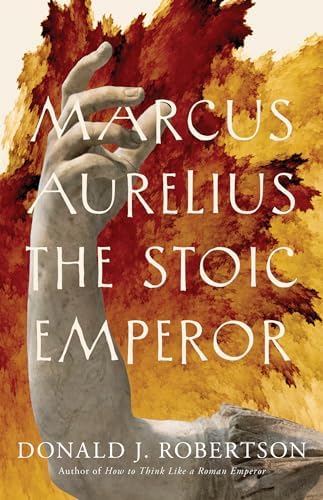
Ryan Holiday hosts Donald Robertson, author of How to Think Like a Roman Emperor, Marcus Aurelius The Stoic Emperor, and...


- 01
Marcus Aurelius' Meditations was inspired by his mother's early teaching to 'work on his character, improve his mind, and not just his external behavior'
- 02
Domitia Lucilla was a billionaire construction magnate who owned brick factories and lived simply despite her wealth
- 03
She was intellectually superior to Fronto, the world's most acclaimed Latin rhetorician, who asked Marcus to check his Greek letters for errors
- 04
Marcus's mother created an intellectual salon where leading thinkers like Herodes Atticus lived and taught
- 05
She remained single after her husband's death in her early twenties, showing unusual independence in Roman society
- 06
Her family had existing connections to Stoicism through relatives like Domitius who praised Stoic teachers
- 07
The entire concept of Meditations follows through on his mother's advice about avoiding wrongdoing in thoughts, not just actions
Get the latest ideas from The Daily Stoic.
Plus the best new takeaways about stoicism from other top podcasts — read in minutes, not hours.
By continuing, you agree to Podbrain's Terms and Privacy Policy.
These notes may contain occasional inaccuracies. Learn how Podbrain notes are made
Ryan Holiday hosts Donald Robertson, author of How to Think Like a Roman Emperor, Marcus Aurelius The Stoic Emperor, and How to Think Like Socrates, to discuss the profound maternal influence on Marcus Aurelius. Robertson, one of the leading contemporary writers on Stoic philosophy, reveals how Marcus's mother Domitia Lucilla shaped the philosophical foundation that would later produce Meditations.
The conversation explores how this wealthy, intellectually gifted woman created an environment that nurtured one of history's greatest philosophical minds. Despite Stoicism's reputation as a masculine philosophy, Robertson argues that Marcus Aurelius's most essential influence came from his mother's early teachings about character development and moral purity.
The discussion reveals Domitia Lucilla as a construction industry magnate who surrounded herself with leading intellectuals while maintaining the simple lifestyle that Marcus would later praise in Meditations. Her influence extended beyond wealth and status to become the philosophical model Marcus spent his life trying to emulate.
The Intellectual Powerhouse Behind Marcus Aurelius
Domitia Lucilla was so fluent in Greek that Fronto, the world's most acclaimed Latin rhetorician, asked Marcus to check his Greek letters for grammatical errors before sending them to her.
She created an intellectual salon where leading figures like Herodes Atticus, the most famous sophist of the period, lived as a close family friend and later became Marcus's Greek rhetoric tutor.
Her family had existing connections to Stoicism - a relative named Domitius 'heaped praise on his philosophy tutor' Athenodotus, a known Stoic teacher.
Robertson notes she may have chosen Rusticus to be Marcus's Stoic tutor, demonstrating her active role in steering him toward philosophy.
A Billionaire Who Lived Like a Stoic
Domitia Lucilla was a construction industry magnate who owned clay fields and brick factories - 'We have bricks her name stamped on them that survive today' - Robertson.
Despite her wealth, Marcus praised her in Meditations for 'the simple way she lived, not in the least like the rich.'
She remained single after her husband's death when she was in her early twenties, showing 'unusual independence in Roman society' - Robertson.
Marcus and his mother left his paternal grandfather's house to return to her own home, further demonstrating her autonomy in a patriarchal society.
The Philosophical Foundation of Meditations
The entire concept of Meditations stems from his mother's early teaching 'to work on his character, like to improve his mind and not just his external behavior' - Robertson.
Marcus's mother taught him 'not only to avoid wrongdoing in your actions, but also in your thoughts,' which Robertson calls 'the ideal that Marcus is aspiring to all his life.'
In Meditations, Marcus thanks his mother for 'her reverence for the divine, her generosity, her inability not only to do wrong, but even to conceive of doing it.'
Robertson argues that 'his mother is the philosophical model for what he's trying to' achieve - 'she's kind of naturally, effortlessly this thing that he's very deliberately and methodically having to cultivate.'
The Unsung Heroes of Stoic Philosophy
Robertson emphasizes that Stoicism includes 'this whole other half of society that embodied the Stoic ideals within the confines of a society that was inherently misogynistic and patriarchal.'
'We focus too much on the Stoic generals and the Stoic philosophers and thinkers, and we don't forget who they were actually aspiring to be like' - Robertson.
Fronto noted that 'philostorgia' (natural affection) was 'completely lacking among the Roman elite' but made exceptions for Marcus and his mother, calling it 'a quality that's more common in the Greek world.'


These notes may contain occasional inaccuracies. Learn how Podbrain notes are made
More in Philosophy

It’s So Hard To Find | Stop Looking For This
Jul 13, 2026
12 Stoic Rules For A Better Life
Jul 12, 2026
Men Are Reading Less Fiction. That’s A Problem. | Steven Pressfield
Jul 11, 2026
Spielberg Just Revealed The Truth About Aliens (He Knows!)
Jun 25, 2026Which Of These Are You? | What's In Your Way Is The Way
Jun 25, 2026.svg)