
Here’s How You Take Back Your Time | Become Dangerously Persuasive With These Books
Ryan Holiday hosts this episode of the Daily Stoic podcast, focusing on book recommendations for effective communication, persuasion, and social change. Holiday, author of multiple books including Growth Hacker Marketing, ref:ref-book-trust-me--i-m-lying:Trust Me, I'm...


- 01
The 48 Laws of Power is banned in federal prisons because powerless people need these ideas to defend against manipulation
- 02
Thomas Clarkson, one Oxford student, single-handedly started the abolition movement that ended thousands of years of slavery worldwide
- 03
Civil rights leaders trained at Highlander School in military-style tactics, learning to absorb physical pain and strategically fill jails
- 04
Rules for Radicals by Saul Alinsky has been a conservative boogeyman for years, which is exactly why everyone should read it
- 05
Frank Luntz demonstrates how word choice determines perception: 'illegal immigrant' versus 'undocumented worker' frames entire debates
- 06
John Boyd brought the F-15 and F-16 fighters in way under budget while being a notorious pain to Pentagon bureaucrats
- 07
Charles De Gaulle refused to collaborate when much of France chose Vichy, standing as 'the last man in France' against incredible odds
Get the latest ideas from The Daily Stoic.
Plus the best new takeaways about history from other top podcasts — read in minutes, not hours.
By continuing, you agree to Podbrain's Terms and Privacy Policy.
These notes may contain occasional inaccuracies. Learn how Podbrain notes are made
Ryan Holiday hosts this episode of the Daily Stoic podcast, focusing on book recommendations for effective communication, persuasion, and social change. Holiday, author of multiple books including Growth Hacker Marketing, Trust Me, I'm Lying, and Right Thing Right Now, presents a curated reading list for activists and change-makers.
The discussion centers on the premise that having good ideas isn't enough—success requires mastering the art of communication and strategic thinking. Holiday draws from military strategy, political biography, marketing psychology, and historical movements to demonstrate how underdogs can effectively challenge established power structures.
The recommendations span from ancient wisdom like The Prince by Machiavelli and Plutarch's How to Be a Leader to modern strategic guides like Robert Greene's trilogy and contemporary works on communication and organizing. Holiday emphasizes learning from both allies and opponents, citing Seneca's advice to 'read like a spy in the enemy's camp.'
Robert Greene's Strategic Trinity for Power and Influence
The 48 Laws of Power is essential reading because 'there's a reason that this book is banned in the federal prison system' - powerful people already know these ideas, so you need them to defend yourself or beat them.
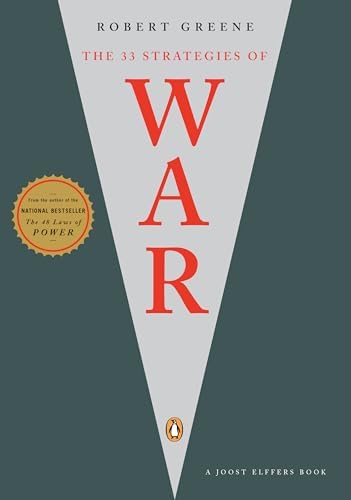
The 33 Strategies of War compiles Sun Tzu, von Clausewitz, and all great military strategists into one book, making it essential for anyone 'trying to achieve anything.'
The Art of Seduction teaches how to 'poeticize your presence, disarm them through strategic weakness, stir up the transgressive and the taboo, master the art of the bold move' - not romantically, but strategically.
The Science of Messaging and Market Positioning
Frank Luntz's Words That Work reveals how word choices determine perception: 'illegal immigrant versus undocumented worker, or illegal alien versus homeless versus unhoused' - these aren't just political correctness, they're winning versus losing frames.
The 22 Immutable Laws of Marketing emphasizes that 'it doesn't just matter that you're morally right. It matters whether you can convince people that your cause is one that they ought to care about.'
Seth Godin's Purple Cow teaches making 'something that's different that's worth stopping and looking at' rather than relying on traditional advertising or publicity.
Growth Hacker Marketing addresses how 'little guys, little companies, tiny startups' can compete against big players through impact-focused growth rather than expensive traditional marketing.
Historical Blueprints for Transformational Change
Bury the Chains tells how Thomas Clarkson, one Oxford student who wrote an essay about slavery being wrong, realized 'if someone should do something about it, maybe that person should be me' and thus began the abolition movement.
The abolitionist movement 'invents so many of the things we take for granted as part of the activists' playbook: consumer boycotts, petitions, public relations, all of that starts here.'
Waging a Good War reveals that 'most of the civil rights leaders went to boot camp' at the Highlander School, where 'they trained in not being provoked into violent action, where they trained their bodies to absorb physical pain.'
Civil rights protesters 'were not just protesting, they were protesting to get arrested, to fill the jails, and then they were refusing bail because they knew it would overload the system.'
Strategic Leadership Under Impossible Odds
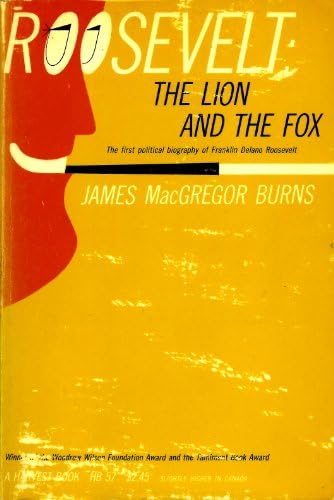
Roosevelt The Lion and the Fox shows how FDR became transformational by understanding 'how power worked,' 'how to sell things to the public,' and 'the levers of power' during the Depression.
Julian Jackson's De Gaulle biography demonstrates how De Gaulle stood as 'the last man in France' when 'everyone, so much of France decides to collaborate' with Vichy, refusing to see France as 'a middle-tier power.'
Boyd The Fighter Pilot Who Changed the Art of War shows how John Boyd 'brings in the F-15 and the F-16 fighter way under budget' while being 'a notorious pain in the side of the people in the Pentagon.'
Boyd 'hated waste. He hated inefficiency. He people who had conflicts of interest. He was like just a warrior who was able to get a bureaucracy to work.'
Grassroots Organizing and Youth-Led Movements
The Children by David Halberstam focuses on 'the teenagers and college students that organized the Nashville sit-in movements' when 'the movement had stalled out, and it was these young kids that forced the movement.'
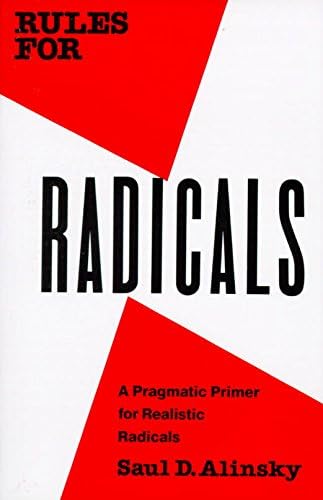
Rules for Radicals by Saul Alinsky 'has been a sort of boogeyman for conservatives for many years, which again is a reason you should read it' - he had 'a great sense for what gets media attention, where the leverage is.'
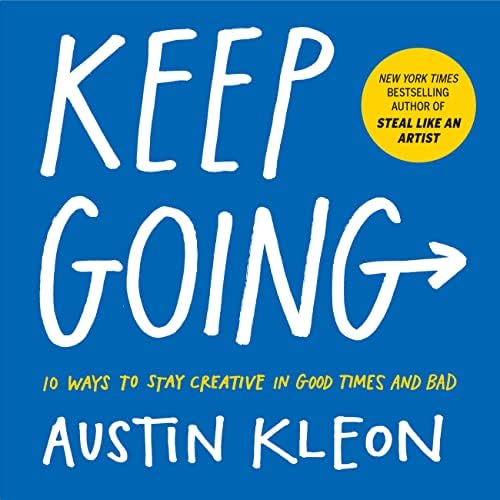
Austin Kleon's Keep Going addresses writers and creators who say 'all the stuff that's happening in the world, I can't focus on my writing' - Holiday responds 'that's letting them win.'
Ancient Wisdom for Modern Strategic Thinking
The Prince by Machiavelli teaches that 'one must be a fox in order to recognize traps and a lion to frighten off the wolves' - though Machiavelli 'was actually tortured by a prince for his Republican leanings.'
Plutarch's How to Be a Leader offers lessons from 'someone who is not just a biographer of some of the great men and women of history, but also a local elected leader.'
Sallust's How to Stop a Conspiracy about the Catiline conspiracy 'feels pretty relevant today' given current political circumstances.
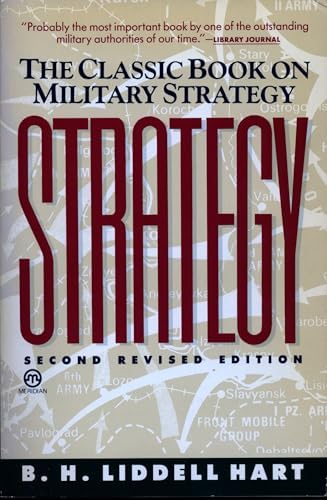
B.H. Liddell Hart's Strategy serves as 'a great supplementary book' alongside Robert Greene's works, while John Lewis Gaddis' On Grand Strategy helps 'little guys going against the big guy.'







These notes may contain occasional inaccuracies. Learn how Podbrain notes are made
More in Philosophy

It’s So Hard To Find | Stop Looking For This
Jul 13, 2026
12 Stoic Rules For A Better Life
Jul 12, 2026
Men Are Reading Less Fiction. That’s A Problem. | Steven Pressfield
Jul 11, 2026
Spielberg Just Revealed The Truth About Aliens (He Knows!)
Jun 25, 2026Which Of These Are You? | What's In Your Way Is The Way
Jun 25, 2026.svg)