
BONUS | Ryan Holiday Responds to Daniel Radcliffe
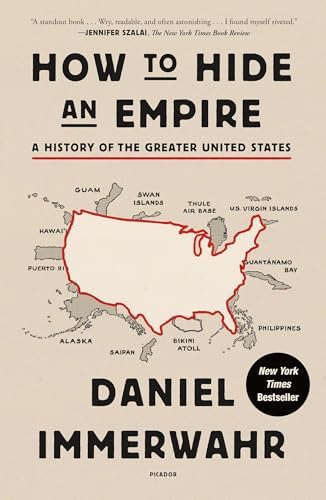
Ryan Holiday delivers a passionate book recommendation for How to Hide an Empire by Daniel Immerwahr, a comprehensive examination of American territorial expansion and colonial history. Holiday emphasizes how the book has been praised by Daniel Radcliffe and...


- 01
How to Hide an Empire reveals that 19th century wars were often fought over bird guano-covered islands needed for gunpowder production
- 02
When Japan attacked Pearl Harbor, it struck America in two places - Hawaii and the Philippines, which was still under U.S. control
- 03
Mark Twain and Andrew Carnegie adamantly opposed American annexation of the Philippines, understanding the moral dangers of colonialism
- 04
America's post-WWII strategy of maintaining bases without territorial control proved far more effective than traditional colonialism
- 05
General Smedley Butler, the most decorated Marine in U.S. history, wrote War is a Racket exposing colonial wars' true motivations
- 06
Thoreau's Civil Disobedience was written in resistance to the Mexican-American War, which he saw as slave power expansion
- 07
The Lend-Lease Act gave America priceless military bases worldwide, making the U.S. the beneficiary rather than other nations getting a 'free ride'
Get the latest ideas from The Daily Stoic.
Plus the best new takeaways from other top podcasts — read in minutes, not hours.
By continuing, you agree to Podbrain's Terms and Privacy Policy.
These notes may contain occasional inaccuracies. Learn how Podbrain notes are made
Ryan Holiday delivers a passionate book recommendation for How to Hide an Empire by Daniel Immerwahr, a comprehensive examination of American territorial expansion and colonial history. Holiday emphasizes how the book has been praised by Daniel Radcliffe and fundamentally changed his understanding of both America and global politics.
The discussion covers America's imperial past, from 19th-century guano wars to the Philippines annexation, Puerto Rico's colonial status, and the strategic brilliance of post-WWII military base agreements. Holiday connects these historical lessons to contemporary political debates about American foreign policy and territorial expansion.
Holiday also recommends complementary works including War is a Racket by General Smedley Butler, Gangsters of Capitalism, Civil Disobedience by Henry David Thoreau, and Fishing for Fun—And to Wash Your Soul by Herbert Hoover, creating a comprehensive reading list on American imperialism and resistance.
America's Hidden Imperial History Revealed
How to Hide an Empire exposes how 19th-century wars were fought over seemingly worthless Pacific islands covered in bird guano, which was essential for gunpowder production.
When Roosevelt declared war after Pearl Harbor, Japan had attacked America in two places - Hawaii and the Philippines, which was still under U.S. control during a 10-year transition period.
Douglas MacArthur grew up in the Philippines and 'was almost more Filipino than he was American,' illustrating the deep colonial connections most Americans don't understand.
The Moral Opposition to American Colonialism
Andrew Carnegie and Mark Twain were 'adamantly opposed to annexing the Philippines,' showing that not all Americans supported colonial expansion.
Mark Twain condemned the 1906 Badaho massacre: 'We abolished them utterly, leaving not even a baby alive to cry for his mother.'
General Pershing reflected on the Philippines campaign: 'I would not have that event on my conscience for the fame of Napoleon.'
Civil Disobedience by Thoreau was written in resistance to the Mexican-American War, which he understood as 'part of the expansionist slave powers trying to turn America into a slave empire.'
The Strategic Genius of Post-War Base Agreements
America learned that 'owning the territory, controlling the land, subjugating the people is a stupid strategy' that 'makes enemies of people.'
The Lend-Lease Act gave America 'rights to bases all over the world, priceless real estate that allows America to project its power' without territorial control.
Rebuilding Germany and Japan 'wasn't simply an act of charity' but strategic positioning that makes America the superpower beneficiary.
When Trump complains about countries getting a 'free ride,' Holiday argues 'we're the ones getting the free ride. We have the great deal.'
Essential Companion Books on American Empire
War is a Racket by General Smedley Butler, 'the most decorated Marine in U.S. history,' exposes what colonial wars 'really were and what they were really about.'
Gangsters of Capitalism provides a biography of Butler that 'pairs well' with his own writings on American military interventions.
Holiday discovered Fishing for Fun—And to Wash Your Soul through a passage about Hoover's love of fishing for 'the quieting of hate, hushing to ambition, and a promotion of meekness.'


These notes may contain occasional inaccuracies. Learn how Podbrain notes are made
More in Philosophy

It’s So Hard To Find | Stop Looking For This
Jul 13, 2026
12 Stoic Rules For A Better Life
Jul 12, 2026
Men Are Reading Less Fiction. That’s A Problem. | Steven Pressfield
Jul 11, 2026
Spielberg Just Revealed The Truth About Aliens (He Knows!)
Jun 25, 2026Which Of These Are You? | What's In Your Way Is The Way
Jun 25, 2026.svg)