
Pro-Worker AI
Today's episode covers Meta's AI model delays, industry consolidation moves, and the growing debate around AI's impact on employment. The show features commentary on Meta's delayed 'Avocado' model, XAI's leadership exodus, Cursor's massive valuation increase, and medical AI adoption statistics.

Episode

- 01
Meta's 'Avocado' model delayed until May due to shortfalls in reasoning, coding, and writing compared to rivals
- 02
81% of doctors now use AI professionally, more than doubling since 2023 according to American Medical Association survey
- 03
Sam Altman predicts majority of world's intelligence could be in data centers by 2028 with huge error bars
- 04
XAI loses two more co-founders this week, leaving only three of original twelve including Elon Musk
- 05
Cursor seeks $50 billion valuation funding round, nearly doubling from November's $29.3 billion after revenue doubled to $2 billion
- 06
European Central Bank study finds AI-intensive firms 4% more likely to hire new staff rather than fire workers
- 07
Atlassian cuts 1,600 jobs explicitly citing AI, while CEO admits 'AI doesn't change the mix of skills we need'
- 08
Building Pro-Worker Artificial Intelligence argues current AI focuses overwhelmingly on automation rather than human collaboration
Get the latest ideas from The AI Daily Brief: Artificial Intelligence News and Analysis.
Plus the best new takeaways about artificial intelligence from other top podcasts — read in minutes, not hours.
By continuing, you agree to podbrain's Terms and Privacy Policy.
These notes may contain occasional inaccuracies. Learn how podbrain notes are made
Today's episode covers Meta's AI model delays, industry consolidation moves, and the growing debate around AI's impact on employment. The show features commentary on Meta's delayed 'Avocado' model, XAI's leadership exodus, Cursor's massive valuation increase, and medical AI adoption statistics.
The main segment explores competing perspectives on AI-driven job displacement, examining recent research from Anthropic's Labor Market Impacts of AI and MIT's Building Pro-Worker Artificial Intelligence. The discussion includes policy proposals from former Commerce Secretary Gina Raimondo and evidence suggesting AI may create more jobs than it eliminates, challenging prevailing pessimistic narratives about technological unemployment.
Meta's Model Delays Signal Frontier AI Competition Tightening
Meta's 'Avocado' model has been delayed until at least May after falling short of rivals in reasoning, coding, and writing benchmarks, despite outperforming Gemini 2.5 but not matching Gemini 3.
The model has been in development for nine months while performance goalposts shifted dramatically, with Meta leadership reportedly considering licensing Gemini as a stopgap solution.
Ethan Mollick tweeted that 'Both XAI and Meta seem to be falling behind' and 'Frontier AI models are really a three-way race at this point.'
XAI Leadership Exodus Continues as Coding Push Intensifies
XAI hired senior Cursor leaders Andrew Millich and Jason Ginsberg to report directly to Elon Musk as the company acknowledges falling behind on coding capabilities.
Two more co-founders departed this week - Zhi Hang Dai and Gorong Zhang - bringing total departures to six of twelve original co-founders this year.
Musk characterized the changes as controlled demolition, tweeting 'XAI was not built right the first time around, so is being rebuilt from the foundations up. Same thing happened with Tesla.'
AI Adoption Accelerates in Medicine and Enterprise Markets
American Medical Association survey found 81% of doctors now use AI professionally, more than doubling since 2023, with leading use cases being research summaries and administrative tasks.
Only 17% of doctors use AI for assistive diagnosis, while most applications focus on 'augmented intelligence' rather than replacing human judgment.
Anthropic is reportedly in talks with Blackstone and other PE firms to launch an AI consulting venture, though Pentagon conflicts have put discussions on hold.
Job Displacement Debate Intensifies Amid Mixed Evidence
Atlassian cut 1,600 jobs (10% of workforce) explicitly citing AI, with CEO Mike Cannon-Brooks stating 'AI doesn't change the mix of skills we need or the number of roles required in certain areas. It does.'
Anthropic's Labor Market Impacts of AI introduces 'observed exposure' metrics showing management and finance roles have 90%+ theoretical AI coverage but minimal current automation.
European Central Bank study of 5,000 Eurozone firms found AI-intensive companies are 4% more likely to hire new staff, contradicting job displacement fears.
63% of Americans believe AI will decrease job availability while only 7% predict job increases, showing more pessimism than Chinese respondents at 40%.
Policy Frameworks Emerge for Managing AI Transition
Former Commerce Secretary Gina Raimondo proposes a 'new grand bargain' requiring employers to define AI economy skills while government invests in training and safety nets.
Raimondo advocates for modular higher education with 'short, affordable job-linked credits' and employer tax incentives tied to on-the-job training and worker retention.
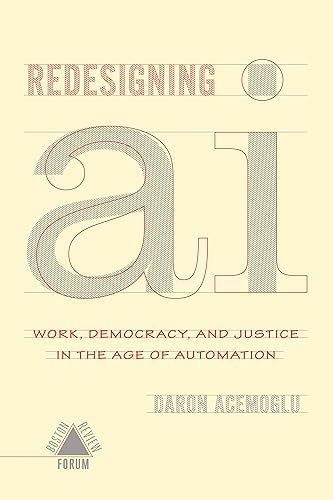
MIT's Building Pro-Worker Artificial Intelligence categorizes technological change into five types, arguing only 'new task-creating technologies' are unambiguously pro-worker.
The MIT paper argues current AI focuses overwhelmingly on automation rather than collaboration, citing misaligned incentives and the 'AGI bet' where firms see little point in worker enhancement tools.

These notes may contain occasional inaccuracies. Learn how podbrain notes are made
More in Science & Tech

The 5-Minute AI Weekly Recap: Realignment Week
Jun 20, 2026
Why Kalshi's John Wang Says Perps Are 'the Most Pure Trading Instrument'
Jun 19, 2026Your Company Doesn’t Need an AI Strategy
Jun 19, 2026
The data black hole at the center of AI
Jun 19, 2026
The New Rules of Media | Marc Andreessen & Ben Horowitz
Jun 19, 2026
.svg)