
Garry Tan
Gary Tan is the CEO of Y Combinator, the legendary startup accelerator that has funded companies like Airbnb, DoorDash, and Coinbase. A former founder himself who went through YC in 2008 with Posterous, Gary returned to lead the organization after seven years running his own VC fund, Initialized Capital.


- 01
Y Combinator receives 80,000 applications annually for 800 spots, with only 1% getting funded at $500,000 for 7-9% equity
- 02
AI coding revolution since November 2024 allows 100x productivity increase - 'I am about to do about 100x the amount of work coding than the whole year of 2013'
- 03
OpenClaw represents the 'homebrew computer club for AI' - an anti-corporate, open source movement for personal AI ownership
- 04
The median YC company now raises $2.2 million at demo day, doubling from $1 million since Gary's return as CEO
- 05
Personal AI agents will soon allow everyone to 'run their own AI agent that is totally under their control that they program'
- 06
Space fusion startup in YC batch has simulations showing fusion is viable in space due to reduced gravity constraints
- 07
Different AI models have distinct personalities: Claude is 'ADHD CEO,' Codex is '200 IQ autistic savant,' DeepSeek is 'conspiracy theorist'
- 08
YC's zero-based accounting approach asks: 'if we were starting everything we do, would we choose to do it again today from zero?'
Get the latest ideas from Tetragrammaton with Rick Rubin.
Plus the best new takeaways about artificial intelligence from other top podcasts — read in minutes, not hours.
By continuing, you agree to Podbrain's Terms and Privacy Policy.
These notes may contain occasional inaccuracies. Learn how Podbrain notes are made
Gary Tan is the CEO of Y Combinator, the legendary startup accelerator that has funded companies like Airbnb, DoorDash, and Coinbase. A former founder himself who went through YC in 2008 with Posterous, Gary returned to lead the organization after seven years running his own VC fund, Initialized Capital.
The conversation explores Gary's journey from a difficult childhood finding refuge in coding, through his early career at companies like Microsoft, to his current role shepherding the next generation of founders. He discusses the dramatic changes AI is bringing to software development, his personal experiments with 'vibe coding' that have led to viral open source projects, and his vision for democratizing AI through the OpenClaw movement.
Gary also opens up about the psychological aspects of entrepreneurship, the importance of being 'connected to the source,' and how his own childhood trauma both fuels his intensity and creates challenges in balancing work and family life. The discussion touches on everything from the technical details of different AI models to the broader implications of technology for society and human connection.
From Childhood Trauma to Coding Sanctuary
Gary's childhood was marked by instability and violence, but computers provided refuge: 'when I was in front of my computer, or even when I was in school studying algebra or calculus, it's like, oh, the world is so beautiful and well arranged, and I can understand it'
His first job at 14 came from cold-calling a web design company after winning awards as a 12-year-old: 'on the internet, nobody knows you're a dog or a 12-year-old'
The contrast between home chaos and work order was stark: 'At home, everything was a mess. And then I could ride my bike and go to work. And here were like quirky, super smart people who weren't yelling at each other'
Y Combinator's Formula for Finding Future Builders
YC's process distills to one core question in 10-minute interviews: 'what are you doing and why is it going to be you who does it'
Paul Graham's influence permeates YC through his writings, particularly Hackers and Painters, described as 'the perfect polymath book' bridging programming and art
The key traits YC looks for are earnestness and being 'connected to the source' - founders who have 'some sort of nuclear reactor in there' driving their vision
Success rates favor location: companies are 2.5x more likely to reach billion-dollar valuations in San Francisco Bay Area, 2x in New York City
The AI Coding Revolution and OpenClaw Movement
The breakthrough moment came in November 2024: 'Thanksgiving of 2025 was this totally insane shift in the way coding and code gen works. So Anthropic released its Opus 4.5 model and the world shook'
Gary's productivity explosion led to two major open source releases: G-Stack (used by 30,000 people daily) and G-Brain (personal AI knowledge system)
OpenClaw represents the 'Apple II moment' for AI - making personal AI accessible to non-engineers, just as Apple democratized personal computing
The vision is personal AI ownership: 'everyone is going to run their own AI agent that is totally under their control that they program' rather than corporate-controlled systems
AI Model Personalities and the Future of Intelligence
Different AI models have distinct characteristics: 'Claude Opus 4.6 is ADHD CEO... Codex from OpenAI is sort of like the almost nonverbal 200 IQ savant'
The danger of AI monopolization: 'there's sort of this nightmare scenario where one company or one entity or just one government has control of the biggest and best and only super intelligence'
Current AI adoption reflects William Gibson's observation from Neuromancer: 'the future is already here. It's just not evenly distributed yet'
Cost barriers remain significant: 'the people who are way out on the edge... he could just spend a million dollars a year on tokens and not feel it' - limiting access to perhaps 1,000 people globally
Technology as the Ultimate Cheese Mover
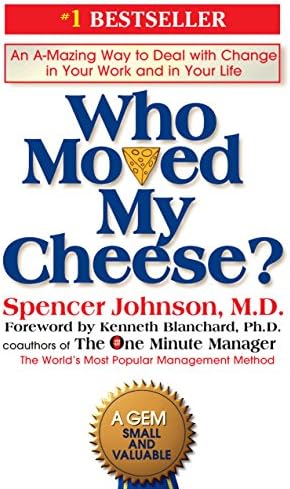
Drawing from Who Moved My Cheese?, Gary explains resistance to tech: 'people literally don't want their cheese to be moved. And technology is the primary cheese mover in society'
Each technological wave follows a pattern from blue ocean to red ocean: 'anytime there's a new wave... it's a blue ocean. You could just do anything, literally anything, and it'd be awesome'
AI has reopened all markets: 'AI has basically opened it up and everything's blue again' after years of increasingly competitive red oceans
The historical parallel to The Machine That Changed the World documentary: computers evolved from room-sized institutional tools to personal devices, just as AI is evolving from corporate to personal
The Psychology of Extreme Performance
Gary's intensity stems from childhood trauma: 'I can go into that room and I go to my seven-year-old version of myself... he just pours out like liquid plutonium'
The challenge of integration: 'if I do that, will I be able to still do what I do?' - balancing healing with maintaining the drive that fuels success
Warren Buffett's cautionary example: divorced at 47, later called it 'the greatest mistake of my life' - highlighting the cost of extreme focus
The mission-driven mindset: 'if there was reincarnation, I would have lived 10 billion lifetimes to inhabit this body and this mind on this earth at this moment'



These notes may contain occasional inaccuracies. Learn how Podbrain notes are made
More in Philosophy

It’s So Hard To Find | Stop Looking For This
Jul 13, 2026
12 Stoic Rules For A Better Life
Jul 12, 2026
Men Are Reading Less Fiction. That’s A Problem. | Steven Pressfield
Jul 11, 2026
Spielberg Just Revealed The Truth About Aliens (He Knows!)
Jun 25, 2026Which Of These Are You? | What's In Your Way Is The Way
Jun 25, 2026.svg)