
True Crime & Forensic Pathology with Patricia Cornwell & Dr. Jonathan Hayes
Neil deGrasse Tyson hosts a fascinating conversation with Dr. Jonathan Hayes, a forensic pathologist and medical examiner for New York City, alongside comedian Chuck Nice. Hayes brings a unique dual perspective as both a practicing forensic scientist and novelist, having written...

Episode


- 01
"You're five times more likely to die if you're shot than if you're stabbed" - Jonathan Hayes on gunshot wound lethality
- 02
Forensic pathologists require 12 years of training: college, medical school, 3-5 years pathology residency, plus one year forensic specialization
- 03
"Rigor mortis typically sets in by 6 hours, peaks at 12 hours, and dissipates by 36 hours after death" - Jonathan Hayes
- 04
Blood spatter patterns in zero gravity would completely change crime scene analysis, as droplets won't follow Earth-based physics
- 05
"We have more bacterial cells in our body than we have body cells" - making decomposition possible even on sterile planets
- 06
AI pattern recognition could revolutionize forensics by analyzing thousands of blood droplets to identify killer's blood versus victim's
- 07
CSI effect created jury expectations for "glamorous animations and incredible cutting-edge science" beyond real forensic capabilities
Get the latest ideas from StarTalk Radio.
Plus the best new takeaways from other top podcasts — read in minutes, not hours.
By continuing, you agree to podbrain's Terms and Privacy Policy.
These notes may contain occasional inaccuracies. Learn how podbrain notes are made
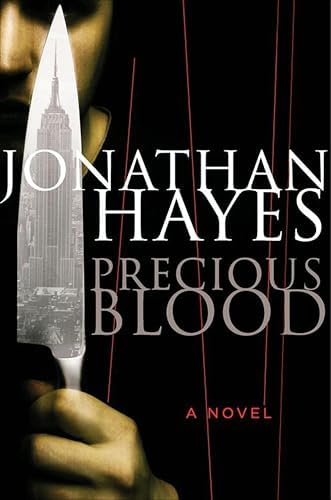
Neil deGrasse Tyson hosts a fascinating conversation with Dr. Jonathan Hayes, a forensic pathologist and medical examiner for New York City, alongside comedian Chuck Nice. Hayes brings a unique dual perspective as both a practicing forensic scientist and novelist, having written Precious Blood and A Hard Death.
The discussion explores the intersection of real forensic pathology with popular culture representations, examining how shows like CSI have both inspired new professionals and created unrealistic expectations. Hayes shares insights from his 30+ years examining violent deaths, including his work after 9/11 identifying victims for eight months.
The conversation ventures into speculative territory as they discuss Patricia Cornwell's space-based crime novel, examining how forensic investigation would adapt to zero gravity environments and future space colonies. Topics range from the technical details of rigor mortis and decomposition to the potential role of AI in pattern recognition and crime scene analysis.
From Medical Examiner to Novelist: Jonathan Hayes' Journey
Hayes became a forensic pathologist through 12 years of training: college pre-med, medical school, 3-5 years pathology residency, then one-year forensic specialization in Miami.
His debut novel Precious Blood was "semi-autobiographical," set in post-9/11 New York City, allowing him to process disturbing experiences he couldn't discuss due to medical privacy.
"We don't really talk about our cases. It's a matter of medical privacy. But I wanted to talk about the things I'd seen and the things that disturbed and upset me" - Jonathan on writing fiction.
His second novel A Hard Death continues drawing from his professional experiences while maintaining scientific accuracy in wound descriptions and forensic procedures.
The Science Behind Death: Rigor Mortis and Decomposition
"Rigor mortis is stiffening of muscles that occurs after death" - detectable first in goose flesh from tiny hair-raising muscles, then progressing to finger joints.
Timeline: rigor typically felt by 6 hours, fully present by 12 hours, and dissipates by 36 hours after death, though body temperature and seizures can accelerate the process.
Decomposition involves bacterial overgrowth producing gas that bloats the body, creating buoyancy that causes drowning victims to surface months later when water warms.
Bodies can leak "purge fluid" through ceilings as tissues break down, explaining how murder victims are sometimes discovered by neighbors below.
Forensic Investigation in Space: Zero Gravity Crime Scenes
Blood spatter patterns would be completely different in zero gravity, eliminating traditional forensic markers like teardrop shapes from movement versus round drops from stationary bleeding.
"How quickly will people bleed from an open wound if there's zero gravity?" - Neil raises fundamental questions about space-based forensic challenges.
Traditional death timing methods would fail in space: "blood doesn't collect anywhere" in zero G, eliminating pooling patterns used to estimate time since death.
Hayes believes he could remotely guide scientifically literate astronauts through crime scene investigation via video documentation, though "there's no real substitute for seeing with your own eyes."
CSI Effect: Fiction's Impact on Real Forensics
"CSI has been great because it's attracted a lot of people into forensics" - Hayes credits the show despite its scientific liberties for inspiring new professionals.
The "CSI effect" created problems with juries demanding "higher levels of visual proof" and "glamorous animations" beyond real forensic capabilities.
"Forensics is becoming a matriarchy" with Hayes estimating his office is "more than 50% female" among medical examiners and staff.
Modern forensics benefits from technological advances: high-resolution photography, 3D room scanning, and video documentation replacing poor-quality Polaroids from the 1990s.
AI and the Future of Forensic Investigation
AI could excel at pattern recognition in complex crime scenes: analyzing "a thousand blood spatter droplets" to identify which belong to killer versus victim.
"I don't think AI will ever be" able to conduct full autopsies due to subtle anatomical differences requiring human touch, smell, and visual discrimination.
Virtual autopsies using CT scanners are advancing, but "New York lawyers are not going to just accept that the CT scan is accurate" without traditional examination.
Hayes envisions AI as assistive technology that could reduce observer bias while requiring human oversight: "they're going to need humans to sign off on them."

These notes may contain occasional inaccuracies. Learn how podbrain notes are made
More in Science & Tech

The 5-Minute AI Weekly Recap: Realignment Week
Jun 20, 2026
Why Kalshi's John Wang Says Perps Are 'the Most Pure Trading Instrument'
Jun 19, 2026Your Company Doesn’t Need an AI Strategy
Jun 19, 2026
The data black hole at the center of AI
Jun 19, 2026
The New Rules of Media | Marc Andreessen & Ben Horowitz
Jun 19, 2026
.svg)