
Told You So! with Matt Kaplan
Neil deGrasse Tyson hosts Gary O'Reilly and Chuck Nice with guest Matt Kaplan, science correspondent at The Economist and author of The Science of Monsters and the upcoming...

Episode


- 01
Ignaz Semmelweis reduced childbed fever mortality from 21% to zero using chlorine hand-washing, but was exiled and died in an asylum
- 02
Louis Pasteur stole vaccine techniques from Henry Toussaint and Pierre Gaultier, then destroyed their careers while taking credit
- 03
Kati Kariko was fired and threatened with deportation for mRNA research that later enabled COVID vaccines and won her the Nobel Prize
- 04
Pierre-Alexandre Louis proved leeches killed more pneumonia patients when applied early versus late, challenging 15,000-leech-per-year Paris industry
- 05
Galileo's Il Saggiatore established the scientific method but he survived the Inquisition through powerful Medici family connections
- 06
Grant funding reforms using lottery systems for qualified applications could reduce bias and increase scientific creativity
- 07
Science communication failures during COVID exposed normal scientific debate to the public, creating widespread anti-science sentiment
Get the latest ideas from StarTalk Radio.
Plus the best new takeaways about science from other top podcasts — read in minutes, not hours.
By continuing, you agree to podbrain's Terms and Privacy Policy.
These notes may contain occasional inaccuracies. Learn how podbrain notes are made
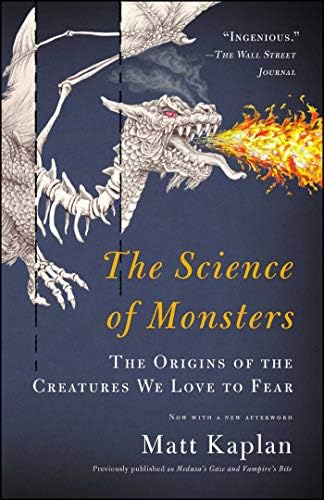
Neil deGrasse Tyson hosts Gary O'Reilly and Chuck Nice with guest Matt Kaplan, science correspondent at The Economist and author of The Science of Monsters and the upcoming I Told You So Scientists Who Were Ridiculed, Exiled, and Imprisoned for Being Right.
The conversation explores how scientific breakthroughs throughout history have been suppressed by religious institutions, political forces, and scientific establishments themselves. From Galileo's diplomatic survival of the Inquisition to Semmelweis's tragic exile for discovering hand hygiene, the discussion reveals how personality, politics, and economic interests often determine which scientific ideas survive.
Kaplan traces the evolution from medieval medicine's reliance on astrology and bloodletting through the establishment of rigorous scientific methods, highlighting how figures like Pasteur achieved fame through plagiarism while genuine innovators like Kati Kariko faced decades of rejection before their mRNA work enabled COVID vaccines.
When Science Broke Free from Religious Authority
The 1500s and 1600s marked science's separation from church doctrine, as telescope observations revealed planetary movements contradicting Earth-centered cosmology.
Galileo's Discourse on Comets battled mathematician Orezio Grassi over comet trajectories, leading to Il Saggiatore which established the scientific method of questioning, exploring, and concluding.
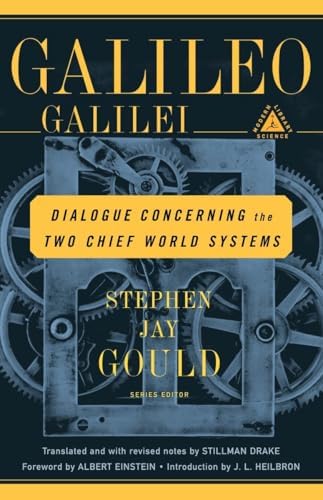
Dialogue Concerning the Two Chief World Systems featured character Simplicio arguing the Pope's Earth-centered views, published in Italian for broader accessibility rather than Latin.
The Leech Industry and Medical Skepticism
Renaissance medicine rediscovered Hippocratic humors theory, leading to widespread bloodletting with leeches - Paris alone imported 15,000-20,000 leeches annually.
Pierre-Alexandre Louis conducted the first controlled medical experiment, applying leeches to pneumonia patients on day one versus day seven, finding early treatment increased mortality.
"He published those results, and he was forgotten. People did not take kindly to the notion that leeches weren't helping" - Matt, describing the economic resistance to medical reform.
Semmelweis and the Tragedy of Childbed Fever
Vienna General Hospital's maternity wards showed 5-6% infection rates with nurses versus 21% with doctors, leading Semmelweis to investigate environmental factors systematically.
After dissecting corpses, Semmelweis noticed his hands retained a 'death smell' and created chlorine solution that eliminated the odor and dropped infection rates to zero.
Despite proving hand hygiene prevented deaths, Semmelweis was fired for political missteps including supporting Hungarian rebels against Austria and publicly contradicting supervisors.
"A group of his own peers put him into an insane asylum where he died" - Matt, describing Semmelweis's tragic end despite saving countless lives.
Pasteur's Brilliant Deceptions
Louis Pasteur learned political lessons from supervisor Auguste Laurent's funding loss during student rebellions, ensuring he never opposed government interests.
Pasteur publicly demonstrated anthrax vaccine success by injecting sheep, with vaccinated animals surviving while unvaccinated died in a theatrical public display.
"When his journals and lab notebooks were opened 100 years later, it was revealed that this was entirely fraud" - Matt, exposing how Pasteur stole Henry Toussaint's heat-treatment method.
Pasteur similarly plagiarized Pierre Gaultier's rabies vaccine technique, tested it on people, killed some patients, buried evidence, and destroyed Gaultier's career.
Galileo's Diplomatic Genius vs Scientific Martyrdom
Galileo survived the Inquisition through powerful Medici family connections, living in a "five-bedroom luxury apartment a stone's throw from the Sistine Chapel" rather than being tortured.
Ferdinando de' Medici, whose family had supplied "two queens to France and four popes," ensured Galileo received three daily meals from the ambassador's wife during his trial.
Unlike Giordano Bruno who was burned at the stake, Galileo's diplomatic skills and political connections protected him from the Inquisition's standard torture methods.
Modern Echoes: Kati Kariko's mRNA Struggle
Kati Kariko spent 25 years developing messenger RNA techniques that could program cells to produce specific proteins, facing constant grant rejections and institutional dismissal.
"She was first demoted for exploring messenger RNA and not getting enough grants. And then she was fired by the university because they felt she really was a waste of time" - Matt.
Partnering with Drew Weissman, Kariko discovered how to prevent immune system attacks on injected mRNA by decorating it with proper proteins for recognition.
Her work at BioNTech enabled COVID vaccine development in record time, ultimately winning the Nobel Prize after decades of persecution for the same research.
Reforming Science Funding and Communication
Grant committees receiving thousands of applications for limited funding create bias against unconventional ideas and non-native English speakers from less prestigious institutions.
Lottery systems for qualified grant applications, implemented by the Willem Foundation and Austrian government, could democratize funding and increase scientific creativity.
"Science still solves a lot of problems. The thing we need to all be aware of is that science debates, it argues, it disproves. And that's normal" - Matt on public science education.
COVID exposed scientific debate processes to the public, shattering the perception of science as an "answer machine" and revealing how frontier research actually operates.


These notes may contain occasional inaccuracies. Learn how podbrain notes are made
More in Science & Tech

The 5-Minute AI Weekly Recap: Realignment Week
Jun 20, 2026
Why Kalshi's John Wang Says Perps Are 'the Most Pure Trading Instrument'
Jun 19, 2026Your Company Doesn’t Need an AI Strategy
Jun 19, 2026
The data black hole at the center of AI
Jun 19, 2026
The New Rules of Media | Marc Andreessen & Ben Horowitz
Jun 19, 2026
.svg)