
Things You Thought You Knew – Rocks Float
In this highly engaging episode of StarTalk, world-renowned astrophysicist Neil deGrasse Tyson and his energetic co-host Chuck Nice break down common scientific misconceptions about chemistry, planetary geology, and thermodynamics. The duo explores the true nature of atmospheric oxygen, explaining why it is not...


- 01
"Nitrogen makes up 78% of Earth's atmosphere, while oxygen is only about 20% to 21%." - Neil
- 02
"The entire source of our oxygen is green plants; without them, reactive oxygen would systematically drain from the atmosphere." - Neil
- 03
"Oxygen itself is not flammable, but it actively promotes combustion, causing burnable materials to ignite instantly." - Neil
- 04
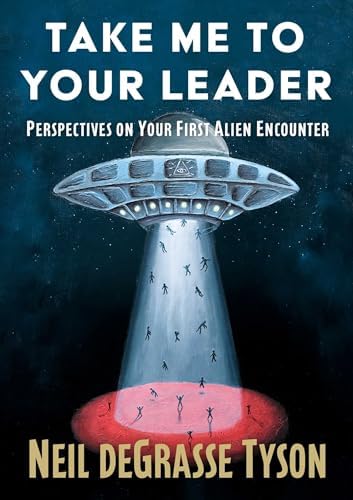
In Take Me to Your Leader Perspectives on Your First Alien Encounter, Neil deGrasse Tyson explains that hostile alien tropes reflect human history.
- 05
"All the heavy metals sank to Earth's core, leaving low-density rocks to float to the crust during planetary formation." - Neil
- 06
"Warm blankets do not generate heat; they act as passive insulation that prevents your body from losing heat to the air." - Neil
- 07
"Two people cannot both feel warm touching each other; thermodynamically, one must transfer heat to the other." - Neil
Get the latest ideas from StarTalk Radio.
Plus the best new takeaways about science from other top podcasts — read in minutes, not hours.
By continuing, you agree to podbrain's Terms and Privacy Policy.
These notes may contain occasional inaccuracies. Learn how podbrain notes are made
In this highly engaging episode of StarTalk, world-renowned astrophysicist Neil deGrasse Tyson and his energetic co-host Chuck Nice break down common scientific misconceptions about chemistry, planetary geology, and thermodynamics. The duo explores the true nature of atmospheric oxygen, explaining why it is not actually flammable and how its presence on other planets serves as a biological signature. They also dive into the surprising low density of rocks, explaining why they are technically light compared to the heavy metals that sank to the Earth's core during its early molten phase.
Neil also introduces his fascinating audiobook, Take Me to Your Leader Perspectives on Your First Alien Encounter, which analyzes why human depictions of extraterrestrial life often mirror our own historical anxieties surrounding technological asymmetry. Together, the hosts blend pop culture references from Star Trek and Jaws with rigorous physical science to explain how the universe actually works. They conclude the episode with a cozy discussion on the passive thermodynamics of blankets, explaining how insulation maintains temperature and why two people cannot both feel warm while touching.
Atmospheric Chemistry and the Plant Lottery
"Most of the air we breathe is nitrogen... Nitrogen is 78% of the air we breathe." - Neil
"Oxygen is between 20 and 21% of the air we breathe, so it's about a fifth of the air we breathe." - Neil
"The entire source of our oxygen is green plants. If you take away the green plants—oxygen is highly reactive as a chemical element, and so the oxygen that's in the atmosphere will glom on to other ingredients on Earth's surface, and it will systematically drain out." - Neil
Neil critiques early Star Trek episodes for depicting barren, rocky planets with perfect oxygen-nitrogen atmospheres, noting that sustained oxygen requires active biological generation.
The Flammability Myth and the Apollo 1 Tragedy
"Oxygen promotes combustion... The oxygen itself does not burn." - Neil
Neil explains that the tragic Apollo 1 fire, which killed three astronauts, occurred because the capsule was pressurized with pure oxygen, enabling everything burnable to ignite instantly from a single spark.
"What mattered there was not that it was oxygen, but that it was gas under pressure." - Neil, explaining why the oxygen tank in Jaws exploded when shot.
Mirroring Human Fears in Alien Encounters
In his book, Take Me to Your Leader Perspectives on Your First Alien Encounter, Neil deGrasse Tyson explores why humans represent aliens as diabolical.
"These representations of evil aliens are not based on how we think they will behave, that maybe they're really based on how we know we have behaved to one another, especially when there's a conflict between a higher technology and a lower technology." - Neil
Planetary Differentiation and Why Rocks Are Light
"Earth was once molten... gravity will do things to that molten mixture... the lower density stuff will float on top of the higher density stuff." - Neil
"Earth's crust, where the active ingredient is rock, is the lightest stuff in Earth when it formed." - Neil
Neil lists the density layers of Earth from lightest to heaviest: gases float on top, followed by water, then rocks, while heavy metals like iron, nickel, and magnesium sank to the core.
"We have geophysicists who anytime there's an earthquake, right, they can time the passage of the earthquake signals through the different layers of the Earth... they can map the density profile of the entire Earth." - Neil
The Passive Thermodynamics of Warm Blankets
"The blanket doesn't make anything warm. It is completely passive in this. It's not a source of warmth." - Neil
"What we really mean when we say a garment is warm is that it does not transmit heat energy." - Neil
Neil notes that a blanket can keep beer cold just as it keeps a human warm, acting exactly like a thermos by preventing heat transfer.
"Two people cannot feel warm with each other at the same time. You can be neutral—one will feel cold, the other hot... Thermodynamically, that's not possible." - Neil
These notes may contain occasional inaccuracies. Learn how podbrain notes are made
More in Science & Tech
Is Reality Really Real? With Donald Hoffman
Jun 26, 2026
CEO-Led AI Gets 3X the ROI
Jun 25, 2026
Leslie Lamport on the Science of Distributed Systems
Jun 25, 2026
The Chopping Block: Is Strategy the Luna for Suits?, ETH Labs Shakeup & CME vs Perps
Jun 25, 2026
Marc Andreessen on AI, Technology, and the Future of Humanity
Jun 25, 2026.svg)