
Things You Thought You Knew – Is Everything Light?
Neil deGrasse Tyson hosts this episode of StarTalk exploring three fundamental concepts that shape our understanding of light, space, and observation. The discussion covers albedo (reflectivity measurements), light pollution affecting astronomical observations, and the electromagnetic spectrum.


- 01
The Moon has an albedo of only 0.1, making it nearly as dark as car tire sidewalls - its brightness comes from the Sun's intensity
- 02
Earth appears 50 times brighter from the Moon than the Moon appears from Earth due to size and reflectivity differences
- 03
Leonardo da Vinci first explained earthshine in his Codex Leicester, illustrating how sunlight reflects from Earth to Moon and back
- 04
Light pollution costs money - streetlights visible from airplanes mean you're paying to illuminate the sky unnecessarily
- 05
Radio telescopes face pollution from TV, satellites, and even car key fobs disrupting observations of distant galaxies
- 06
The Vera Rubin Telescope takes movies of the night sky to distinguish between satellites and potentially dangerous asteroids
- 07
Humans can only see a tiny slice of the electromagnetic spectrum - we are 'practically blind' to most light forms
- 08
William Herschel discovered infrared light by measuring temperatures in Newton's spectrum, finding the hottest spot beyond visible red
Get the latest ideas from StarTalk Radio.
Plus the best new takeaways from other top podcasts — read in minutes, not hours.
By continuing, you agree to podbrain's Terms and Privacy Policy.
These notes may contain occasional inaccuracies. Learn how podbrain notes are made
Neil deGrasse Tyson hosts this episode of StarTalk exploring three fundamental concepts that shape our understanding of light, space, and observation. The discussion covers albedo (reflectivity measurements), light pollution affecting astronomical observations, and the electromagnetic spectrum.
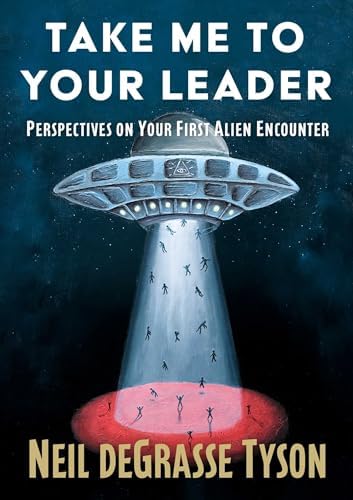
The conversation begins with albedo as a precise measurement of reflectivity, revealing surprising facts about the Moon's darkness and Earth's brightness. Tyson then examines how various forms of pollution - from city lights to radio waves to satellites - interfere with astronomical research. The episode concludes with an exploration of the electromagnetic spectrum, showing how visible light represents just a tiny fraction of all light forms, with references to Leonardo da Vinci's groundbreaking work in the Codex Leicester and Tyson's latest book Take Me to Your Leader.
Albedo: The Science of Cosmic Reflectivity
Albedo measures reflectivity from 0 to 1, where 0.5 means half the light gets reflected and half gets absorbed - 'it's like thinking of it as a percentage' - Neil
The Moon's albedo is only 0.1, making it 'almost as dark as the sidewall tires on a car' despite appearing bright due to the Sun's intensity
Earth's albedo averages 0.3, meaning 70% of the Sun's energy hitting Earth gets absorbed, with variations based on cloud cover and ocean exposure
From the Moon's perspective, Earth appears 16 times larger and 3 times more reflective, making it nearly 50 times brighter than the Moon appears from Earth
Leonardo da Vinci first explained earthshine in his Codex Leicester, drawing rays of sunlight going from Sun to Earth to Moon and back to Earth in the 15th century
Light Pollution: When Brightness Becomes a Problem
Growing up in cities, Tyson thought the Hayden Planetarium's star display was 'a hoax' because 'way too many stars' were visible compared to the light-polluted urban sky
The International Dark Sky Association (IDA) promotes economic solutions - if you can see streetlights from an airplane, 'somebody is paying for electricity to illuminate my airplane flying overhead'
Tucson, Arizona successfully implemented light ordinances near Kitt Peak Observatory, controlling brightness levels and requiring lamp 'hats' to direct light downward
Radio pollution affects telescopes through TV, AM/FM, satellite, and microwave signals, requiring radio-free zones around sensitive instruments
Satellite pollution creates streaks across telescope images, with the Vera Rubin Telescope designed to take 'movies of the night sky every single night' to distinguish satellites from asteroids
The Electromagnetic Spectrum: Beyond Human Vision
Tyson's childhood revelation that 'microwaves, radio waves, infrared, ultraviolet, X-rays, gamma rays - it's all the same thing' traveling at light speed
Higher frequency light carries more energy - ultraviolet 'has enough energy to break apart biological molecules' causing sunburn and skin cancer
Sunblock protects against UV radiation, not heat - 'you're not blocking heat, the point of sunblock is to block just the UV'
William Herschel discovered infrared by measuring temperatures across Newton's spectrum, finding the hottest reading in an area with light 'unfit for vision'
Humans see only 'a tiny slice' of the electromagnetic spectrum - 'we are practically blind' to most forms of light including radio, microwave, infrared, ultraviolet, X-ray, and gamma radiation

These notes may contain occasional inaccuracies. Learn how podbrain notes are made
More in Science & Tech

Is Reality Really Real? With Donald Hoffman
Jun 26, 2026
CEO-Led AI Gets 3X the ROI
Jun 25, 2026
Leslie Lamport on the Science of Distributed Systems
Jun 25, 2026
The Chopping Block: Is Strategy the Luna for Suits?, ETH Labs Shakeup & CME vs Perps
Jun 25, 2026
Marc Andreessen on AI, Technology, and the Future of Humanity
Jun 25, 2026.svg)