
Science at Warp Speed: StarTalk Live!
This Star Talk Live episode from the Novo Theater in Los Angeles features Neil deGrasse Tyson with co-host comedian Sashir Zamata, exploring the science behind science fiction. The expert panel includes Dr. Aaron McDonald, astrophysicist and official science advisor to the Star Trek franchise specializing in neutron...

Episode


- 01
100 trillion neutrinos pass through your body every second, but only one or dozen will interact in your lifetime - David
- 02
LIGO detected gravitational waves in 2015 using changes in space-time one 1,000th the size of an atom
- 03
Matter-antimatter conversion is 100% efficient at turning mass into energy, compared to 0.1% for atomic fission
- 04
The Alcubierre warp drive requires energy equivalent to a semi-truck's mass, down from original calculations needing all energy in universe
- 05
Star Trek's transporter essentially murders you and recreates you elsewhere, raising philosophical questions about identity
- 06
85% of the universe's gravity comes from dark matter with no known origin, detected only through gravitational effects
- 07
Tachyons would violate causality - you could receive messages before they were sent, creating paradoxes
Get the latest ideas from StarTalk Radio.
Plus the best new takeaways from other top podcasts — read in minutes, not hours.
By continuing, you agree to podbrain's Terms and Privacy Policy.
These notes may contain occasional inaccuracies. Learn how podbrain notes are made
This Star Talk Live episode from the Novo Theater in Los Angeles features Neil deGrasse Tyson with co-host comedian Sashir Zamata, exploring the science behind science fiction. The expert panel includes Dr. Aaron McDonald, astrophysicist and official science advisor to the Star Trek franchise specializing in neutron stars and gravitational waves, and Dr. David Salzberg, UCLA particle physicist who served as science advisor to The Big Bang Theory, Young Sheldon, and Christopher Nolan's Oppenheimer.
The conversation examines how real physics concepts like dark matter, antimatter, and gravitational waves appear in popular science fiction, particularly Star Trek. They discuss the detection methods for cosmic phenomena beyond traditional telescopes, including neutrino detectors in Antarctic ice and LIGO's laser interferometry for gravitational waves.
The panel explores theoretical concepts like warp drives, higher dimensions, and the multiverse, while addressing how science fiction storytelling balances scientific accuracy with narrative needs. They also examine representation in sci-fi and how fictional technologies like Star Trek's communicators have inspired real-world innovations like flip phones.
Beyond Light: New Windows to the Universe
Traditional telescopes detect electromagnetic radiation from radio waves to gamma rays, but the universe communicates through additional channels like particles and gravitational waves.
Neutrino detection experiments in Antarctica use glacial ice as a target, with "100 trillion neutrinos per second going through you" but only one or dozen interactions per lifetime - David.
LIGO detects gravitational waves by measuring space-time distortions "one 1,000th the size of an atom" using lasers, fulfilling Einstein's 1915 prediction a century later.
Cosmic rays are charged particles that bend through magnetic fields, making it "really hard to do very meaningful astronomy" since direction doesn't indicate origin.
Dark Matter: The Universe's Missing 85%
Dark matter comprises 85% of the universe's gravity with no known origin, detectable only through gravitational effects rather than electromagnetic radiation.
Particle physicists search for dark matter using "very deep caves" with "very, very cold vats of liquid noble gases" shielded from cosmic ray interference.
Gravitational wave detectors may eventually help identify dark matter since "we can't see dark matter using traditional electromagnetic radiation, but we see the gravitational effects" - Aaron.
Star Trek Discovery named the "Verubin Nebula" after astronomer Vera Rubin, who mapped dark matter in our own galaxy following Fritz Zwicky's 1930s discoveries.
Antimatter: The Ultimate Energy Source
Paul Dirac predicted antimatter in the 1930s by solving equations that had two solutions, like "the square root of 9 is 3, but it's also minus 3."
Matter-antimatter annihilation converts 100% of mass to energy via E=mc², compared to atomic bombs which convert only 0.1% of uranium mass to energy.
Antimatter costs approximately "$2 quadrillions of dollars per gram" when produced at particle accelerators, though "your body is making antimatter right now" from potassium decay.
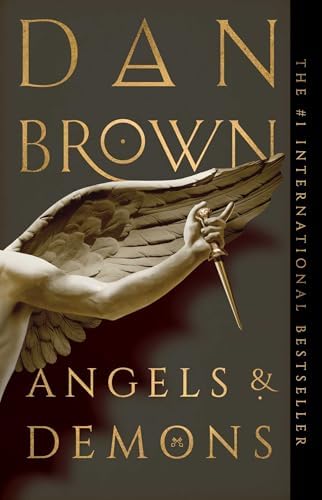
Angels and Demons portrayed antimatter storage incorrectly - "Dan Brown did not take any physics in his entire life" and "the Vatican does not have a particle accelerator in his basement" - David.
Star Trek uses matter-antimatter reactions for warp drives, with dilithium crystals serving as "control rods" rather than power sources for the reactions.
Warp Drives and Faster-Than-Light Travel
The Alcubierre drive represents mathematically valid physics for faster-than-light travel by warping space-time around a ship rather than accelerating through space.
Original calculations required "all energy that ever existed," but refined models reduced requirements to "energy equivalent of a semi-truck being torn" via E=mc².
Tachyons, hypothetical faster-than-light particles, would violate causality - "you could receive messages before they were sent," creating paradoxes where effects precede causes.
Star Trek consistently uses tachyons when breaking causality through time travel, as "anytime they break those rules, tachyons show up" - Aaron.
Higher Dimensions and Multiverse Theories
Particle physicists theorize extra dimensions beyond our four-dimensional space-time, with string theory originally requiring "26 extra dimensions" reduced to "10 total dimensions" with supersymmetry.
Higher-dimensional objects passing through our space would appear as particles that "pop in and out quantum mechanically" - like a sphere creating expanding and contracting circles in a 2D world.
Multiverse theories range from different physical laws to infinite variations where "everything is exactly the same but one" detail differs across parallel universes.
Star Trek explored multiverses in The Next Generation with Worf experiencing "quantum fissures" showing alternate realities, recently revisited in Lower Decks season five.
Science Fiction's Influence on Real Technology
The first Motorola flip phone was directly inspired by Star Trek's communicator, demonstrating how "science fiction inspiring design" drives innovation.
An X Prize was awarded for creating a real tricorder - a device that can diagnose ailments and measure vital signs without touching patients.
Star Trek's transporter was invented for budget reasons to avoid "lower ramps and land" sequences, but raises philosophical questions since "it murders the person and recreates them."
3D printing technology approaches Star Trek's replicator concept, with advances in food science potentially enabling printed meals in the future.
Balancing Science and Storytelling
Science advisors serve as resources rather than "science police," with story, characters, and budget taking precedence over scientific accuracy in production decisions.
Mark Twain's advice applies to science fiction: "first get your facts straight, then distort them at your leisure" when incorporating scientific concepts into stories.
For The Big Bang Theory finale, Salzberg created "super asymmetry" as a Nobel Prize-worthy discovery, finding "zero papers with that title" in existing literature.
Star Trek has consistently addressed social issues through science fiction allegory, serving as "morality tales" that reflect contemporary Earth problems through futuristic scenarios.

These notes may contain occasional inaccuracies. Learn how podbrain notes are made
More in Science & Tech

The 5-Minute AI Weekly Recap: Realignment Week
Jun 20, 2026
Why Kalshi's John Wang Says Perps Are 'the Most Pure Trading Instrument'
Jun 19, 2026Your Company Doesn’t Need an AI Strategy
Jun 19, 2026
The data black hole at the center of AI
Jun 19, 2026
The New Rules of Media | Marc Andreessen & Ben Horowitz
Jun 19, 2026
.svg)