
Our Burning Questions – Simulation Debate
Neil deGrasse Tyson hosts this StarTalk Special Edition with co-hosts Gary O'Reilly (recently naturalized American citizen) and Chuck Nice, fielding burning questions from the StarTalk production team and staff members.

Episode


- 01
Earth is weightless because it's falling around the sun, just like astronauts orbiting Earth are weightless
- 02
You can calculate a truck's weight by measuring tire contact area and multiplying by air pressure across all wheels
- 03
Google's quantum chip completing universe-age computations in five minutes suggests we might be living in a simulation
- 04
Schools should teach how to think and solve unknown problems rather than just loading students with information
- 05
Students should be sad when school ends each day, not celebrating escape from learning
- 06
Neil identifies as agnostic rather than atheist because he doesn't share the confrontational behavior of leading atheists
- 07
Death returns our molecular energy to the universe through decomposition or cremation's radiant heat
- 08
Each person is unique among 10^30 possible genetic variations - we won the lottery by being born at all
Get the latest ideas from StarTalk Radio.
Plus the best new takeaways from other top podcasts — read in minutes, not hours.
By continuing, you agree to podbrain's Terms and Privacy Policy.
These notes may contain occasional inaccuracies. Learn how podbrain notes are made
Neil deGrasse Tyson hosts this StarTalk Special Edition with co-hosts Gary O'Reilly (recently naturalized American citizen) and Chuck Nice, fielding burning questions from the StarTalk production team and staff members.
The episode covers diverse topics from truck physics and Earth's weight to quantum computing's implications for simulation theory. The team explores educational reform, with Neil advocating for teaching critical thinking over rote memorization.
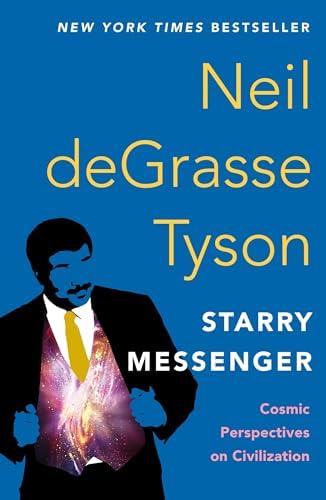
A particularly profound segment addresses mortality and existence, where Neil reads extensively from his book Starry Messenger Cosmic Perspectives on Civilization to answer a deeply personal question about death from editor Zhao, whose father faces terminal illness.
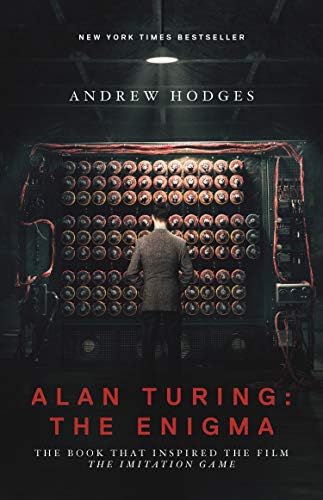
Throughout the discussion, Neil references The Imitation Game research paper by Alan Turing when explaining consciousness tests for AI, demonstrating how foundational scientific concepts continue to inform modern technological debates.
Calculating Earth's Weight and Truck Physics
"Earth is weightless" - Neil, explaining that Earth orbiting the sun is equivalent to astronauts being weightless in orbit around Earth.
To weigh a truck, measure each tire's road contact area, multiply by air pressure (typically 50 psi), then multiply by number of wheels - an 18-wheeler with 30 square inches per tire yields 30,000 pounds total weight.
Truckers lower tire pressure to reduce vehicle height for low overpasses, increasing contact area while maintaining the same total weight calculation.
Quantum Computing and Simulation Theory Evidence
Google's quantum chip completing computations in five minutes that would take supercomputers longer than the universe's age suggests we could simulate convincing universes with conscious beings.
Evidence we're in a simulation might appear as artificial limits in physical constants, similar to how programmers set finite decimal places for pi or energy cutoffs in cosmic ray measurements.
Drawing from The Imitation Game research, the Turing test suggests functional consciousness matters more than the substrate - whether biological neurons or silicon doesn't change the interaction quality.
"Maybe the distinction is artificial between those two. Maybe if something can calculate and can do things you need it to do, and it's way smarter than you" - Neil on biological versus artificial intelligence.
Revolutionary Education Reform Principles
Schools must teach "how to think" rather than "what to know" - training students to solve unprecedented problems rather than memorize information for tests.
"We need to have schools where at the end of the day, you are sad that the school day has ended" - Neil, contrasting with students celebrating escape from learning.
ChatGPT reveals that school systems value grades over learning - students cheat because curiosity isn't built into the educational experience.
Progressive change requires economic incentives, not just moral arguments - citing how oil discovery ended whaling more effectively than conservation movements.
Personal Philosophy on Religion and Mortality
Neil identifies as agnostic rather than atheist because leading atheists like Richard Dawkins exhibit confrontational behaviors he doesn't share, such as refusing to use AD/BC dating.
"I will defend the use of AD and BC in reckoning years" because the Catholic Church's Jesuit priests created the Gregorian calendar that civilized world uses - giving credit where due.
Death resembles pre-birth non-existence - stroke victims losing brain functions piece by piece demonstrates consciousness depends on neural activity that ceases completely in death.
Reading from Starry Messenger Cosmic Perspectives on Civilization: "Each of us, for all practical purposes, is unique in the universe now and forever" among 10^30 possible genetic variations.
In death, buried bodies feed microbes and flora while cremated remains become infrared radiation traveling at light speed - "after someone has been cremated, you can keep a timeline" of where their energy has reached in space.
These notes may contain occasional inaccuracies. Learn how podbrain notes are made
More in Science & Tech

The 5-Minute AI Weekly Recap: Realignment Week
Jun 20, 2026
Why Kalshi's John Wang Says Perps Are 'the Most Pure Trading Instrument'
Jun 19, 2026Your Company Doesn’t Need an AI Strategy
Jun 19, 2026
The data black hole at the center of AI
Jun 19, 2026
The New Rules of Media | Marc Andreessen & Ben Horowitz
Jun 19, 2026
.svg)