
Is the Universe a Math Problem? With Terence Tao
Neil deGrasse Tyson hosts a Cosmic Queries edition on mathematics with comedian Paul Mercurio, writer and performer from The Daily Show and The Late Show with Stephen Colbert. Their guest is Terence Tao, Professor of Mathematics at UCLA and Director of Special Projects at IPAM (Institute for Pure and Applied...

Episode


- 01
Terence Tao's team developed MRI algorithms that are 10 times faster than traditional scans, now used in all modern MRI machines
- 02
The Collatz conjecture has trapped mathematicians for 100+ years despite its simple rule: divide even numbers by 2, multiply odd numbers by 3 and add 1
- 03
Tao proved that 99% of very large numbers in the Collatz sequence become much smaller than where they started, though not necessarily reaching 1
- 04
Non-Euclidean geometries, developed as pure mathematical curiosities, became essential for Einstein's general relativity theory decades later
- 05
Paul Erdős posed over 1,000 mathematical problems with cash prizes, but winners rarely cashed the checks, preferring to frame them as trophies
- 06
IPAM brings together pure mathematicians, applied mathematicians, and industry experts to solve interdisciplinary problems years before they become mainstream
- 07
Eugene Wigner called mathematics' practical applications 'unreasonable effectiveness' - pure math concepts often find surprising real-world uses
- 08
Modern mathematical collaboration happens organically through chat rooms and crowdsourcing, with recent Erdős problems solved by combining human insight with AI tools
Get the latest ideas from StarTalk Radio.
Plus the best new takeaways from other top podcasts — read in minutes, not hours.
By continuing, you agree to podbrain's Terms and Privacy Policy.
These notes may contain occasional inaccuracies. Learn how podbrain notes are made
Neil deGrasse Tyson hosts a Cosmic Queries edition on mathematics with comedian Paul Mercurio, writer and performer from The Daily Show and The Late Show with Stephen Colbert. Their guest is Terence Tao, Professor of Mathematics at UCLA and Director of Special Projects at IPAM (Institute for Pure and Applied Mathematics).
The conversation explores the intersection of pure and applied mathematics, from unsolved problems like the Collatz conjecture to practical applications in MRI technology. Tao discusses his work at IPAM, which brings together mathematicians, scientists, and industry experts to tackle interdisciplinary challenges years before they become mainstream issues.
The discussion covers famous mathematical problems, the collaborative nature of modern mathematical research, and how abstract mathematical concepts developed for pure curiosity often find unexpected practical applications decades later. They also examine mathematical education, the nature of mathematical proof, and even tackle philosophical questions about whether we might be living in a simulation.
IPAM's Role in Bridging Pure and Applied Mathematics
IPAM holds workshops on emerging technologies like AI, deep fakes, and self-driving cars years before they become reality, connecting mathematicians with industry experts facing mathematical obstacles.
Tao's collaboration with an electrical engineer and statistician 20 years ago resulted in MRI algorithms that are 10 times faster than traditional scans, now used in all modern MRI machines.
"Science is just way too broad now. Maybe 100 years ago, it was possible to have a pretty decent understanding of every corner of science, but that's basically impossible now" - Tao
The Collatz Conjecture: A Deceptively Simple Unsolved Problem
The Collatz conjecture applies a simple rule: if a number is even, divide by 2; if odd, multiply by 3 and add 1. Every tested number eventually reaches the loop 1-4-2-1, but this hasn't been proven for all numbers.
"It's called the hailstone conjecture because there's this oversimplified model of hailstones... All the hailstones eventually hit the ground" - Tao, explaining the meteorological analogy
Crowdsourcing projects like Collatz Grid have tested numbers up to 10^18 or 10^19, but infinite numbers remain unverified, requiring mathematical proof rather than brute force computation.
Tao proved that 99% of very large numbers become much smaller than their starting point, though not necessarily reaching 1, representing significant partial progress on the conjecture.
Paul Erdős and the Culture of Mathematical Problem-Solving
Paul Erdős was an extreme mathematician who owned no home, traveled constantly crashing on other mathematicians' couches, and produced 2,000-3,000 papers throughout his career.
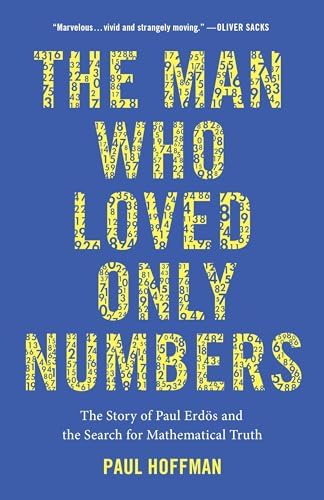
The Man Who Loved Only Numbers biography captures Erdős perfectly - "the entire conversation was about math. He was not one for small talk" - Tao recalls meeting him
Erdős posed over 1,000 problems with small cash prizes ($25 typical), but winners rarely cashed the checks, preferring to frame them as proof of solving an Erdős problem.
Recent Erdős problem #1026 was solved through modern collaboration combining discussion forums, AI tools, and traditional mathematical reasoning with 5-6 contributors in a chat room.
The Unreasonable Effectiveness of Pure Mathematics
Eugene Wigner coined the term 'unreasonable effectiveness of mathematics in the physical sciences' to describe how abstract mathematical concepts find unexpected practical applications.
Non-Euclidean geometries were developed by mathematicians exploring curved spaces purely out of curiosity, with no thought that actual space might be non-Euclidean.
When Einstein needed mathematics for general relativity, his friend Marcel Grossman pointed him to Riemann's non-Euclidean geometry, which was "almost exactly what he needed, almost word for word."
"Both pure math and science are motivated by compressing the world around them... when you compress either theoretical data or experimental data, it often tends to compress to similar-looking theories" - Tao
Mathematical Education and Different Learning Pathways
"Different people have a different kind of math language. Some people are very visual learners... Some people are very narrative driven... Some like playing games, some like being competitive" - Tao
The challenge in teaching classes of 30-40 students is that teachers can only use one approach, inevitably leaving many students who don't connect with that particular style.
Mercurio emphasizes that effective teaching depends on the teacher's emotional engagement: "If that person emanates passion and enthusiasm and love and fun," students will be more receptive regardless of the subject matter.
The Limits of Current Mathematics and Future Frontiers
Current mathematics works extremely well for most of the universe, allowing accurate measurements of galaxies billions of light-years away, but breaks down at extreme scales.
"The biggest problem is that we don't have a theory of quantum gravity... we have to abandon our notions of space and time. Even non-Euclidean geometry will not be enough" - Tao
String theory, despite having "very pretty math," doesn't seem to fit reality as much as theorists had hoped, showing that mathematical elegance doesn't guarantee correctness.
Regarding simulation theory, Tao notes that Bayesian probability could theoretically help evaluate competing hypotheses, but we lack knowledge of all possible universe types and their prior probabilities.
These notes may contain occasional inaccuracies. Learn how podbrain notes are made
More in Science & Tech

The 5-Minute AI Weekly Recap: Realignment Week
Jun 20, 2026
Why Kalshi's John Wang Says Perps Are 'the Most Pure Trading Instrument'
Jun 19, 2026Your Company Doesn’t Need an AI Strategy
Jun 19, 2026
The data black hole at the center of AI
Jun 19, 2026
The New Rules of Media | Marc Andreessen & Ben Horowitz
Jun 19, 2026

.svg)