
How Did Life Begin? with Betül Kaçar
Neil deGrasse Tyson hosts this Star Talk episode with comedian Chuck Nice and guest Dr. Betul Kachar, Director of the NASA-funded MUSE (Metal Utilization and Selection Across Eons) program and professor in the Department of Bacteriology at University of Wisconsin-Madison. Dr. Kachar runs her own lab focused on...

Episode


- 01
Life is 'a form of chemistry that maintained a memory over really long time periods' - Betul
- 02
Over 99.99% of everything that ever lived on Earth has gone extinct, including likely microbes
- 03
Half the world's population would starve without biological nitrogen fixation systems
- 04
About 2% of the world's entire energy consumption goes to artificial nitrogen production via Haber-Bosch process
- 05
Life appeared on Earth within 100-200 million years after the planet could sustain complex molecules
- 06
There are only a few evolutionary singularities: origin of life, oxygen production, animals, plants, nitrogen fixation - each happened only once
- 07
Ancient enzymes can be resurrected using CRISPR gene editing to understand how life survived billions of years
- 08
One centimeter slice of your lower intestine contains more microbes than total humans ever born
Get the latest ideas from StarTalk Radio.
Plus the best new takeaways from other top podcasts — read in minutes, not hours.
By continuing, you agree to podbrain's Terms and Privacy Policy.
These notes may contain occasional inaccuracies. Learn how podbrain notes are made
Neil deGrasse Tyson hosts this Star Talk episode with comedian Chuck Nice and guest Dr. Betul Kachar, Director of the NASA-funded MUSE (Metal Utilization and Selection Across Eons) program and professor in the Department of Bacteriology at University of Wisconsin-Madison. Dr. Kachar runs her own lab focused on understanding life's origins and survival mechanisms.
The conversation explores how life emerged and evolved on Earth over billions of years, examining the role of microbes, metabolism, and evolutionary singularities. Dr. Kachar discusses her groundbreaking research resurrecting ancient enzymes using modern gene editing tools to understand how early life forms survived dramatic planetary changes.
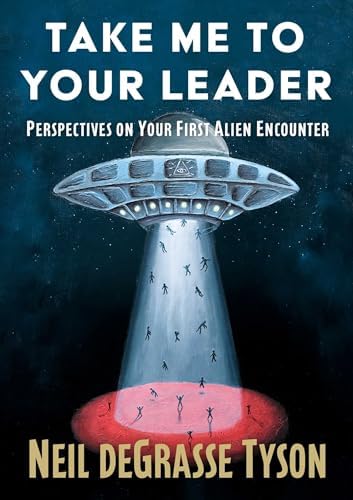
Neil promotes his latest book Take Me to Your Leader, which explores alien encounters and human preparedness for first contact. The discussion weaves together astrobiology, the search for extraterrestrial life, and practical applications of understanding Earth's biological history for agriculture and planetary science.
Resurrecting Ancient Life Through Gene Editing
Dr. Kachar's lab uses CRISPR and other gene editing tools to resurrect extinct ancient enzymes, forcing modern microbes to 'speak an ancient dialect' by cloning extinct DNA into living organisms.
This approach allows scientists to have 'conversations' with ancient life forms, understanding how they survived in dramatically different planetary conditions billions of years ago.
The research bridges molecular biology with planetary science through 'planetary microbiology' - understanding how microbes and planets dance together over geological time.
Life's Evolutionary Singularities and Survival Mechanisms
Only a few evolutionary breakthroughs happened once in Earth's history: origin of life, oxygen production through photosynthesis, emergence of animals and plants, and biological nitrogen fixation.
'Life finds a way' by overcoming extreme challenges - when oxygen appeared and threatened nitrogen-fixing enzymes that hate oxygen, life developed protection mechanisms to survive.
Earth's past resembles potential future conditions, making ancient life forms valuable for understanding how to engineer better biological systems for agriculture and sustainability.
The Critical Role of Nitrogen Fixation
Biological nitrogen fixation, powered by a single enzyme for 3 billion years, is essential for life - without it, half the world's population would starve.
The artificial Haber-Bosch process consumes about 2% of global energy to produce ammonia for fertilizers, highlighting our dependence on nitrogen availability.
Atmospheric nitrogen (N2) has triple bonds that are 'very, very strong' and must be broken to make nitrogen available for DNA, ATP, and other essential biological molecules.
Defining Life and Chemical Intelligence
'Life is an electron looking for a place to rest' - requiring energy gradients between donors and acceptors to drive metabolic processes and maintain chemical reactions.
Chemical intelligence emerges from autocatalytic cycles that 'catalyze their own presence' - coupled reactions where waste from one cycle becomes input for another.
Life requires both metabolism (the battery/engine) and information transfer to offspring - it's not enough to just be a battery that sits there for a billion years.
Astrobiology and the Search for Life Beyond Earth
The upcoming Europa mission will search for life in the ocean beneath Jupiter's moon's ice sheet, where tidal stresses from Jupiter provide the energy source for potential metabolism.
Modern techniques can identify biological versus non-biological origins of molecules by analyzing isotopic discrimination in individual atoms of complex sugar molecules.
Recent research shows that Deinococcus bacteria can survive the extreme pressures of planetary travel, supporting theories about panspermia and life's potential to spread between worlds.
These notes may contain occasional inaccuracies. Learn how podbrain notes are made
More in Science & Tech

The 5-Minute AI Weekly Recap: Realignment Week
Jun 20, 2026
Why Kalshi's John Wang Says Perps Are 'the Most Pure Trading Instrument'
Jun 19, 2026Your Company Doesn’t Need an AI Strategy
Jun 19, 2026
The data black hole at the center of AI
Jun 19, 2026
The New Rules of Media | Marc Andreessen & Ben Horowitz
Jun 19, 2026
.svg)