
Fixing the Internet with Jaron Lanier
This episode features Jaron Lanier, Microsoft's Prime Unifying Scientist and a computer scientist widely considered the father of virtual reality. Lanier coined the term 'virtual reality' and has written extensively about technology's impact on society, including...


- 01
Jaron Lanier argues that AI is fundamentally a collaboration of people rather than an independent entity, stating 'AI is made of people. It's made of data from people'
- 02
VR has failed to reach its potential after hundreds of billions in investment because companies refuse to hire diverse teams, particularly excluding women and Asian engineers who experience motion sickness
- 03
Social media addiction occurs because algorithms keep the 'fast brain' constantly activated, making users 'always being stalked, you're always stalking' - Jaron
- 04
The only allowed business model in Silicon Valley is 'influence generation' where companies get paid 'blackmail money not to be left out of the influence pool' - Jaron
- 05
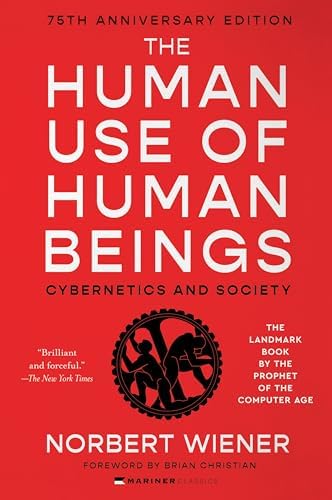
Norbert Wiener predicted in 1950 that portable networked devices for behavior modification would 'destroy civilization' but assured readers it was 'physically impossible'
- 06
Data dignity means recognizing that 'data only comes from people' and prohibiting algorithms that predict human behavior to manipulate it
- 07
Privacy should be redefined as 'freedom from manipulation' rather than just controlling information flows between points
Get the latest ideas from StarTalk Radio.
Plus the best new takeaways about artificial intelligence from other top podcasts — read in minutes, not hours.
By continuing, you agree to podbrain's Terms and Privacy Policy.
These notes may contain occasional inaccuracies. Learn how podbrain notes are made
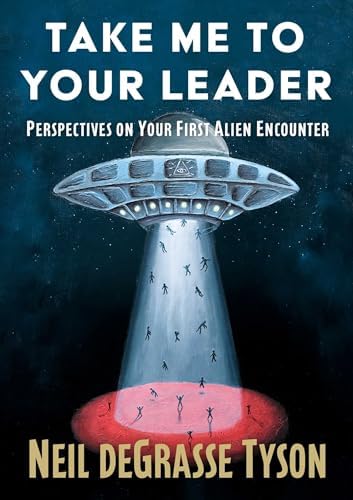
This episode features Jaron Lanier, Microsoft's Prime Unifying Scientist and a computer scientist widely considered the father of virtual reality. Lanier coined the term 'virtual reality' and has written extensively about technology's impact on society, including Ten Arguments for Deleting Your Social Media Accounts Right Now. He's joined by host Neil deGrasse Tyson, author of Take Me to Your Leader, comedian Nagin Farsad who wrote How to Make White People Laugh, and co-host Gary O'Reilly from London.
The conversation explores whether the internet has become too destructive to repair, examining social media addiction, AI development, and virtual reality's unfulfilled promises. Lanier draws on historical warnings from The Human Use of Human Beings by Norbert Wiener, who predicted in 1950 that networked behavior modification devices would threaten civilization. The discussion covers everything from VR's exclusion of diverse users to the need for new business models beyond influence generation, while Lanier advocates for 'data dignity' and reconceptualizing AI as human collaboration rather than artificial intelligence.
Virtual Reality's Billion-Dollar Failure and Diversity Problem
VR companies spent 'hundreds of billions of dollars' - equivalent to the moon landing budget - yet failed to create basic applications like 3D design software because they only hired 'a room of white men' - Jaron
Motion sickness in VR disproportionately affects women and Asian users, but companies refuse to test on diverse populations, leading to predictable product failures when reviewed by excluded demographics
Lanier originally envisioned VR as a 'palette freshener' to help people appreciate reality better, not as an escape from it, proposing experiments like raising children in 4D VR to create 'the world's first 4D native mathematicians'
Social Media as Behavioral Modification Machine
The Human Use of Human Beings by Norbert Wiener warned in 1950 about 'automated behaviorist algorithms to change people, to manipulate people' through networked devices, predicting it as an 'extinction-level event'
Social media algorithms keep the 'fast brain' constantly activated, creating users who are 'always being stalked, you're always stalking, you're always horny but never satisfied, you always feel alone because you can't trust anybody' - Jaron
The network effect creates 'hyper-centralized power' where 'a handful of people have more wealth than the bottom half of society,' unlike pre-internet systems with distributed middlemen
Ten Arguments for Deleting Your Social Media Accounts Right Now is now forced reading in high schools, with students telling Lanier 'We were forced to read your book' and him replying 'you must have done something very bad'
AI as Human Collaboration, Not Artificial Intelligence
Lanier argues 'there is no AI' - instead proposing to think of AI as 'a new form of collaboration between a collection of people' rather than an independent entity
Young AI developers want to 'make God' because they're 'young men who think the world owes them everything' and grew up on 'Matrix movies and Terminator' instead of positive sci-fi like '90s Star Trek
AI security requires 'multi-factor' approaches that reveal the human data sources rather than treating models as black boxes, enabling solutions to hallucination and manipulation problems
Current AI discourse promotes the idea that 'everybody's going to be obsolete' and 'you'll just be kept by Elon as a pet at his discretion,' which Lanier calls psychologically destructive
Data Dignity and the Economics of Information
Data dignity recognizes that 'data only comes from people' and 'information is physical or it's nothing' - challenging the ideology that bits are 'ethereal' and free
The only allowed Silicon Valley business model is 'influence generation' where companies get paid 'blackmail money not to be left out of the influence pool' rather than direct payment for services
Privacy should mean 'prohibition on software that interacts with humans that contains any predictive function about that human' rather than just controlling information flows
Big tech companies already know 'where in their menstrual cycle every woman in this room is' and have known health data for '15 years,' making current privacy theater meaningless


These notes may contain occasional inaccuracies. Learn how podbrain notes are made
More in Science & Tech

Is Reality Really Real? With Donald Hoffman
Jun 26, 2026
CEO-Led AI Gets 3X the ROI
Jun 25, 2026
Leslie Lamport on the Science of Distributed Systems
Jun 25, 2026
The Chopping Block: Is Strategy the Luna for Suits?, ETH Labs Shakeup & CME vs Perps
Jun 25, 2026
Marc Andreessen on AI, Technology, and the Future of Humanity
Jun 25, 2026.svg)